Quick answer: Sky-Watcher is strongest in Dobsonians, collapsible reflectors, value refractors, and beginner-friendly GoTo tabletop scopes. The right model depends on whether you care most about portability, aperture, astrophotography, or planetary observing.
Best Sky-Watcher telescope for your goal
Choose the Sky-Watcher line before comparing individual models.
A tabletop Dobsonian, full-size Dobsonian, travel refractor, and APO refractor solve very different problems even when they share the same brand name.
Best Sky-Watcher telescopes by use case
Short answer: the best Sky-Watcher telescope depends on your main goal. Choose a Heritage tabletop Dobsonian for beginner visual astronomy, an EvoStar APO for astrophotography, a Flextube Dobsonian for deep-sky observing, and a Skymax Maksutov for compact lunar and planetary views.
| Rank | Best for | Recommended Sky-Watcher model | Rating | Why it is the best pick |
|---|---|---|---|---|
| #1 | Beginners / first telescope | Sky-Watcher Heritage 150P | ★★★★★ | Best starter choice because it gives real 150mm aperture, simple Dobsonian aiming, and strong visual performance without a complicated mount. |
| #2 | Portable GoTo tabletop observing | Sky-Watcher Virtuoso GTI 130P | ★★★★★ | Best compact computerized option for readers who want object finding and tracking in a collapsible tabletop scope. |
| #3 | Entry astrophotography | Sky-Watcher EvoStar 72 APO | ★★★★☆ | Best first imaging tube because the small ED/APO refractor is easier to mount, balance, and guide than a large visual telescope. |
| #4 | Serious astrophotography | Sky-Watcher EvoStar 80ED | ★★★★★ | Best upgrade imaging refractor thanks to cleaner color correction, sharper stars, and a useful focal length for nebulae and wide deep-sky targets. |
| #5 | Deep-sky visual observing | Sky-Watcher Flextube 200 8" Dobsonian | ★★★★★ | Best deep-sky value because 8 inches of aperture shows brighter galaxies, nebulae, and clusters while staying manageable for storage and transport. |
| #6 | Moon and planets | Sky-Watcher Skymax 127mm Maksutov-Cassegrain | ★★★★☆ | Best compact planetary pick because its long focal length and high-contrast Mak design are well suited to lunar detail, Jupiter, and Saturn. |
| #7 | Wide-field casual viewing | Sky-Watcher StarTravel 102 AZ3 | ★★★★☆ | Best casual refractor for sweeping star fields, open clusters, and grab-and-go observing, though not the top choice for high-magnification planets. |
🌌 Get Weekly Stargazing Tips
Join 1,000+ astronomers. No spam, just sky.
This site contains affiliate links to products. I may receive a commission for purchases made through these links.
Sky-Watcher is one of the most respected names in amateur astronomy, offering telescopes for everyone from first-time stargazers to experienced astrophotographers. Made by Synta Technology Corporation (Taiwan) and founded in 1999 by David Shen, the brand is known for delivering quality optics at prices that won't require a second mortgage.
This guide breaks down every Sky-Watcher telescope series, so you can find the right model for how you actually want to use it: visual observation, astrophotography, deep sky hunting, or planetary close-ups.
How to choose the right Sky-Watcher telescope
Sky-Watcher sells several very different telescope families under the same brand. The best choice is less about the logo and more about what you want the telescope to do on a normal night. Use this quick filter before comparing individual models.
Tabletop Dobsonians
Sky-Watcher's tabletop Dobsonians are some of the best beginner-friendly telescopes on the market. They sit on any flat surface, require zero alignment, and deliver surprisingly sharp views for their price.
Sky-Watcher Heritage 130mm Tabletop Dobsonian
Great for beginners. 5-inch aperture, excellent light gathering, tabletop design for portability.
Read more: Sky-Watcher Heritage 130p review
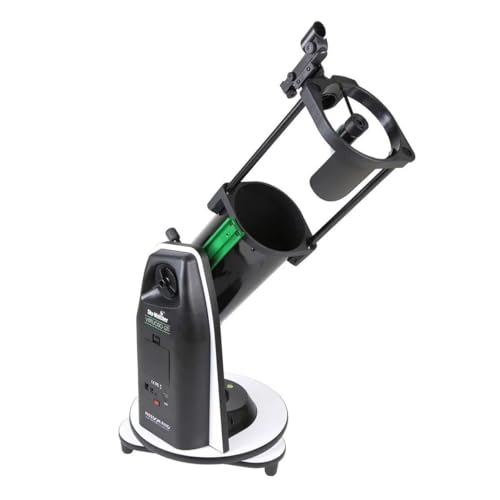
Sky-Watcher Virtuoso GTI 130P Collapsible Tabletop GoTo Dobsonian
Compact collapsible design with advanced GoTo technology. Sits on a sturdy tabletop base, easy to set up and transport.
View on Amazon →StarTravel Series
The StarTravel range punches well above its price class. These are wide-field refractors that work great for sweeping views of star clusters, the Milky Way, and bright deep-sky objects. Affordable enough to be a first scope, good enough to keep using as a second.
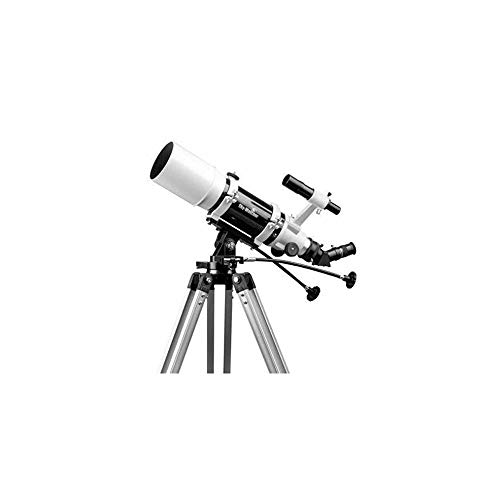
Sky-Watcher StarTravel 102 AZ3
Affordable 102mm refractor with f/4.9 focal ratio. Alt-azimuth mount (AZ3) is beginner-friendly and portable.
View on Amazon →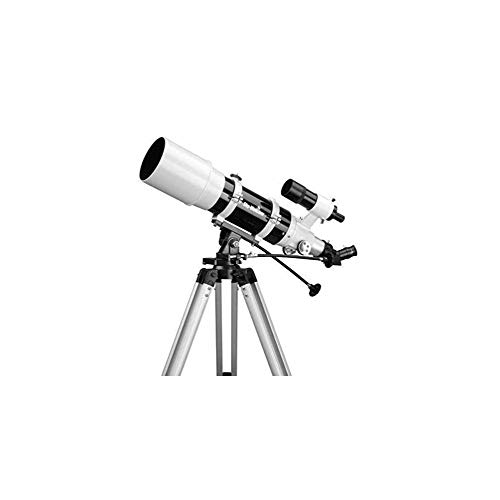
Sky-Watcher StarTravel 120
120mm aperture, 600mm focal length. Excellent optics for moon, planets, and deep sky objects. Compact and lightweight.
View on Amazon →Best Sky-Watcher Telescopes for Astrophotography
If you want to photograph the night sky, you need optics that minimize chromatic aberration (color fringing around bright objects). Sky-Watcher's EvoStar and Equinox lines use Extra-low Dispersion (ED) glass that delivers the sharp, color-corrected images astrophotography demands.
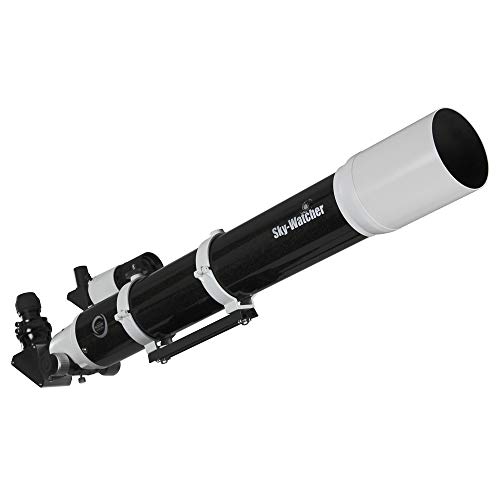
Sky-Watcher EvoStar 80ED APO Doublet Refractor
Extra-low Dispersion (ED) glass reduces chromatic aberration. Sharp, color-corrected images for astrophotography.
View on Amazon →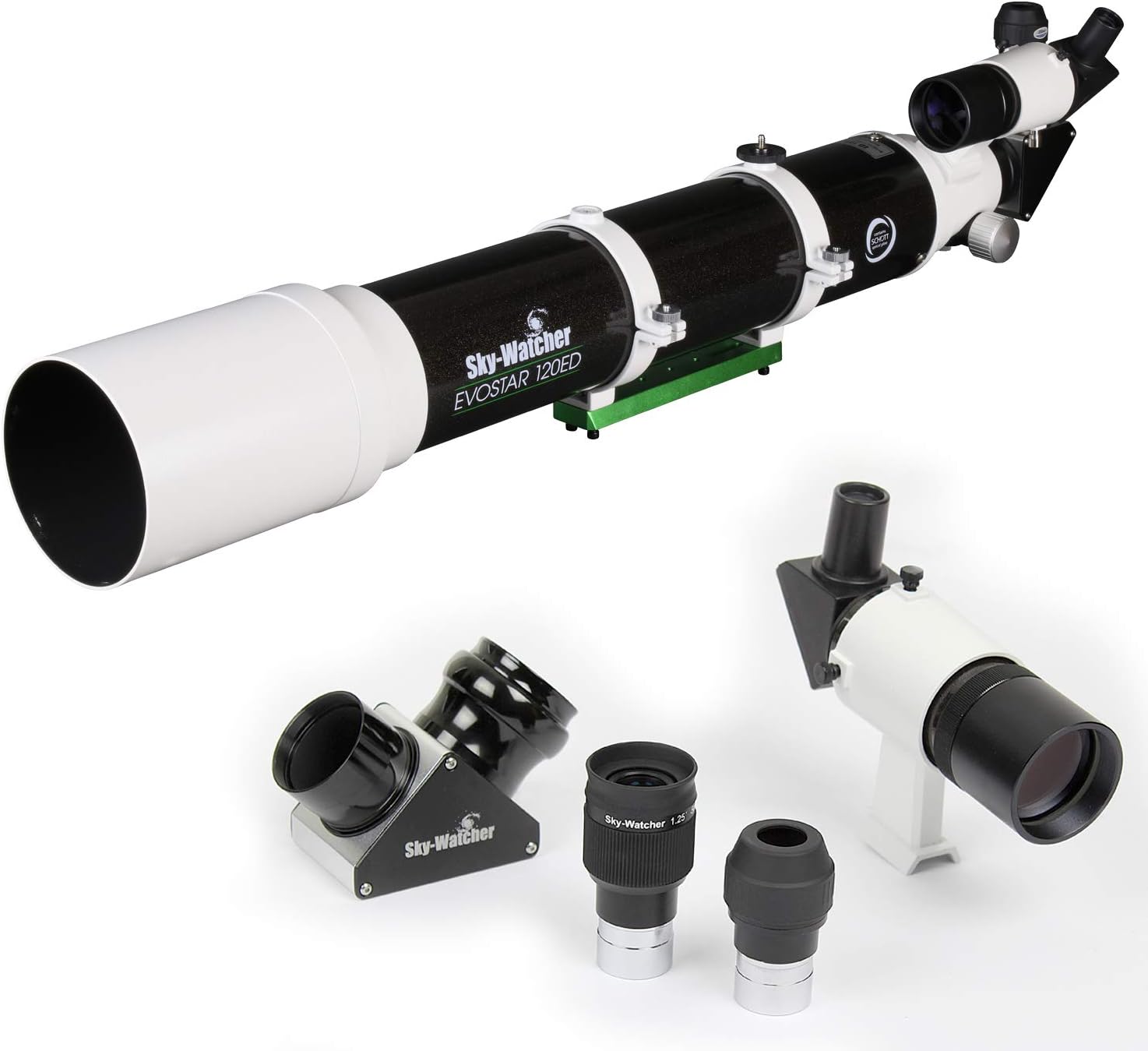
Sky-Watcher EvoStar 120 APO Doublet Refractor
High-end APO with premium lens system. Minimal chromatic aberration, crisp images. Fully multi-coated objective.
View on Amazon →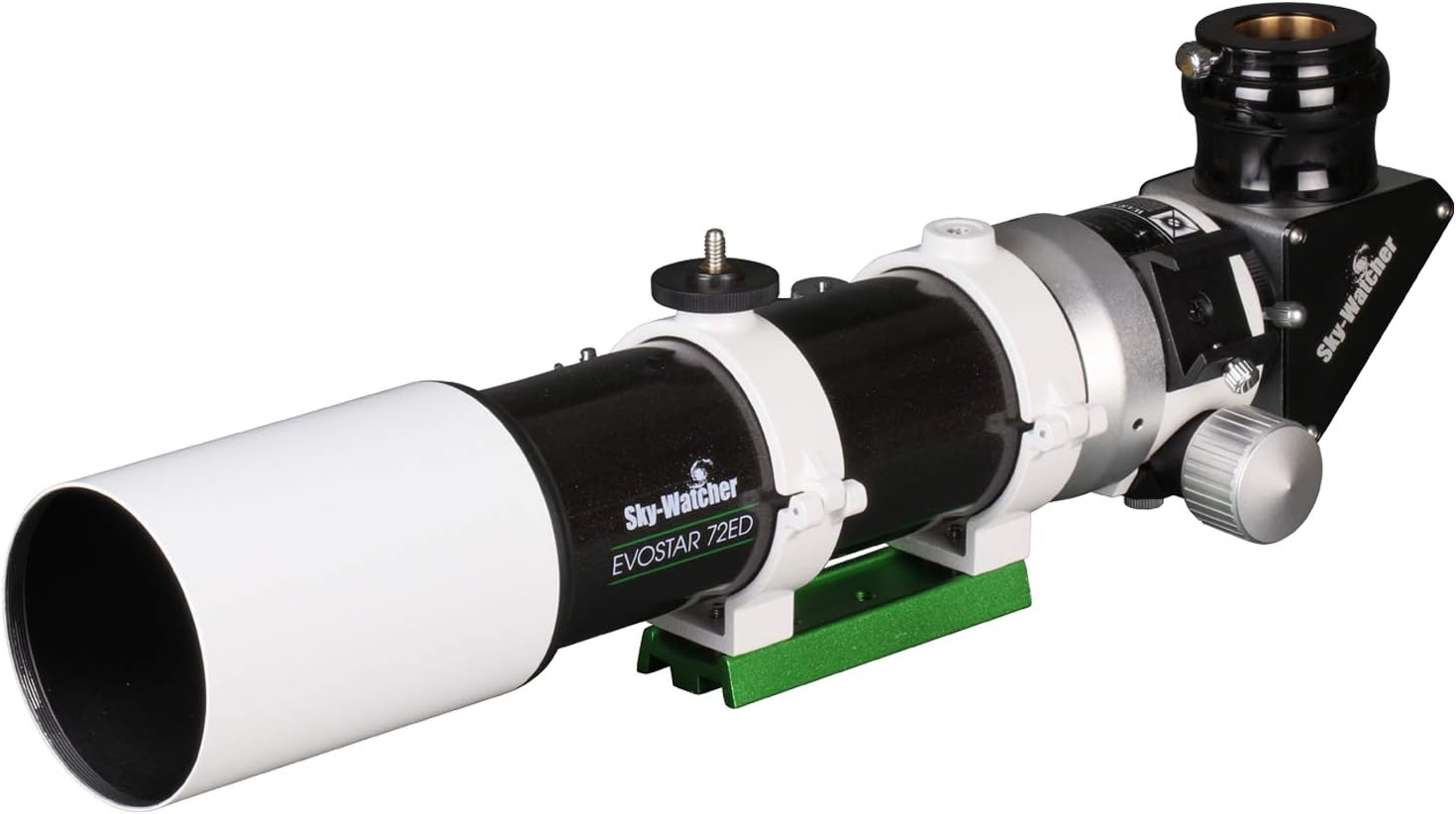
Sky-Watcher EvoStar 72 APO Doublet Refractor
Compact and portable APO. 72mm aperture punches above its weight thanks to quality ED optics. Great entry point for astrophotography.
View on Amazon →Sky-Watcher Equinox-80 Pro OTA Fluorite ED
Fast f/6.25 focal ratio with fluorite ED lens. Crisp, high-contrast images with minimal chromatic aberration. Great for low-cost astrophotography.
Read more: Sky-Watcher Refractor Telescopes (All Models)
Best Sky-Watcher Telescopes for Deep Sky Objects
Deep sky objects like galaxies, nebulae, and star clusters are faint and spread out. You need aperture (light-gathering power), and Sky-Watcher's GoTo Dobsonians deliver it in spades. The computerized tracking means you can find and follow 42,900+ objects without star-hopping.
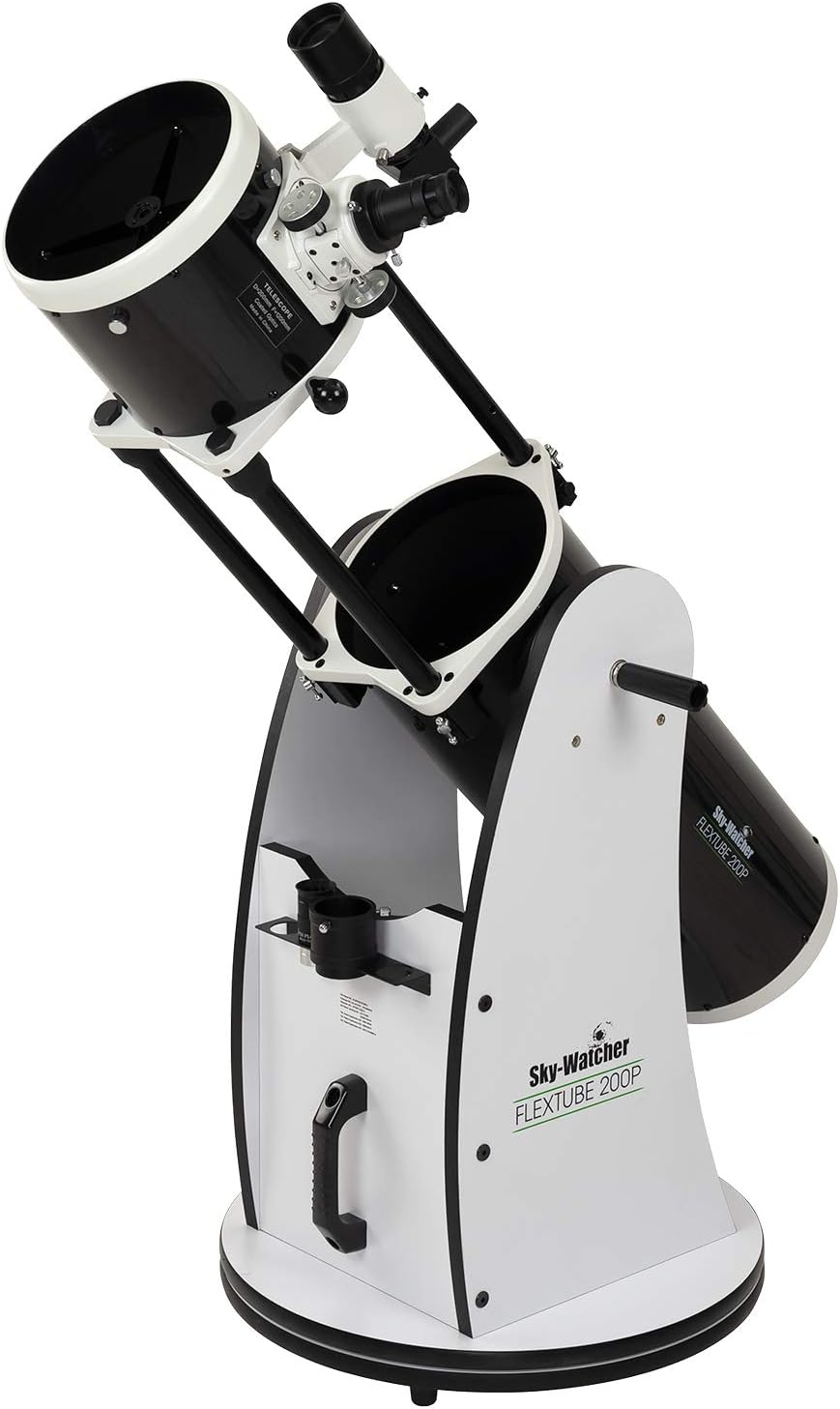
Sky-Watcher Flextube 200 8" Dobsonian
8-inch collapsible Dobsonian. A strong Sky-Watcher deep-sky and planetary option with easier storage than a full solid tube.
View on Amazon →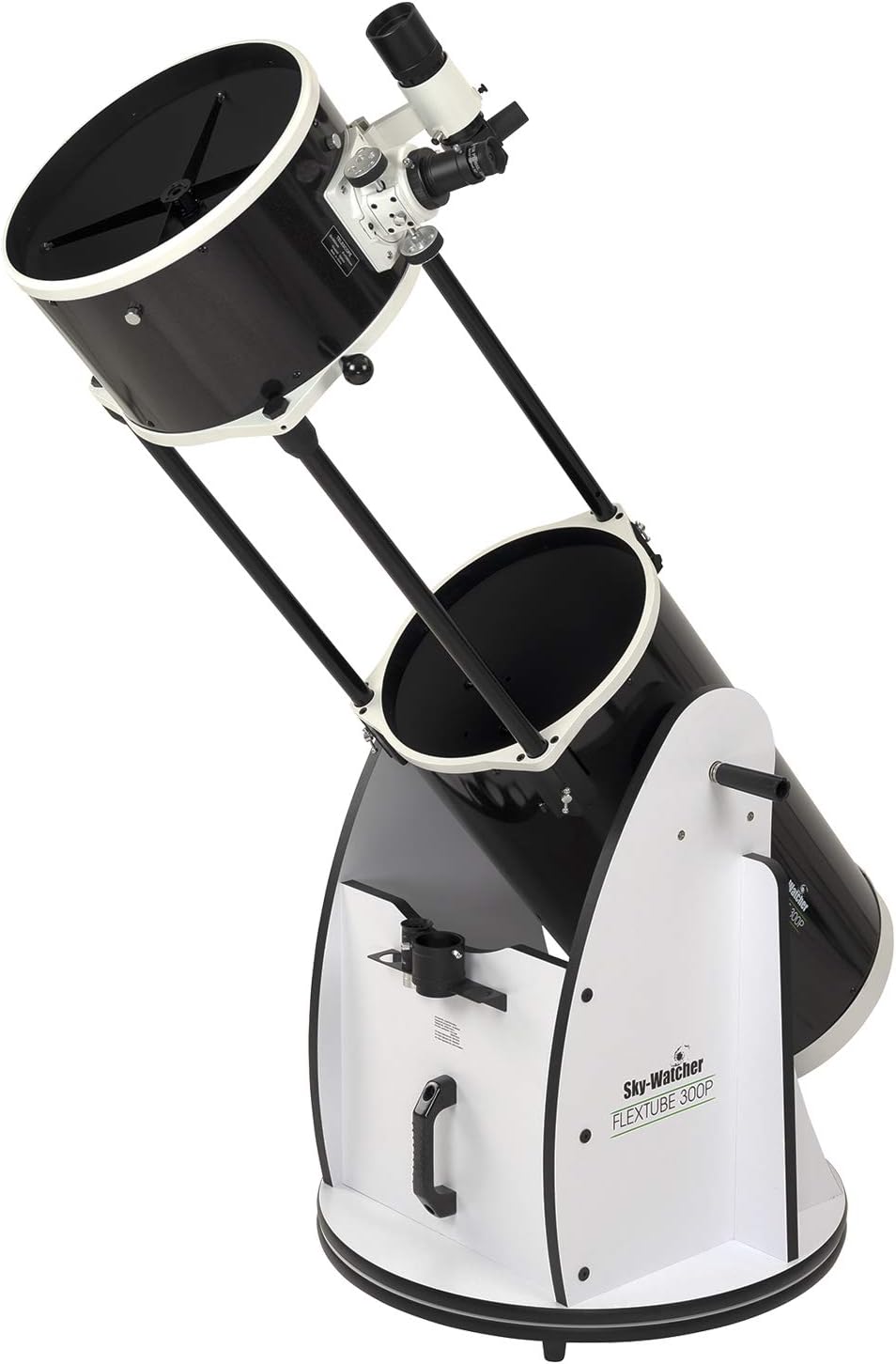
Sky-Watcher Flextube 300 12" Dobsonian
Large-aperture Sky-Watcher Dobsonian for maximum deep-sky reach and high-detail lunar/planetary views.
View on Amazon →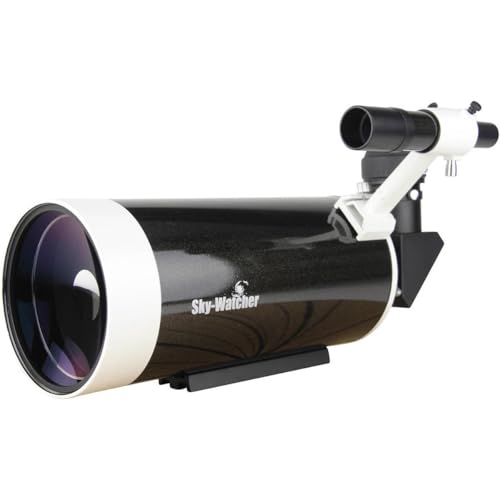
Sky-Watcher Skymax 127mm Maksutov-Cassegrain
127mm aperture with long focal length for great contrast. Compact design, computerized GoTo mount. Excellent for star clusters, nebulae, and galaxies.
View on Amazon →Also worth reading: Schmidt Cassegrain vs Maksutov Cassegrain
Best Sky-Watcher Telescopes for Beginners
Starting out in astronomy can feel overwhelming. These Sky-Watcher models balance ease of use, image quality, and price so you can start observing without a steep learning curve or a steep bill.
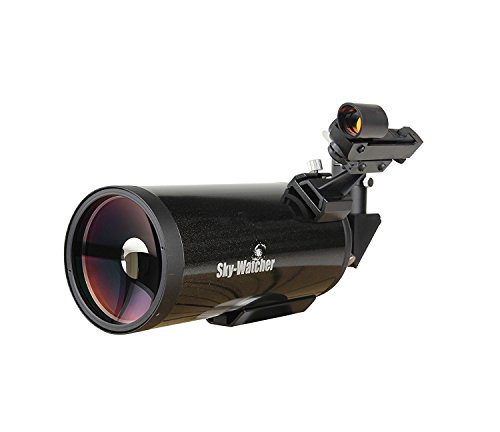
Sky-Watcher Skymax 90mm Maksutov-Cassegrain
Compact, portable Mak-Cass for beginners. Good light gathering in a small package. Note: narrower field of view than some beginner scopes.
View on Amazon →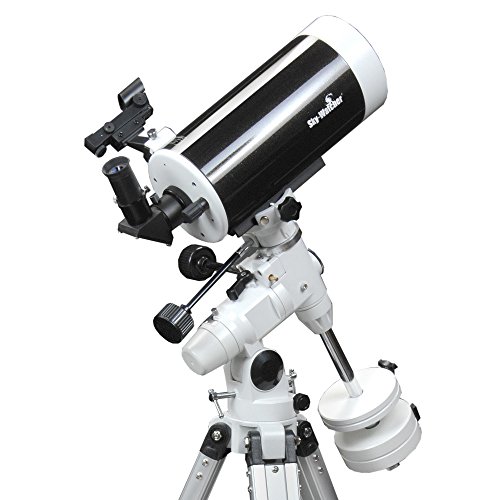
Sky-Watcher Skymax-127 EQ3-2 Maksutov-Cassegrain
Equatorial mount with slow-motion controls for precise tracking. Steeper learning curve but rewarding for beginners willing to learn alignment.
View on Amazon →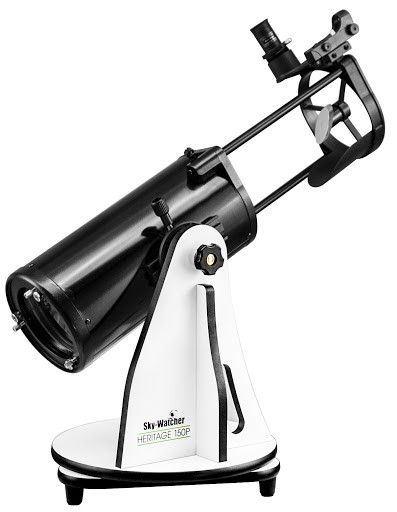
Sky-Watcher Heritage 150P
Catalog-aligned beginner Sky-Watcher pick with 150mm aperture and strong value under $300.
View on Amazon →Best Sky-Watcher Telescopes for Planetary Observation
Planets need high contrast and sharp focus more than raw aperture. Refractors with APO optics excel here because they produce pinpoint images without the diffraction spikes that reflectors introduce. If you want to see Jupiter's cloud bands and the Cassini Division in Saturn's rings, these are the scopes to consider.
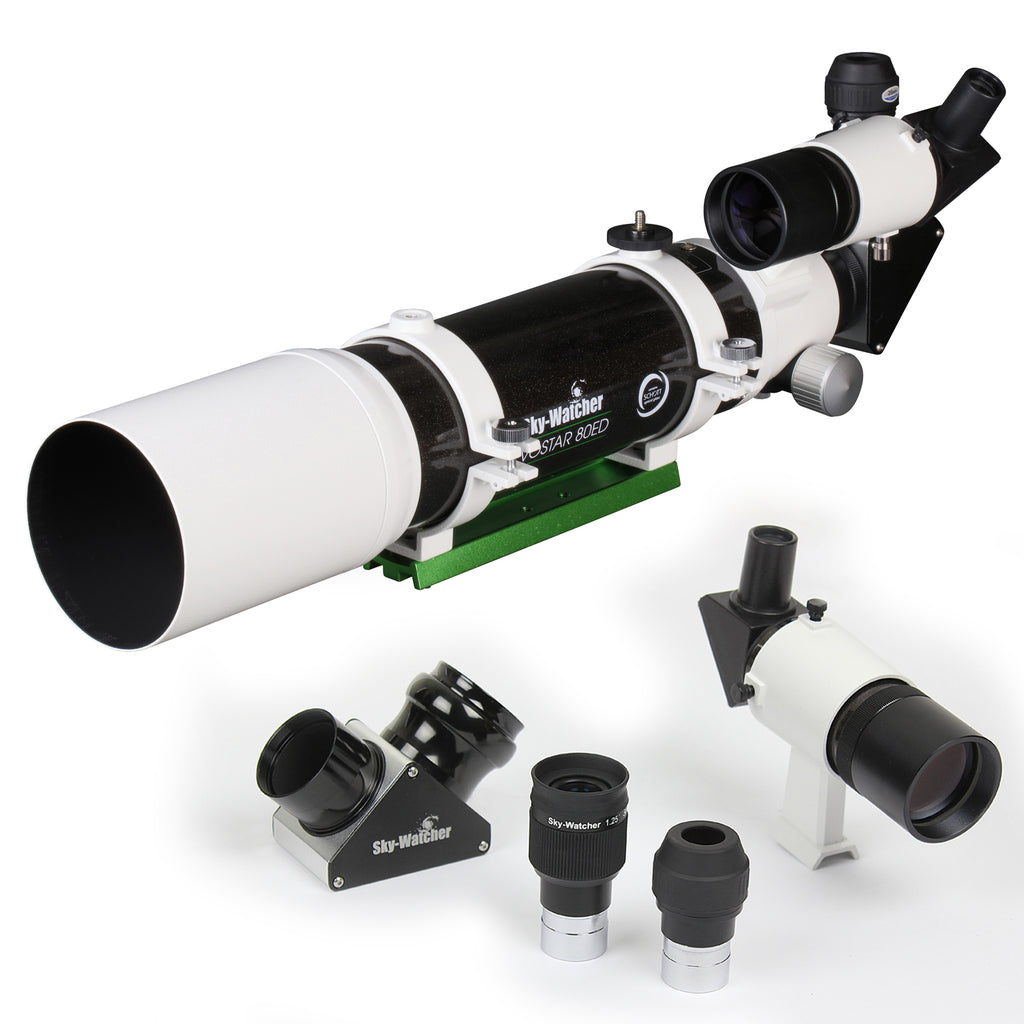
Sky-Watcher Evostar 80 APO
Catalog APO refractor pick for cleaner color correction and wide-field imaging than basic achromats.
View on Amazon →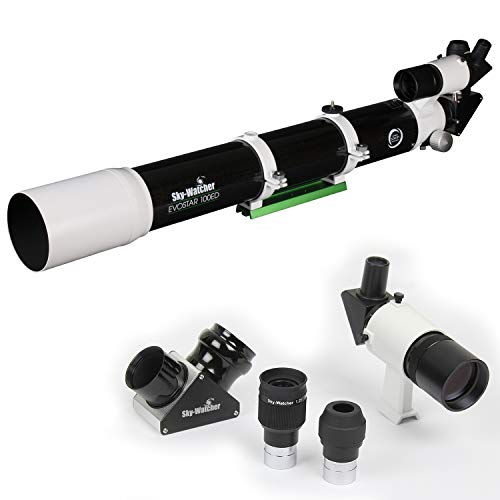
Sky-Watcher EvoStar 100 APO Doublet Refractor
Superior color correction and image sharpness. 100mm aperture captures cloud bands on Jupiter and Saturn's rings in detail.
View on Amazon →Best Sky-Watcher Reflector Telescopes
Reflectors give you the most aperture per dollar. Sky-Watcher's reflectors range from the imaging-focused Quattro series to large Maksutov-Cassegrain designs that combine reflector and refractor advantages.
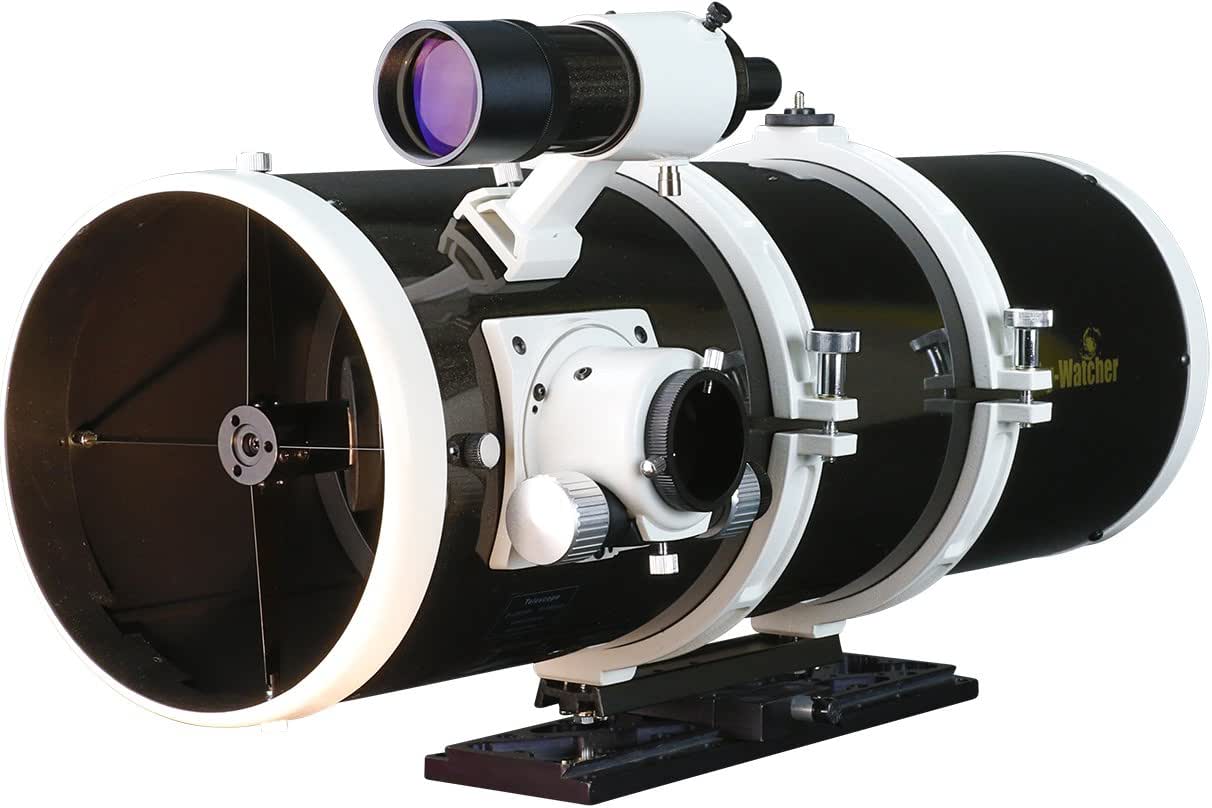
Sky-Watcher Quattro 200P
200mm parabolic mirror for stunningly detailed deep-sky views. Equatorial mount with motor drive. Compatible with many accessories.
View on Amazon →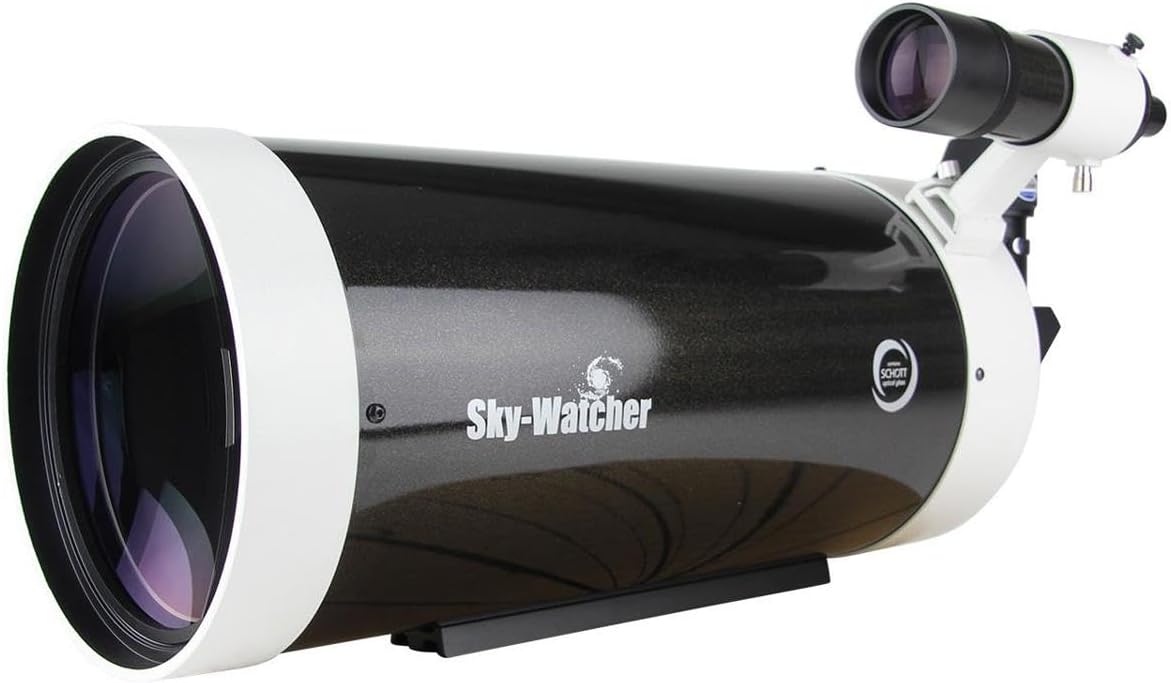
Sky-Watcher Skymax 180mm Maksutov-Cassegrain
180mm aperture combines reflector and refractor advantages. Massive light gathering in a Mak-Cass design.
View on Amazon →Also worth reading: Reflector vs Refractor Telescope: Which One Do You Need?
Best Catadioptric Sky-Watcher Telescopes
Catadioptric telescopes use a combination of mirrors and lenses to fold the optical path into a compact tube. You get the light-gathering power of a reflector with the convenience and portability of a much smaller instrument.
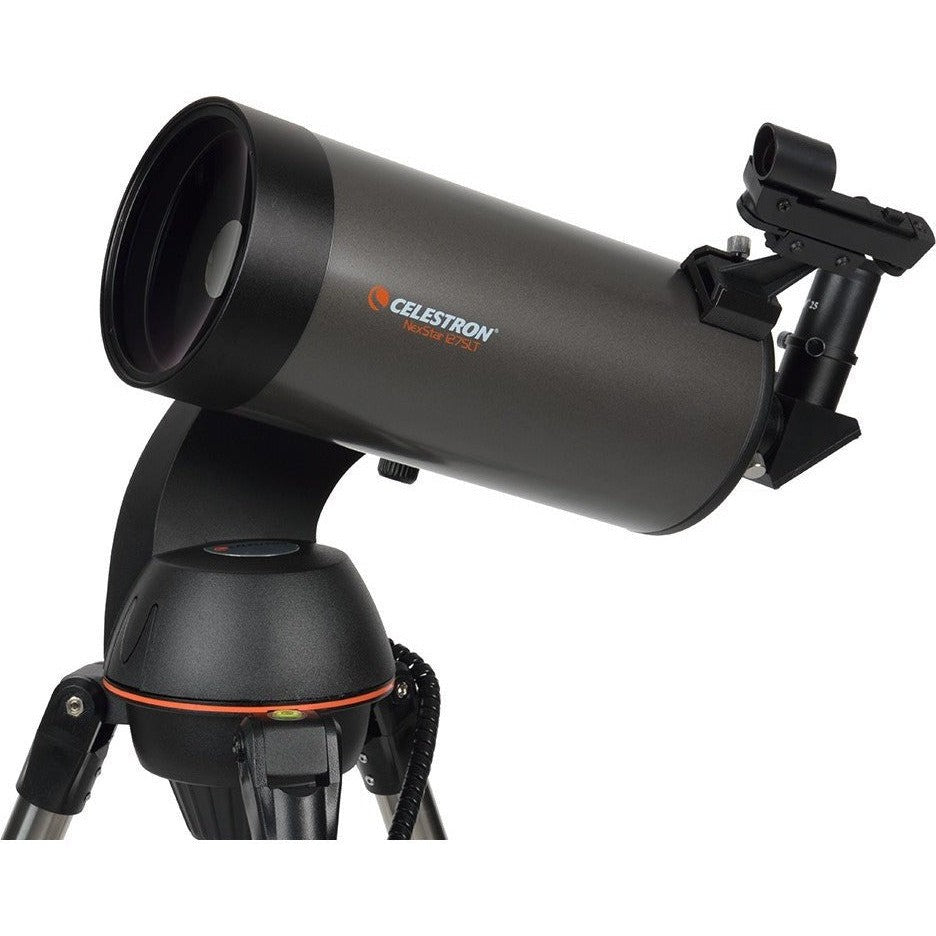
Celestron NexStar 127SLT
Catalog compact catadioptric fallback for readers who want a long-focal-length planetary scope.
View on Amazon →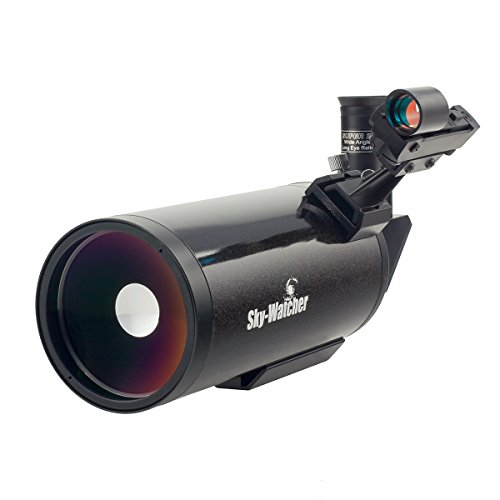
Sky-Watcher Skymax-90 OTA
Catadioptric design using mirrors and lenses. Primary mirror reflects to secondary, then focused by front lens. Includes red dot finder.
View on Amazon →Frequently Asked Questions
Who makes Sky-Watcher telescopes?
Sky-Watcher is produced by the Synta Technology Corporation, based in Taiwan. The brand was founded in 1999 by David Shen, who started pursuing astronomy at age 26.
Are Sky-Watcher telescopes any good?
Yes. Sky-Watcher consistently delivers quality optics at competitive prices. Their designs are user-friendly, and they offer a wide range of compatible accessories. They're a go-to recommendation in most astronomy forums.
Who makes the mirrors for Sky-Watcher telescopes?
Sky-Watcher uses precision-ground mirrors from several manufacturers including Sitall, Schott, and Ohara. The specific manufacturer varies by model and specs.
Orion vs Sky-Watcher: which is better?
Both are excellent brands. Sky-Watcher is typically praised for value and accessory range, while Orion gets points for optical quality and customer service. The best choice depends on your specific needs and budget. Do your research and read reviews for the specific models you're comparing.
What solar filters work with Sky-Watcher telescopes?
Popular options include the Celestron EclipSmart filter, the Orion Safety Film filter, and the Thousand Oaks Optical filter. Make sure you get the correct size for your telescope's aperture.
What is the best Sky-Watcher telescope for beginners?
The Heritage 130mm Tabletop Dobsonian and the Explorer 130P are both excellent starting points. They offer great optics at affordable prices with minimal setup.
Which Sky-Watcher is best for astrophotography?
The EvoStar 72 APO is a popular entry-level choice. For more serious work, the EvoStar 80ED and EvoStar 120 APO deliver premium results. The Equinox-80 Pro is the top-end option with fluorite ED glass.
What I would not overthink
Sky-Watcher's catalog overlaps a lot: several scopes can technically show the Moon, planets, clusters, and brighter nebulae. The real decision is the tradeoff you are willing to live with. Dobsonians win on aperture and visual value, ED/APO refractors win for imaging and clean color correction, and Maksutovs win when you want a compact tube for lunar and planetary observing. If two models seem close, pick the one with the mount and size you will use most often.
Bottom Line
Sky-Watcher has a telescope for every level and every budget. Whether you're a beginner grabbing your first Heritage 130mm or an experienced astrophotographer upgrading to the Esprit 80mm Triplet APO, the brand consistently delivers optics that punch above their price class.
Our top picks by use case:
- First telescope: Heritage 130mm or Explorer 130P
- Astrophotography: EvoStar 72 APO or EvoStar 80ED
- Deep sky: S11800 GoTo 8" Dobsonian
- Planetary: Esprit 80mm ED Triplet APO
- Best value: StarTravel 102 AZ3
Related guides:
- Top 3 Sky-Watcher 10-inch Dobsonian Telescopes
- Unistellar eVscope Review
- Orion SkyQuest XT8 Review (#1 Beginner Telescope)
- Schmidt-Cassegrain vs Dobsonian: A Guide
- Sky-Watcher Refractor Telescopes (All Models)
🔭 Never Miss a Guide
Get telescope reviews, buying guides, and stargazing tips. Free, weekly, no spam.