- Age matters more than star ratings - a documentary that bores a 5-year-old might captivate a 12-year-old. We sorted by age so you can jump straight to the right tier.
- Netflix and Disney+ dominate for polished kids content, but YouTube has excellent free options from NASA and PBS.
- Watch together when possible - kids retain far more when a parent or sibling pauses to ask questions.
- After watching, go outside - even a basic telescope turns passive curiosity into hands-on exploration.
The best space documentary for a kid isn't the most technically impressive one. It's the one that makes them sprint outside after dinner and stare at the sky.
Finding that film takes some trial and error, mostly because streaming platforms mix adult docs with kids content, and a slow-burn series about black hole physics will lose a 7-year-old in the first five minutes. We've done the sorting for you.
Below are 15 space documentaries organized by age group, with notes on where to watch, how long they run, and what makes each one click for kids specifically.
How We Picked These Documentaries
We evaluated each title on four criteria:
- Age-appropriate pacing - does it hold a kid's attention for the full runtime?
- Scientific accuracy - no dramatized nonsense or outdated facts
- Availability - readily accessible on a major platform in 2026
- Curiosity factor - does it make kids want to know more, not just watch more?
We excluded anything rated TV-14 or above, anything with graphic violence (even CGI supernova destruction at that level), and anything last updated before 2015 unless it's a genuine classic.
Ages 3-6: First Look at Space
At this age, visuals do all the work. Long narration loses them fast. Short episodes, bright imagery, and repetition of simple concepts (planets go around the sun, the moon is our neighbor, stars are very far away suns) are what stick.
1. Ready Jet Go! (PBS Kids)
- Where to watch: PBS Kids (free), YouTube
- Episodes: 100+ short episodes, ~11 min each
- Age sweet spot: 3-7
Technically animated, but each episode is built around real planetary science. Kids follow Jet Propulsion (yes, that's his name) as he explores the solar system with his Earth friends. NASA scientists consult on the series, so the facts check out. Episode topics include the Moon's phases, Mars rovers, and why Pluto got reclassified. It's the closest thing to a documentary a preschooler will sit through.
Pro tip: PBS Kids has free printable activity sheets for each episode. Great for keeping hands busy after the screen goes off.
2. Earth to Luna! (Netflix)
- Where to watch: Netflix
- Episodes: 52 episodes, ~12 min each
- Age sweet spot: 4-8
Brazilian-produced and bursting with color, Earth to Luna! follows a girl obsessed with science who turns everyday questions into experiments. Space episodes cover gravity, the solar system, and the Moon with enough humor and movement to hold a 4-year-old's attention. It's less documentary and more science show, but the educational density rivals anything on this list.
3. StoryBots: Our Universe (Netflix)
- Where to watch: Netflix
- Episodes: 6 episodes, ~25 min each
- Age sweet spot: 4-8
Five tiny robots explore the solar system asking simple questions: What is the Sun? How big is the universe? What's on Mars? Real scientists appear between animated sequences to answer. Morgan Freeman narrates the universe segments. Kids who've already burned through Ready Jet Go! will love this as a next step. The tone is warm, funny, and never condescending.
For very young kids, one episode per session works better than binge-watching. Pause and ask "what did you just see?" - the recall exercise doubles retention and opens up conversations about planets and stars.
Ages 7-10: Building Real Knowledge
This is the golden window. Kids this age can follow a 45-minute episode, understand cause-and-effect explanations, and start asking their own questions. The documentaries below introduce real science without dumbing it down.
4. One Strange Rock (Disney+/Netflix)
- Where to watch: Disney+
- Episodes: 10 episodes, ~45 min each
- Age sweet spot: 8-14
Eight astronauts narrate the story of Earth from the perspective of people who've left it. Will Smith hosts. The cinematography is genuinely jaw-dropping: time-lapse storms filmed from the ISS, bioluminescent ocean footage, high-altitude balloon sequences. Kids around 8-9 can follow the big ideas (why Earth has life, why the Moon matters, what a fragile thing our atmosphere is) without getting lost. One of the best-produced science documentaries made for a general audience.
5. The Planets (BBC, 2019)
- Where to watch: BBC iPlayer (UK), Amazon Prime
- Episodes: 5 episodes, ~50 min each
- Age sweet spot: 8-13
Brian Cox narrates a tour of the solar system built on the latest data from Cassini, New Horizons, and Juno. The CGI reconstruction of early solar system formation is genuinely stunning. Kids who already know the planets by name will discover entirely new things: that Venus was once covered in oceans, that Europa's ocean might harbor life, that Jupiter's Great Red Spot is shrinking. It moves faster than older BBC series and rewards curious minds at any age.
6. Space Explorers: The ISS Experience (YouTube / Quest VR)
- Where to watch: YouTube (free clips), Felix & Paul Studios
- Episodes: 4 episodes, ~20-30 min each
- Age sweet spot: 7-12
Filmed entirely aboard the International Space Station in 360-degree video, this series puts kids inside the ISS. Astronauts float past the camera, conduct experiments, and explain daily life in microgravity. Even on a flat screen (not VR), the immersion is unlike anything else on this list. Perfect for a kid who just asked "what do astronauts actually do up there?"
7. Mars Inside SpaceX (National Geographic)
- Where to watch: Disney+ (National Geographic)
- Episodes: 1 episode, 90 min
- Age sweet spot: 9-14
Behind-the-scenes access to SpaceX's Starship development. Kids who follow rocket news will know many of the milestones covered here. The doc makes the engineering challenges concrete: why reusable rockets matter, why Mars requires a completely different approach than the Moon. Elon Musk appears throughout. No narrator, just scientists and engineers explaining their work directly to camera.
8. Apollo's New Moon (BBC)
- Where to watch: BBC iPlayer (UK), YouTube
- Episodes: 1 episode, 60 min
- Age sweet spot: 8-12
Produced for the 50th anniversary of Apollo 11, this documentary uses newly restored footage of the mission that most kids have never seen. The original film was 65mm format, and the 4K restoration makes 1969 look like it was filmed last year. Kids who've asked "did we really go to the Moon?" will walk away with no remaining doubts, and probably a few chills.
Ages 11-14: Going Deep
Tweens and early teens can handle ambiguity, complexity, and unanswered questions. The picks below don't talk down to their audience. They're adult documentaries that happen to be perfectly appropriate for curious older kids.
9. Cosmos: A Spacetime Odyssey (Disney+)
- Where to watch: Disney+, Hulu
- Episodes: 13 episodes, ~43 min each
- Age sweet spot: 11+
Neil deGrasse Tyson hosts this 2014 sequel to Carl Sagan's original Cosmos series. The animated "Ship of the Imagination" sequences make abstract concepts like deep time and galactic scale visually intuitive. Topics include natural selection, the speed of light, climate change, and the story of how science developed as a human endeavor. One of the most-watched science series of the decade for a reason. The 2023 follow-up series "Cosmos: Possible Worlds" is worth watching immediately after.
10. Apollo 11 (2019 documentary film)
- Where to watch: Amazon Prime, Apple TV
- Runtime: 93 minutes
- Age sweet spot: 10+
No narrator. No talking heads. Just never-before-seen 70mm footage of the Apollo 11 mission, edited into a seamless first-person account of the Moon landing. The mission audio serves as the only narration. Older kids will appreciate that this isn't a documentary "about" the Moon landing, it is the Moon landing. The launch sequence alone, in original IMAX-quality footage, is one of the most stunning things available on any streaming platform.
11. The Last Man on the Moon (Amazon Prime)
- Where to watch: Amazon Prime
- Runtime: 98 minutes
- Age sweet spot: 11+
Gene Cernan, the last astronaut to walk on the Moon, narrates his own story. It covers his entire career: test pilot, Gemini spacewalk disaster, Apollo 10, and finally Apollo 17 in 1972. For teens interested in what it actually costs to become an astronaut, this documentary is more honest than anything else on this list. Cernan passed away in 2017, which gives his final words in the film an extra weight.
12. Black Hole Apocalypse (PBS Nova)
- Where to watch: PBS (free), Amazon Prime
- Runtime: 53 minutes
- Age sweet spot: 11+
Janna Levin, an astrophysicist at Columbia, narrates this Nova special on black holes. It covers Schwarzschild's wartime calculations, the first gravitational wave detection by LIGO in 2015, and the supermassive black hole at the center of our galaxy. PBS Nova consistently produces the best science content for the general public, and this episode is one of their best. Free on PBS's website with no subscription required.
After watching Cosmos or Black Hole Apocalypse, ask your kid to explain one concept back to you using their own words. The "teach it back" method is the single most effective way to lock in new knowledge. You don't need to understand the answer, just listen and ask follow-up questions.
13. Return to Space (Netflix)
- Where to watch: Netflix
- Runtime: 2 hours
- Age sweet spot: 10+
The directors of "Free Solo" follow SpaceX and the crew of the first crewed Dragon mission (Demo-2) to the ISS in 2020. It's part space documentary, part biography of Elon Musk, part portrait of astronauts Doug Hurley and Bob Behnken. The tension of watching a rocket that had failed multiple times attempt its first crewed flight is genuinely gripping. Good for kids who follow SpaceX launches and want context for why Demo-2 mattered.
Free Space Documentaries for Kids on YouTube
Not every great space documentary requires a subscription. These channels and series are completely free on YouTube and consistently accurate.
- NASA Kids' Club YouTube Channel - Produced by NASA specifically for children. Short explainers on planets, the ISS, rovers, and upcoming missions. Updated regularly with current news. Age: 5-12.
- PBS Space Time - Targeted at adults but perfectly accessible to curious 12-year-olds. Topics include quantum mechanics, dark matter, and the Big Bang. Hosted by Dr. Matt O'Dowd. Free, no ads on most videos.
- Kurzgesagt: In a Nutshell - Animated explainers on everything from black holes to the Fermi Paradox. 10-15 minutes each, stunning animation, rigorous sourcing. Every video has a full bibliography in the description. Age: 10+.
- SciShow Space - Short (5-8 minute) science news episodes on space topics. Great for kids who want to stay current with what's happening in astronomy and space exploration. Age: 9+.
- NASA Jet Propulsion Laboratory - Raw and real. Mission briefings, rover footage, launch coverage. Less polished than produced documentaries but gives older kids direct access to actual scientists explaining their work.
What to Do After Watching: Turning Curiosity Into a Habit
The documentary is the spark. Here's how to make it stick.
Get outside with a telescope
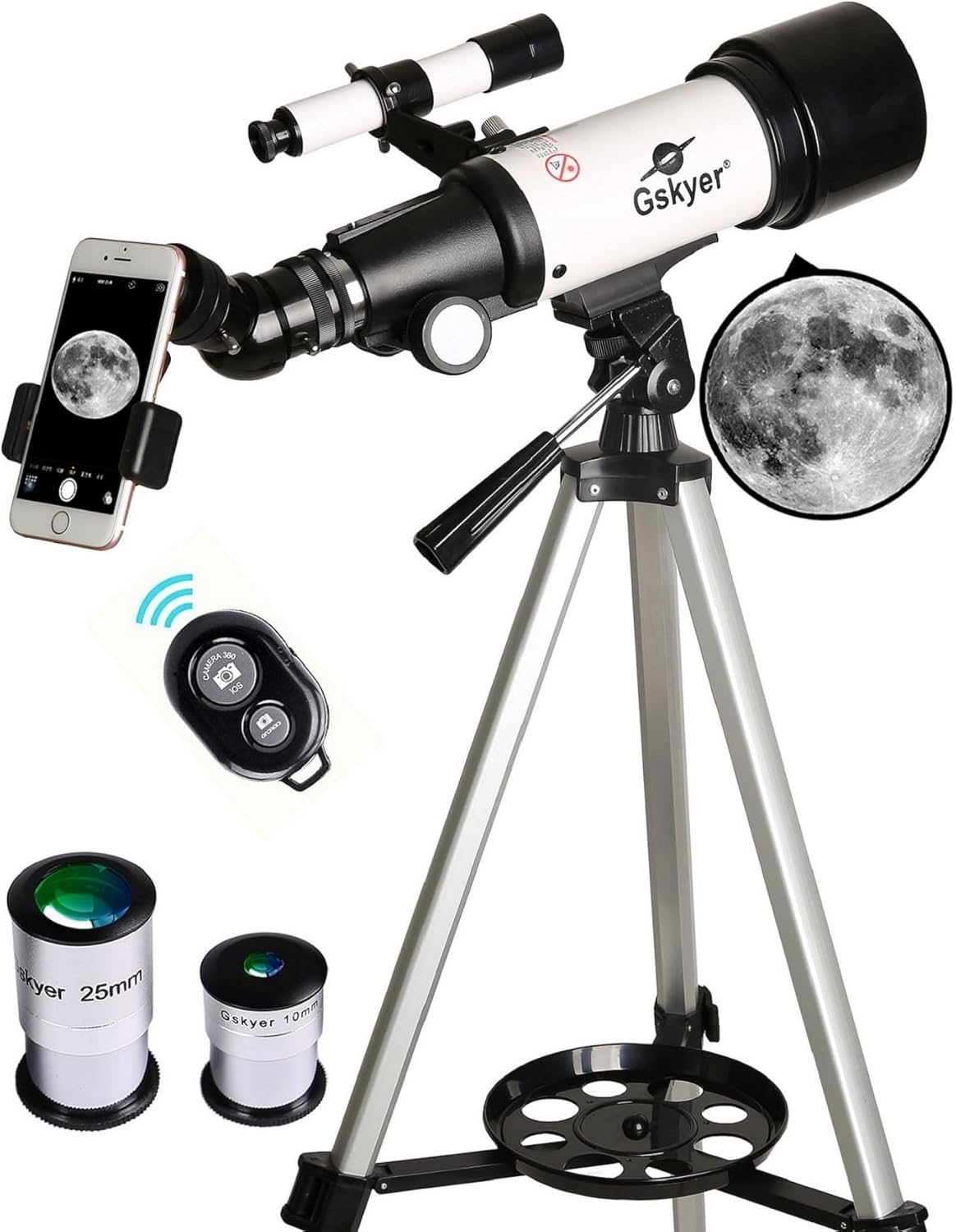
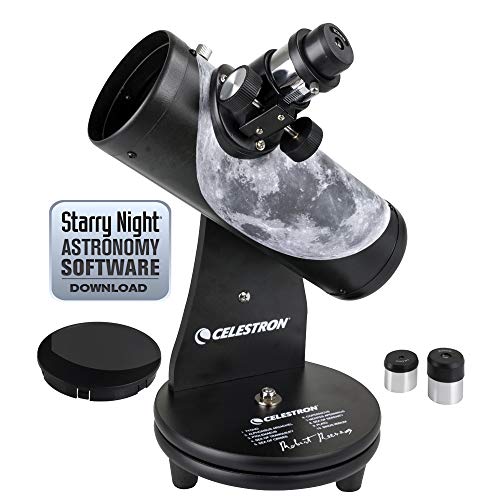
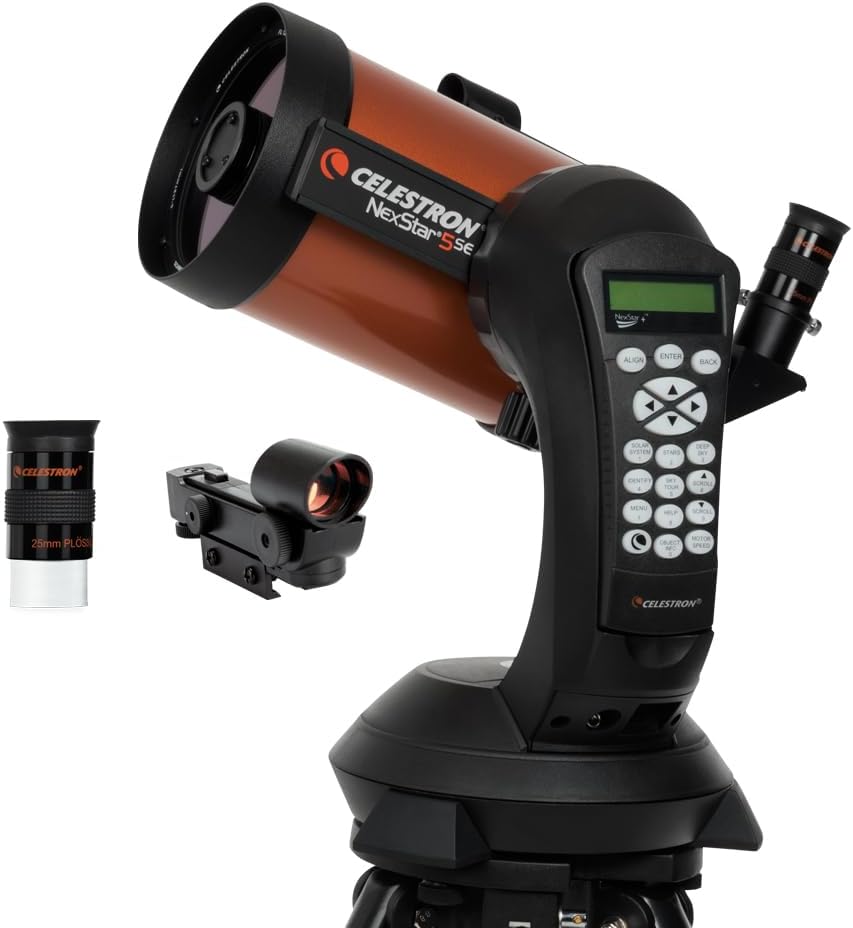
A child who just watched The Planets episode on Saturn, then goes outside and actually sees Saturn's rings through a telescope, has an experience they don't forget. The two activities reinforce each other completely. You don't need an expensive telescope - a basic 70mm refractor handles Saturn, the Moon, and Jupiter's moons easily.
Related: Best Telescopes for Kids
Download a star map app
Stellarium (free) and SkySafari (paid, worth it) both let kids point a phone at the sky and see what they're looking at. After watching Apollo's New Moon, finding the actual Sea of Tranquility on the Moon through an app bridges the gap from screen to sky immediately.
Visit a planetarium
Most cities have a planetarium with shows updated annually. After a documentary marathon, a live planetarium show hits completely differently. Many planetariums also run free public nights with amateur astronomers' telescopes set up outside.
Read alongside watching
For kids ages 8-12: "National Geographic Kids Space Atlas" and "Professor Astro Cat's Frontiers of Space" pair well with most of the documentaries on this list. They cover the same topics in more detail and give kids something to return to between episodes.
Frequently Asked Questions
What is the best space documentary for young kids?
For ages 4-7, StoryBots: Our Universe (Netflix) and Ready Jet Go! (PBS Kids, free) are the best starting points. They use bright visuals, simple language, and actual scientists to explain the solar system in a format young children can follow. For slightly older kids (7-9), One Strange Rock on Disney+ is a significant step up in production quality without becoming too complex.
Are space documentaries educational for kids?
Yes, consistently. Space documentaries build science vocabulary, introduce STEM concepts visually, and spark curiosity that carries into school. Research on informal science learning shows that children who engage with quality science media score higher on science tests and are more likely to pursue STEM subjects. The key variable is quality: productions by NASA, BBC, PBS, and National Geographic maintain scientific accuracy. Lower-budget productions are inconsistent.
Where can I find free space documentaries for kids?
NASA's YouTube channel (search "NASA Kids") is the best free source. PBS LearningMedia has full episodes of many Nova and Nature series at no cost. Kurzgesagt and SciShow Space on YouTube are free, ad-supported, and consistently accurate. For older series, Tubi (free with ads) carries a large archive of space documentaries including older BBC and National Geographic titles.
What age are space documentaries appropriate for?
Animated space series designed for children work from age 3-4. Nature-style documentary formats generally work from age 7-8 onward. Adult series like Cosmos: A Spacetime Odyssey and One Strange Rock are appropriate from age 10-11 without any content concerns. The limiting factor is attention span and vocabulary, not content - space documentaries rarely contain anything inappropriate for children.
The Bottom Line
The best space documentary for your kid is the one matched to where they are right now. A 5-year-old needs Ready Jet Go! not Cosmos. A 12-year-old who already knows the planets needs Cosmos: A Spacetime Odyssey, not StoryBots. The age tiers above give you a clear path from first exposure to serious astronomy knowledge.
And when the credits roll, that's when it gets interesting. Pair any of these with a clear night and even a basic telescope, and you've turned a passive viewing experience into something they'll remember for years.
See also: 33 Best Space Documentaries for Adults | Best Space Movies for Kids | Free Space Documentaries Online