Flying or backpacking? Choose a compact refractor. Driving to a dark site? Choose a tabletop Dobsonian or SCT. Buying for kids? Choose something app-guided or very simple. Planning astrophotography? Prioritize the mount and optical quality over raw aperture.
Every recommendation below focuses on current, practical travel-friendly gear, with an Amazon card included so you can quickly check specs, pricing, and availability.
- Best simple travel scope: Celestron Travel Scope 80
- Best compact reflector: Orion StarBlast 4.5
- Best family-friendly app-guided scope: Celestron StarSense Explorer LT 80AZ
- Best serious all-rounder: Celestron NexStar 6SE
- Best deep-sky road-trip scope: Celestron StarSense Explorer 8-inch Dobsonian
- Best travel astrophotography tube: Sky-Watcher EvoStar 72 APO
For most people, that means choosing one of three paths: a lightweight refractor for easy trips, a tabletop Dobsonian for maximum aperture in a compact body, or a compact GoTo telescope when you want help finding targets. This guide keeps the choices practical and beginner-friendly.
A good travel telescope is not just a small telescope. It is a telescope you will actually bring with you, set up quickly, and enjoy using when the sky is dark.
| If you want... | Start with... | Why |
|---|---|---|
| Beginner backpack trips | Celestron Travel Scope 80 | Light refractor |
| Best compact tabletop | Orion StarBlast 4.5 | More aperture in a small body |
| Kids and families | StarSense Explorer LT 80AZ | Phone-guided finding |
| Adult all-rounder | Celestron NexStar 6SE | Compact GoTo SCT |
| Planets | Celestron NexStar 127SLT | High-power Mak design |
| Deep sky by car | StarSense Explorer 8-inch Dobsonian | Big aperture with guidance |
| Travel imaging | Sky-Watcher EvoStar 72 APO | Small APO refractor |
Quick Picks by Travel Style
Best travel telescope for beginners
The best travel telescope for beginners offers a user-friendly and accessible introduction to the world of astronomy. These telescopes are designed with simplicity in mind, providing easy setup, intuitive controls, and clear instructions.
They typically have a good balance between portability and performance, allowing beginners to easily explore celestial objects.
Here are some of them:
1. Celestron Travel Scope 80
- Best for: beginners, carry-on style trips, casual Moon viewing
- Travel style: Backpack or car camping
- Keep in mind: Keep expectations realistic on faint galaxies. This is a portable refractor, not a deep-sky light bucket.
The Travel Scope 80 is the easiest recommendation if you want a true grab-and-go telescope. It is light, simple, and forgiving, which matters when you are setting up at a campsite, balcony, beach house, or roadside dark-sky stop. The 80mm aperture gives you better lunar and bright-cluster views than tiny 50mm or 60mm kits while staying compact enough to pack without planning your whole trip around it.
If you are buying your first travel telescope, start here unless you already know you want more aperture or GoTo tracking.
2. Orion StarBlast 4.5 Astro Reflector
- Best for: wide-field views, kids with adults, dark-sky weekends
- Travel style: Tabletop car travel
- Keep in mind: Needs a stable table, bench, or crate. It is not ideal if you only have uneven ground.

The StarBlast 4.5 is one of the rare beginner scopes that feels small but performs like a real telescope. The tabletop design keeps the mount steady, the wide field makes targets easier to find, and the 4.5-inch mirror shows more than typical starter refractors. It is especially good for the Moon, open clusters, the Orion Nebula, and casual sweeping under dark skies.
3. Gskyer 70mm AZ Telescope
- Best for: low-cost first telescope, lunar viewing, family trips
- Travel style: Lightweight grab-and-go
- Keep in mind: The mount is basic. Use lower magnification for steadier views.
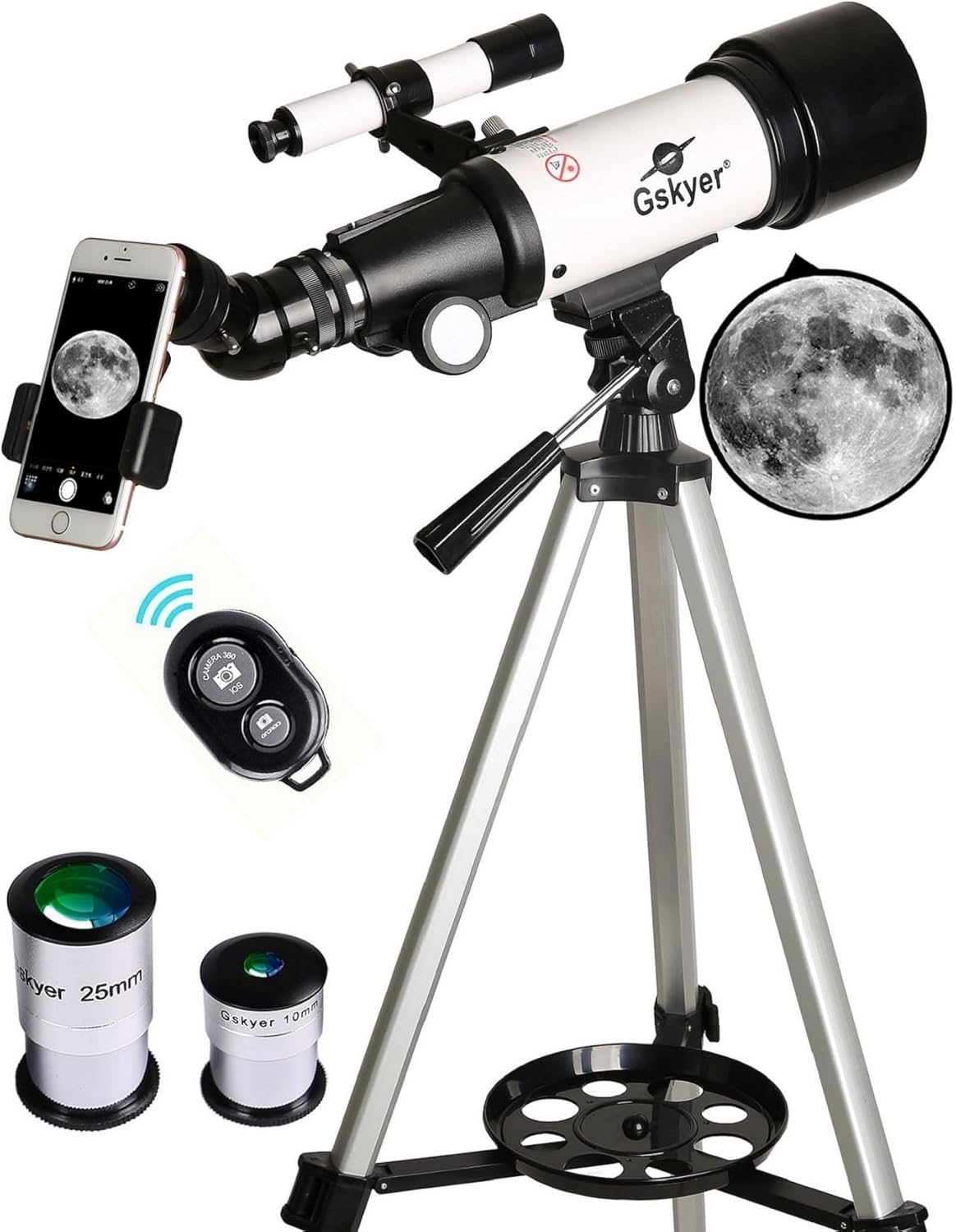
The Gskyer 70mm AZ is the budget-friendly pick for someone who wants a simple refractor without overthinking the purchase. It is light, affordable, and easy to carry, which is exactly what many first-time travelers need. Use it for the Moon, Jupiter's moons, Saturn at modest magnification, and brighter star clusters.
Best travel telescopes for stargazing overall
The best travel telescopes for stargazing excel in providing impressive views of celestial wonders during stargazing sessions. Consider factors such as aperture size, optical design, mount type, and portability when choosing the best travel telescope for your stargazing adventures.
Here are some recommended options:
4. Celestron NexStar 5SE
- Best for: travelers who want GoTo without a large tube
- Travel style: Car travel, cabins, small patios
- Keep in mind: Bring external power for long sessions. AA batteries drain quickly.
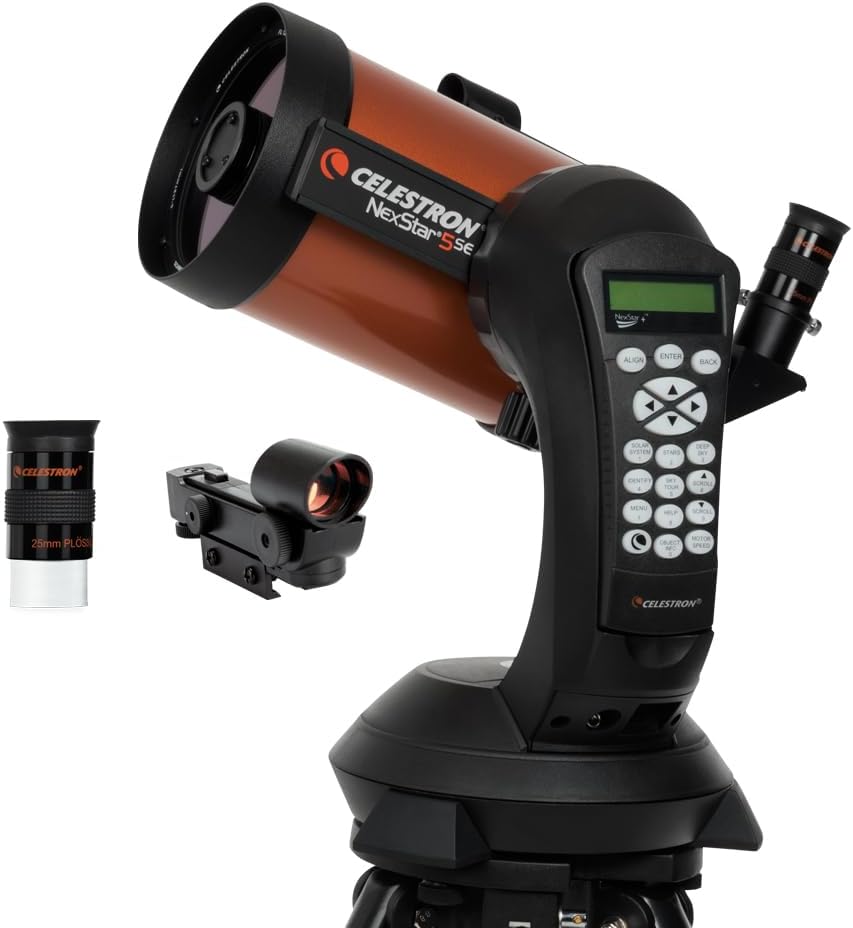
The NexStar 5SE is a strong travel pick when you want computerized pointing in a genuinely compact package. The 5-inch Schmidt-Cassegrain tube is short, protected, and easy to move, but it still has enough aperture to make planets and brighter deep-sky objects rewarding. If you want one travel telescope that feels serious without becoming bulky, this is the clean middle ground.
5. Sky-Watcher Virtuoso GTi 150P
- Best for: maximum visual performance in a compact setup
- Travel style: Tabletop car travel
- Keep in mind: Open truss design benefits from a shroud in bright or dusty locations.
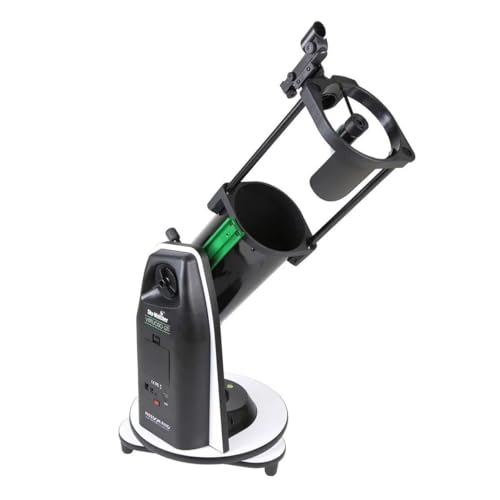
The Virtuoso GTi 150P is the aperture bargain in this list. Its collapsible tabletop Dobsonian design gives you a 150mm mirror in a package that is much easier to transport than a full-height Dob. Under dark skies, that extra aperture makes a real difference on nebulae, globular clusters, and galaxies. It is not a backpack scope, but it is excellent for road trips.
This is the kind of telescope that benefits most from a real dark-sky location, so it is ideal for weekend trips outside the city.
6. Celestron NexStar 90SLT
- Best for: Moon, planets, double stars, compact GoTo observing
- Travel style: Small car travel and balcony use
- Keep in mind: Narrower field of view makes it less suited to large nebulae and wide star fields.
The NexStar 90SLT is compact, computerized, and naturally suited to high-contrast targets. The small Maksutov-style optical tube travels well and gives crisp views of the Moon, Saturn, Jupiter, and bright double stars. It is a good choice if your travel observing is mostly planetary and you want help finding targets.
Best travel telescopes for astrophotography
The best travel telescopes for astrophotography combine portability and excellent imaging capabilities, allowing enthusiasts to capture stunning celestial images while on the go.
These telescopes are designed with features specifically tailored for astrophotography, such as wide apertures, low-dispersion glass, and precise tracking mounts.
Capture beautiful celestial images with your DSLR camera using compatible telescope adapters.
Below are some top choices:
7. Celestron Advanced VX 8" EdgeHD
- Best for: astrophotographers driving to dark-sky sites
- Travel style: Car travel with planned setup time
- Keep in mind: Too heavy for casual trips. Buy this for imaging intent, not spontaneous stargazing.
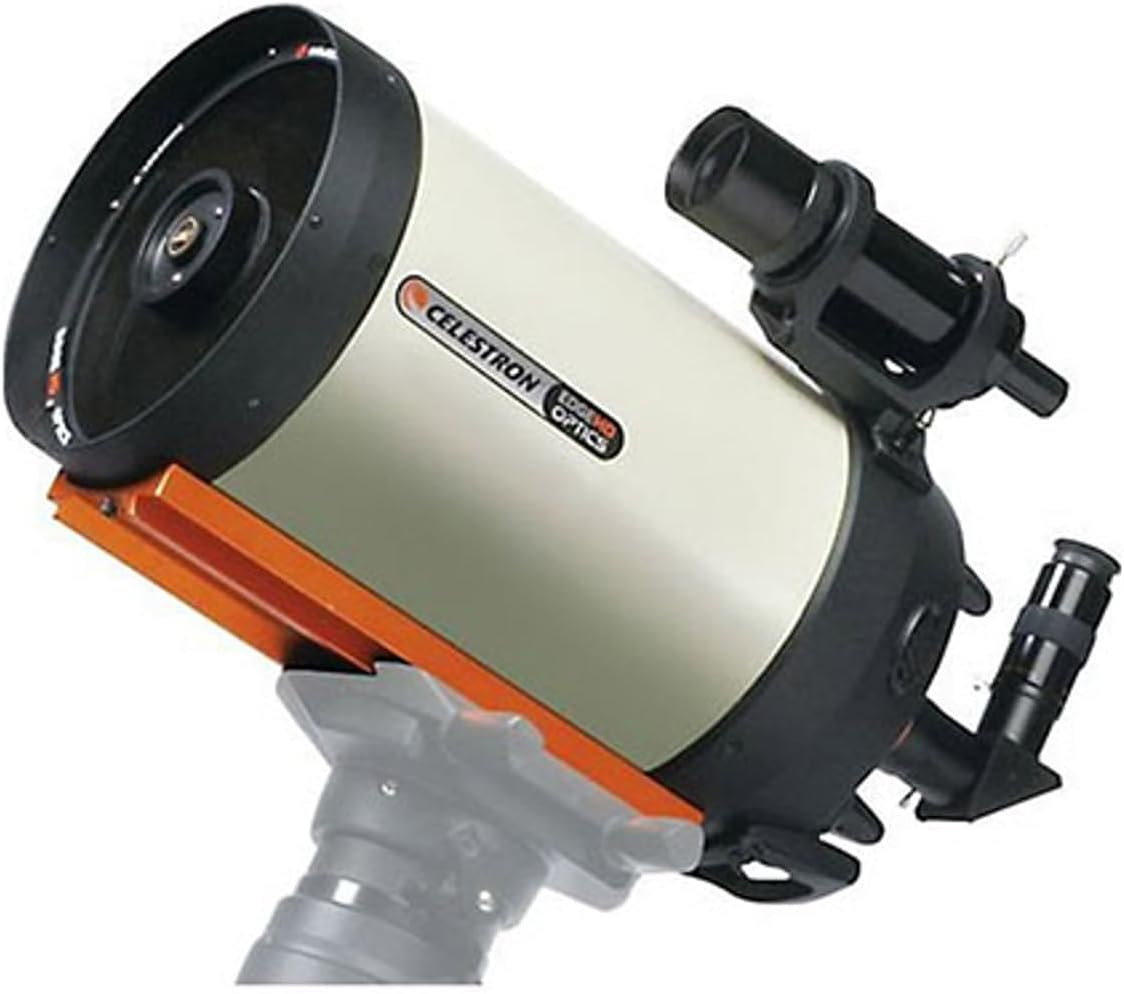
The Advanced VX 8-inch EdgeHD is the serious imaging pick here. It is not backpack-light, but it gives you a real equatorial mount and an optical tube capable of sharp planetary and deep-sky work. Choose it if your idea of travel astronomy means driving to a dark site, polar aligning carefully, and spending the night collecting data.
8. Sky-Watcher Evostar 80 APO
- Best for: wide-field astrophotography, clean star color, portable imaging
- Travel style: Mount-and-tripod travel kit
- Keep in mind: Optical tube only. You still need a suitable mount, diagonal or camera train, and accessories.
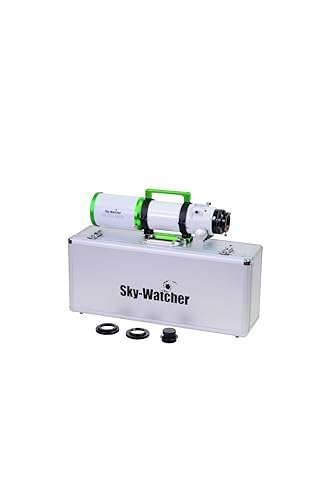
The Evostar 80 APO is a compact ED refractor for travelers who care about image quality. It is sharp, portable, and much easier to mount than larger imaging scopes. For wide-field nebulae, star fields, Andromeda, and lunar photography, an 80mm ED refractor is one of the most practical travel choices.
9. Sky-Watcher EvoStar 72 APO
- Best for: lightweight imaging, compact travel kits, wide fields
- Travel style: Airline-friendly optical tube
- Keep in mind: Small aperture means less reach on faint visual targets.
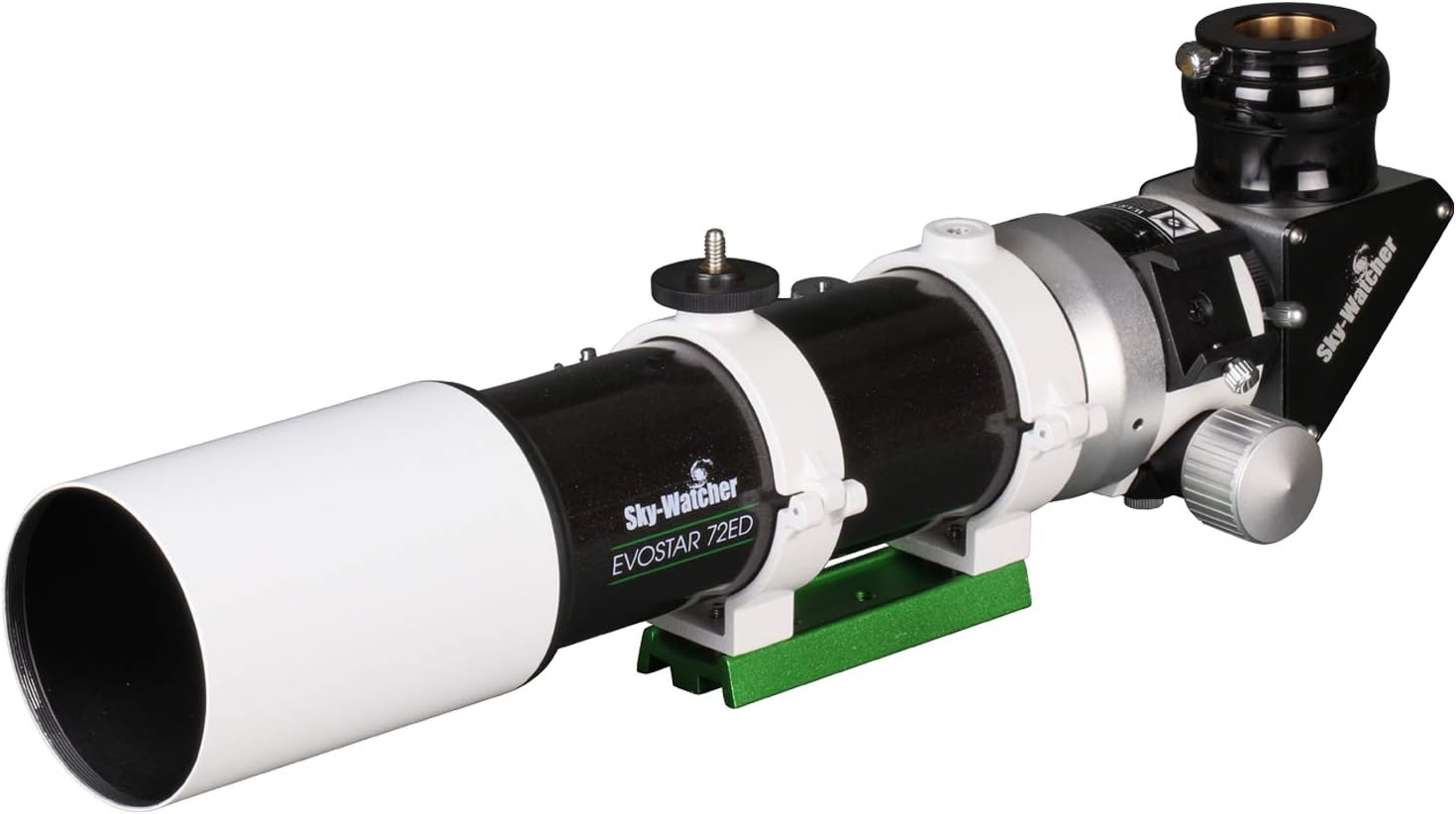
The EvoStar 72 APO is the smaller, more travel-focused refractor pick. It gives up some aperture compared with an 80mm or 100mm refractor, but the compact tube is easier to pack, easier to mount, and easier to balance. It is a smart choice for photographers who want clean stars without hauling a large rig.
Best travel telescopes for kids
The best travel telescope for kids combines user-friendly features, durability, and educational value, providing young astronomers with an exciting and immersive stargazing experience.
They spark curiosity, encourage exploration, and create unforgettable astronomical memories for budding young astronomers.
Here are some telescopes to consider:
10. Celestron PowerSeeker 70EQ
- Best for: kids, Moon viewing, low-risk first telescope
- Travel style: Light car travel
- Keep in mind: The equatorial mount has a learning curve. Keep magnification modest at first.
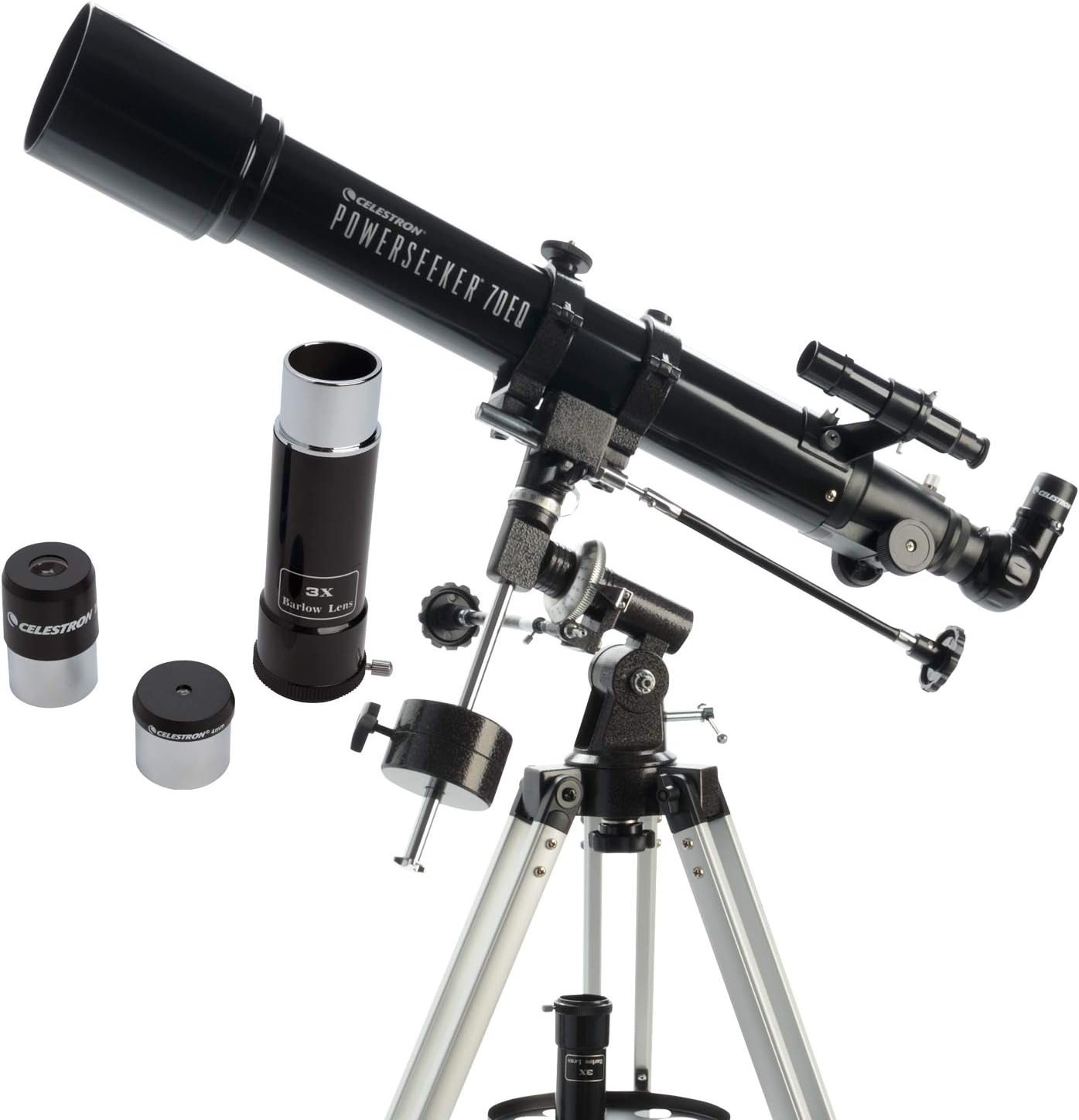
The PowerSeeker 70EQ is a low-cost refractor that works best as a first step into astronomy. It is not a premium instrument, but it is affordable, approachable, and capable of showing the Moon, Jupiter's moons, Saturn's shape, and bright clusters. For kids, the most important feature is that it can start the habit without a big upfront investment.
11. Celestron StarSense Explorer LT 80AZ
- Best for: families, kids who need help finding targets
- Travel style: Simple tripod travel
- Keep in mind: Requires a compatible phone for the StarSense experience.
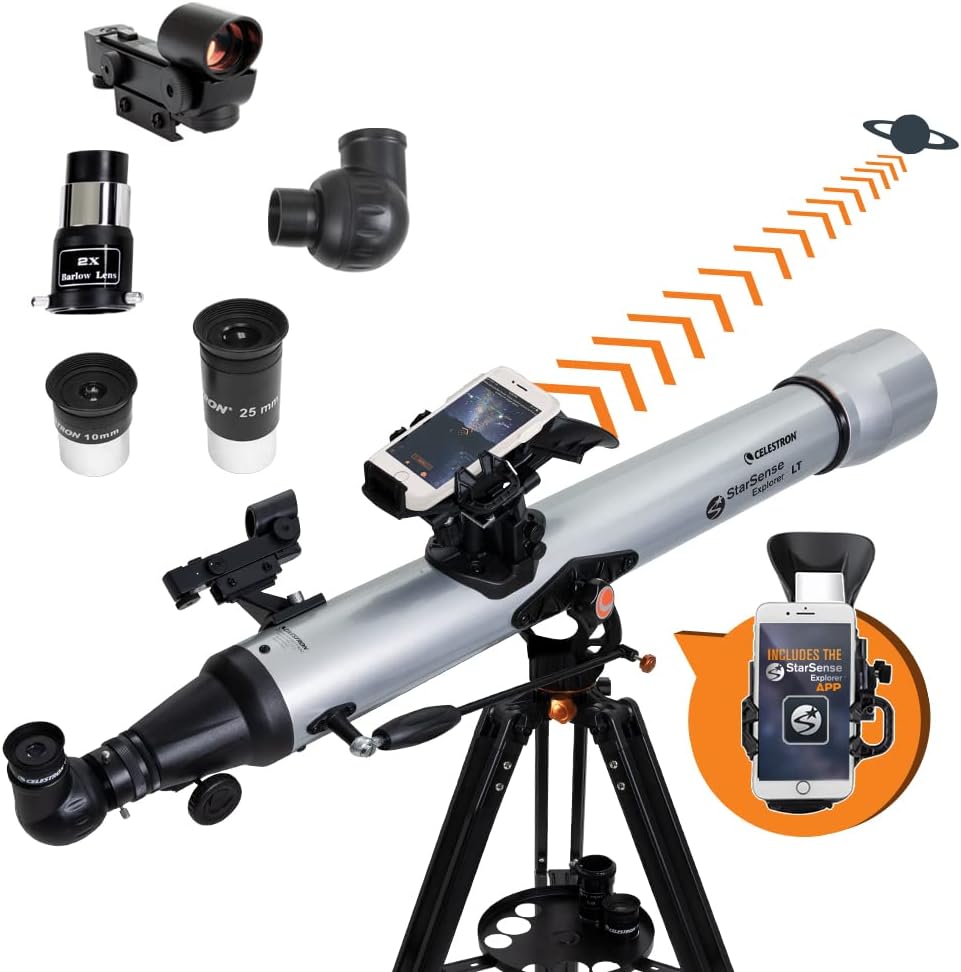
The StarSense Explorer LT 80AZ is one of the easiest family travel scopes because the phone-guided system solves the hardest beginner problem: finding things. Instead of randomly sweeping the sky, kids can follow arrows on the app and land on real targets. That makes early sessions more successful and much less frustrating.
Best travel telescopes for adults
The best travel telescope for adults empowers experienced astronomers to explore the night sky with enhanced clarity and convenience, enabling them to delve deeper into the wonders of the universe.
12. Celestron NexStar 6SE
- Best for: one serious travel telescope for planets and deep sky
- Travel style: Car travel and home use
- Keep in mind: More expensive than beginner scopes, but much more capable.
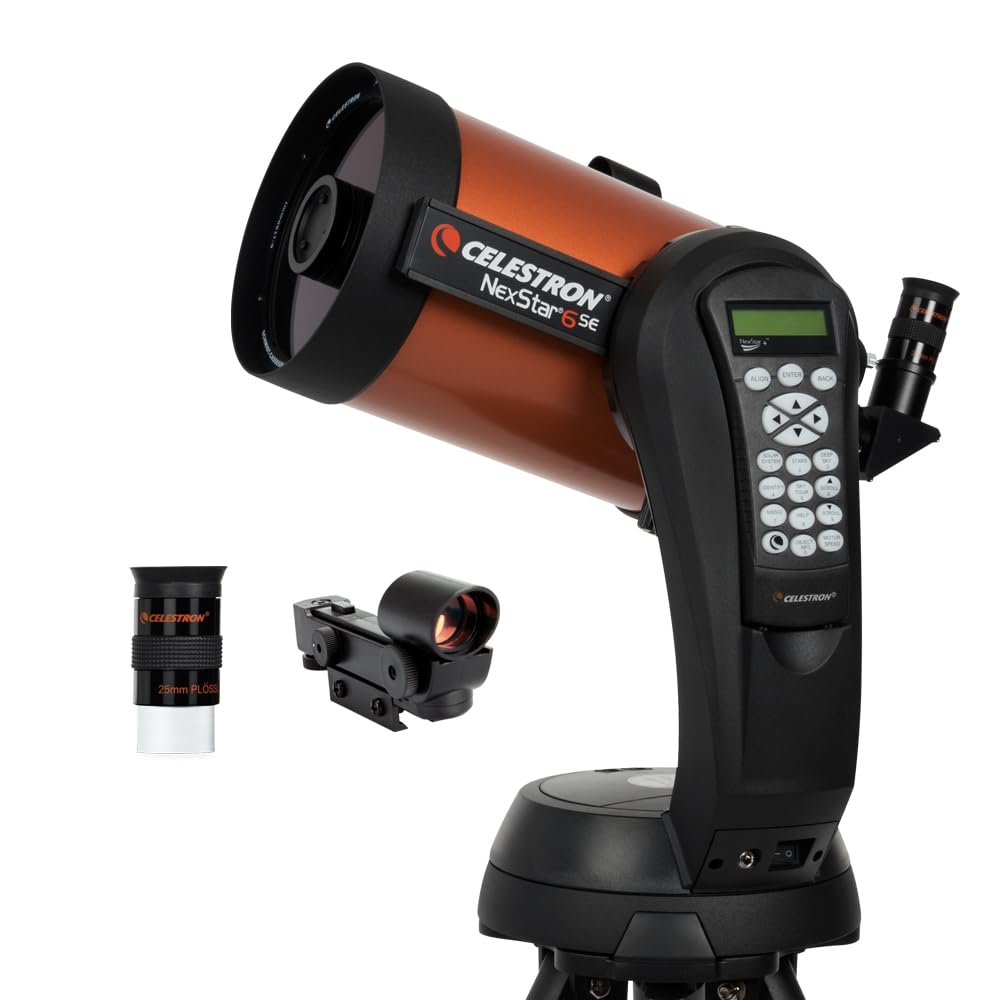
The NexStar 6SE is the adult travel telescope I would pick most often for car-based trips. It has enough aperture to make planets, globular clusters, nebulae, and brighter galaxies satisfying, but the optical tube is still compact and manageable. The GoTo mount also helps you make better use of limited dark-sky time.
It is the safest premium recommendation for someone who wants one telescope that can serve at home and on the road.
13. Celestron NexStar Evolution 8
- Best for: premium GoTo, built-in battery, high-end visual observing
- Travel style: Car travel, dark-sky rentals, serious home use
- Keep in mind: Costs more than the NexStar SE line, but the setup experience is cleaner.
The NexStar Evolution 8 is the premium version of the compact SCT idea. You get 8 inches of aperture, GoTo tracking, WiFi control, and a built-in battery, which makes setup away from home cleaner. It is a strong choice for adults who want a serious telescope that still fits into a practical travel routine.
Best Portable Telescopes for Planets and Galaxies
The best portable travel telescope for viewing planets and galaxies offers exceptional optics and portability, allowing astronomers to witness the beauty of celestial objects in remarkable detail.
These telescopes typically feature moderate to large apertures, enabling excellent light gathering for clear views of planets, moons, and distant galaxies.
Here some recommended options to consider:
14. Celestron NexStar 8SE
- Best for: maximum SCT aperture in a compact travel package
- Travel style: Car travel and backyard use
- Keep in mind: The single-arm mount is best for visual use and short planetary imaging, not long deep-sky exposures.
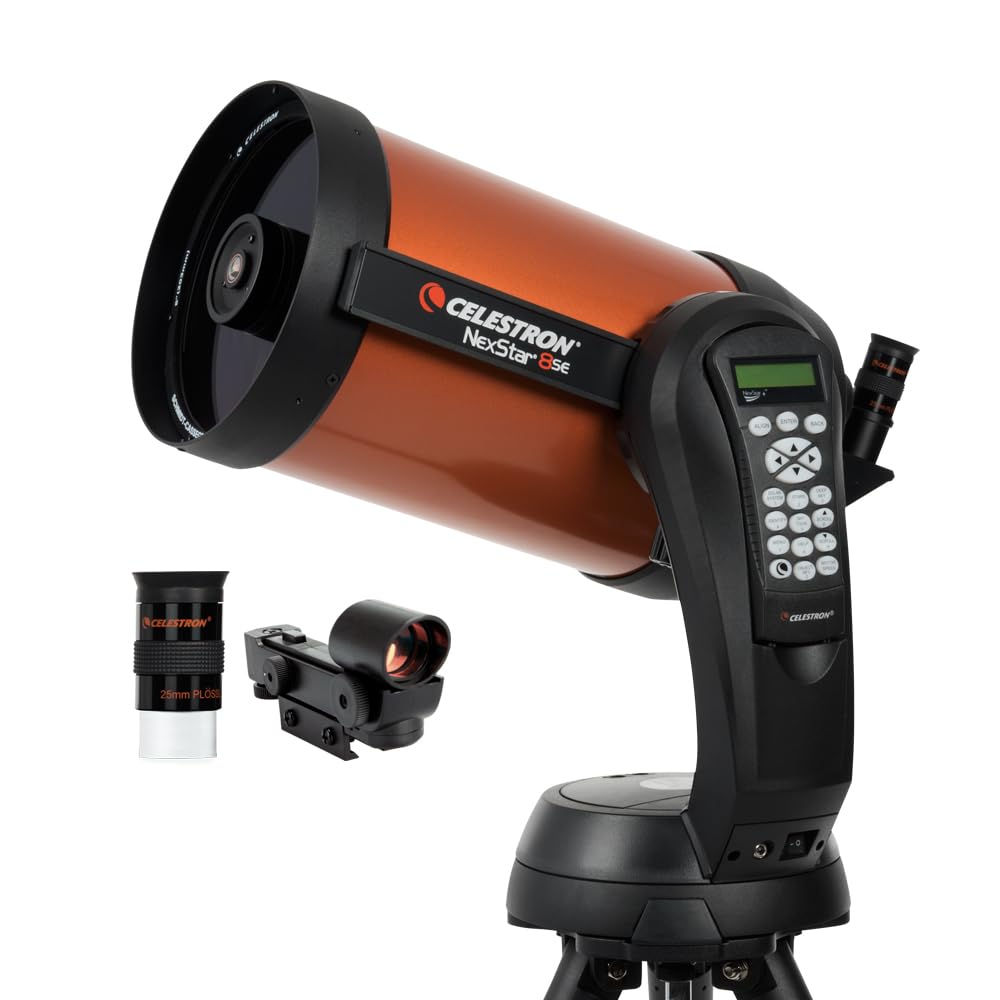
The NexStar 8SE gives you serious reach in a compact optical tube. The 8-inch aperture is obvious on Saturn, Jupiter, globular clusters, and brighter nebulae, yet the tube is still far easier to transport than a full-size Dobsonian. If you want the most visual power in Celestron's classic orange-tube travel format, this is the one.
For many observers, this is the upper limit of what still feels portable while delivering big-scope views.
15. Celestron NexStar 127SLT
- Best for: high-power lunar and planetary travel observing
- Travel style: Compact GoTo travel
- Keep in mind: Long focal length means narrow views. It is not the best choice for large star fields.
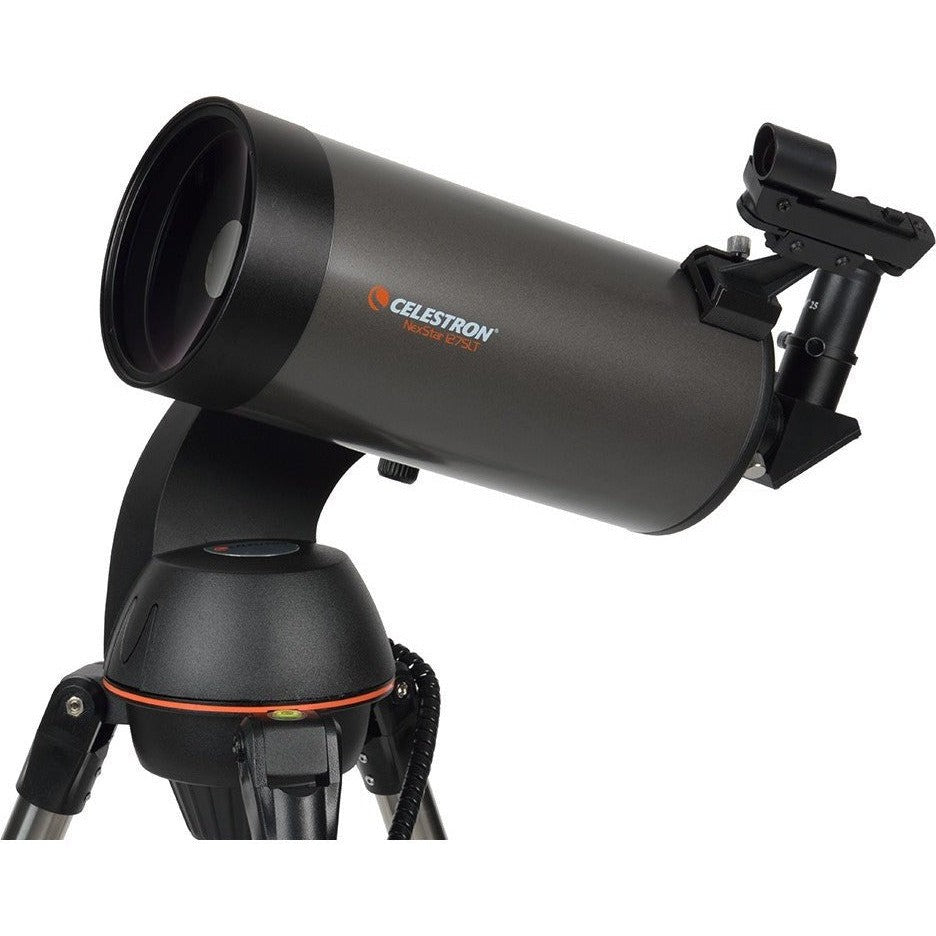
The NexStar 127SLT is a compact high-power telescope for people who mostly care about the Moon, planets, and double stars. The 127mm Maksutov-Cassegrain design is easy to transport and naturally comfortable at higher magnification. It is a strong travel choice when your target list is mostly bright, detailed objects.
16. SVBONY SV503 70ED Refractor
- Best for: budget ED optics, lunar viewing, casual imaging
- Travel style: Small optical tube kit
- Keep in mind: Often sold as an optical tube. Check what accessories are included before buying.
The SV503 70ED is a compact ED refractor for travelers who want cleaner optics than a basic achromat without paying premium APO prices. It is easy to carry, easy to mount, and useful for lunar viewing, wide-field observing, and casual imaging. For a small travel refractor, the ED glass is the main reason to consider it.
Best portable travel telescopes for camping
Portable telescopes are essential for on-the-go stargazing enthusiasts. These telescopes are specifically designed to be lightweight and easy to pack, making them convenient for camping trips.
They are often ruggedly built to withstand outdoor conditions and may come with protective carrying cases for added safety. Explore the night sky at a dark sky site. If you are observing the sun, safely observe it with a solar filter designed for your portable telescope.
Here are some of the best portable telescopes for your astronomical adventures:
17. Celestron Astro Fi 102
- Best for: camping groups, app control, casual guided observing
- Travel style: Car camping and patios
- Keep in mind: WiFi control is convenient, but practice setup at home before relying on it at a dark site.
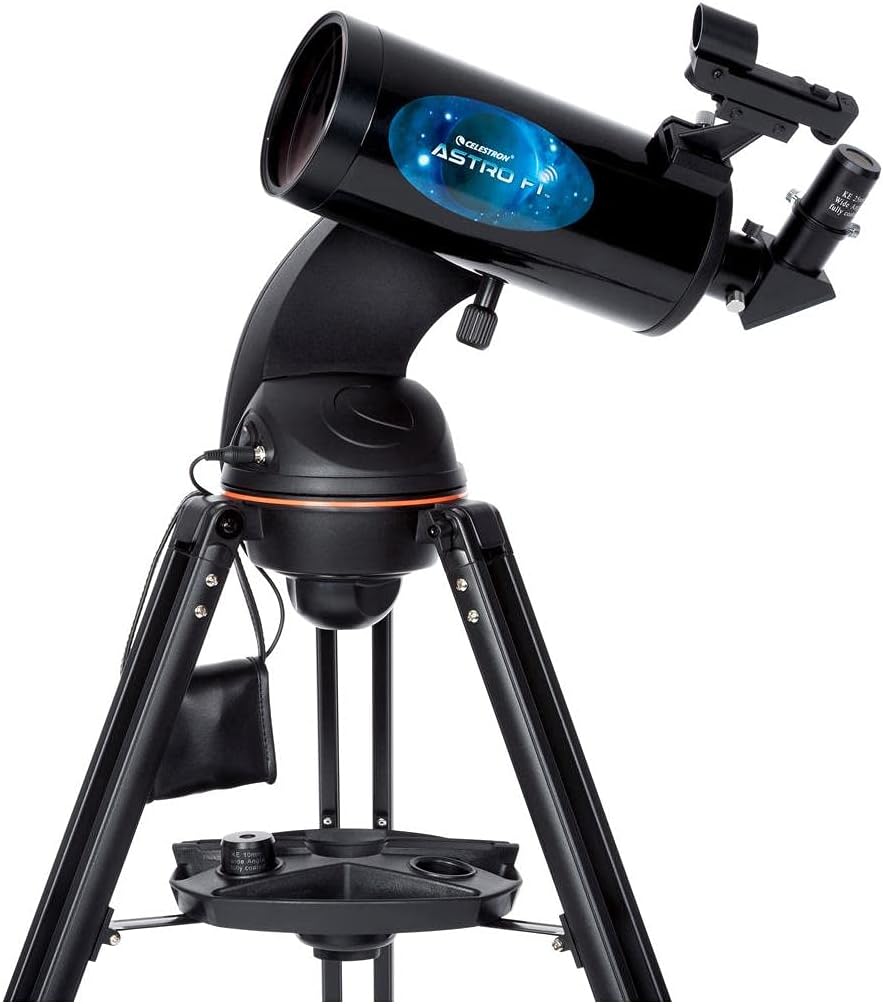
The Astro Fi 102 is a practical camping telescope because it combines a portable refractor with app-based GoTo control. That makes it easier for groups, families, and casual observers to move from target to target without spending the night star-hopping. The 102mm aperture also gives more satisfying views than the smallest travel refractors.
18. Celestron StarSense Explorer DX 130AZ
- Best for: campers who want aperture and easy finding
- Travel style: Tripod car camping
- Keep in mind: It aims with your phone but does not track, so bring the tripod and check phone fit before the trip.
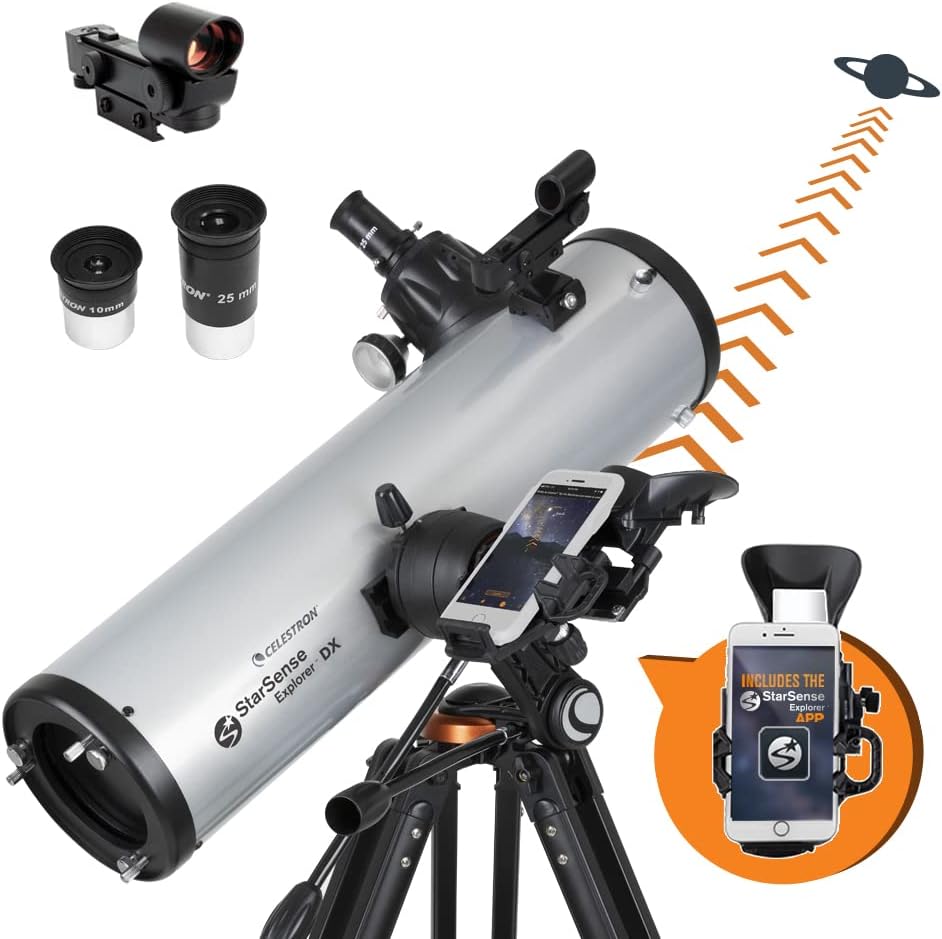
The StarSense Explorer DX 130AZ is a strong car-camping telescope because it combines a 130mm mirror with phone-guided navigation. The 130mm mirror brings in enough light for dark-sky objects, while StarSense makes finding those objects far easier. It is bulkier than a small refractor, but much more rewarding under a dark campground sky.
Best portable travel telescopes for deep space
The best portable travel telescopes for deep space exploration offer impressive optical performance and portability, allowing astronomers to observe distant galaxies, nebulae, and star clusters with remarkable clarity.
Here are some telescopes to consider:
19. Celestron StarSense Explorer 8-inch Dobsonian
- Best for: deep-sky visual observing with phone guidance
- Travel style: Large road-trip telescope
- Keep in mind: Big enough that storage and transport matter. Measure your vehicle space first.
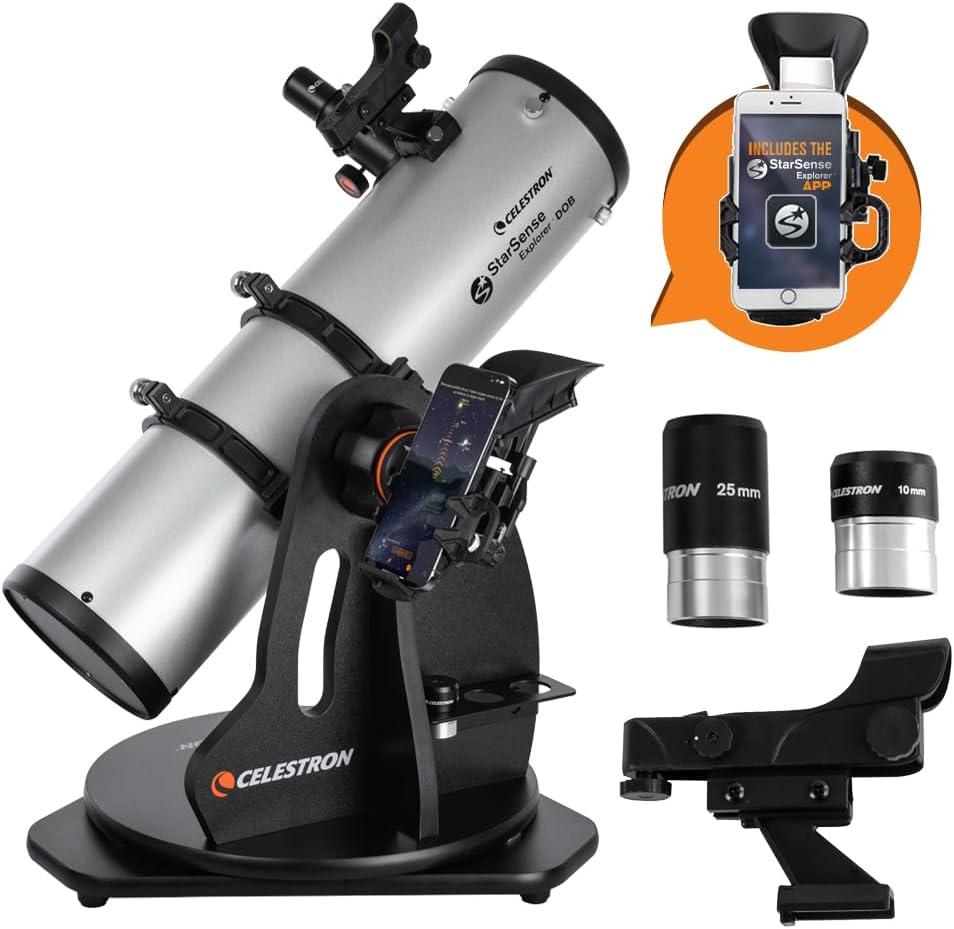
The StarSense Explorer 8-inch Dobsonian is for travelers who want deep-sky performance but still appreciate guidance. The 8-inch mirror is excellent on nebulae, galaxies, and globular clusters, and the StarSense system helps you find targets that would otherwise take patience and practice. It is a road-trip telescope, not a lightweight grab-and-go scope.
If you can transport the base and tube comfortably, this is one of the most rewarding travel-by-car options in the whole list.
20. Sky-Watcher GoTo Collapsible Dobsonian 8"
- Best for: deep-sky observing, groups, tracking at dark sites
- Travel style: Collapsible car-travel Dob
- Keep in mind: More moving parts and power needs than a manual Dobsonian.
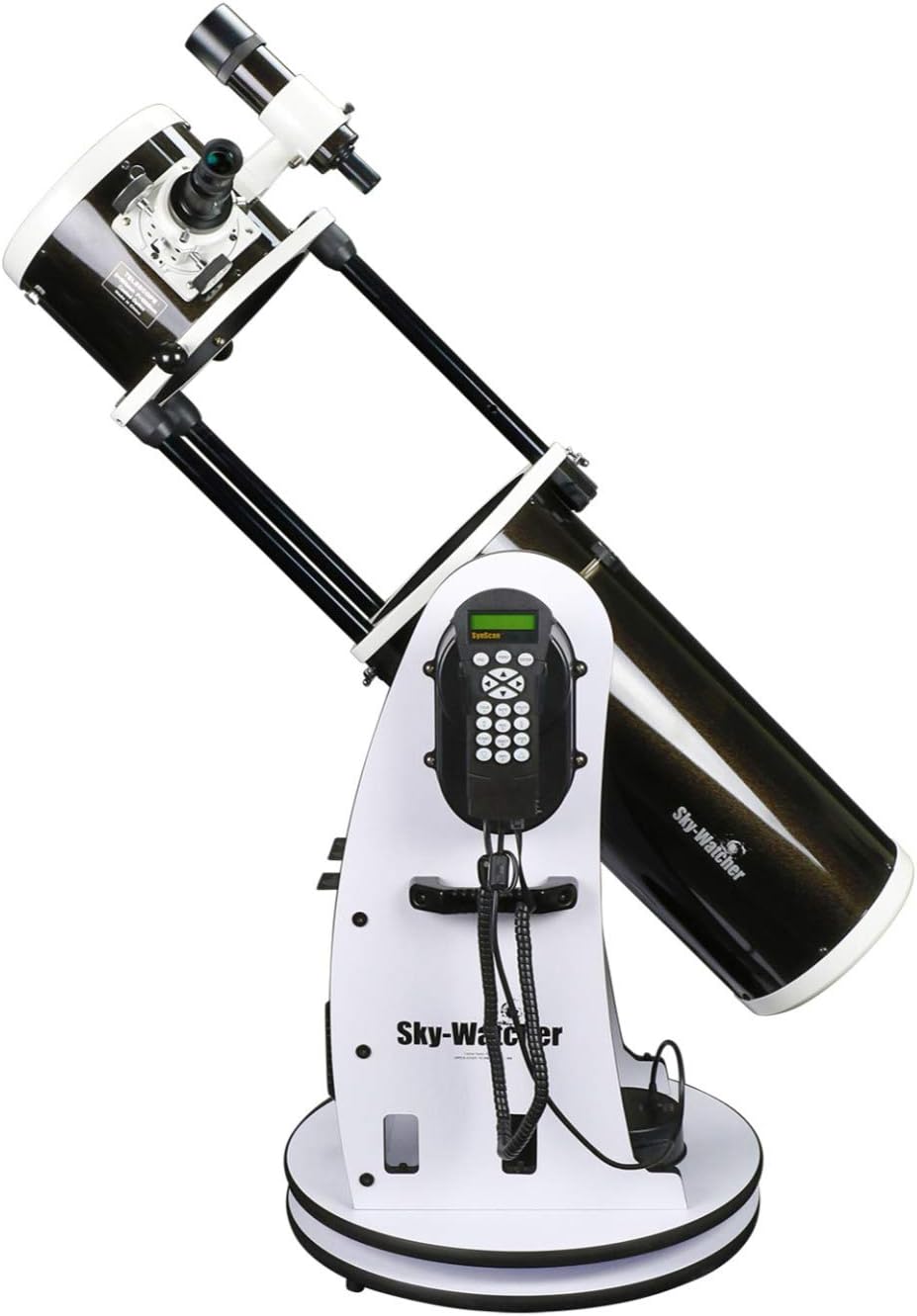
The Sky-Watcher GoTo Collapsible Dobsonian 8-inch is a powerful visual telescope for car-based dark-sky trips. The collapsible tube saves space compared with a solid-tube Dob, and GoTo tracking keeps objects centered while other people take turns at the eyepiece. It is especially useful for outreach-style nights and group observing.
21. Celestron StarSense Explorer DX 102AZ
- Best for: simple refractor travel with app guidance
- Travel style: Tripod-based car travel
- Keep in mind: A 102mm refractor is easy to use, but it will not match an 8-inch Dobsonian on faint galaxies.
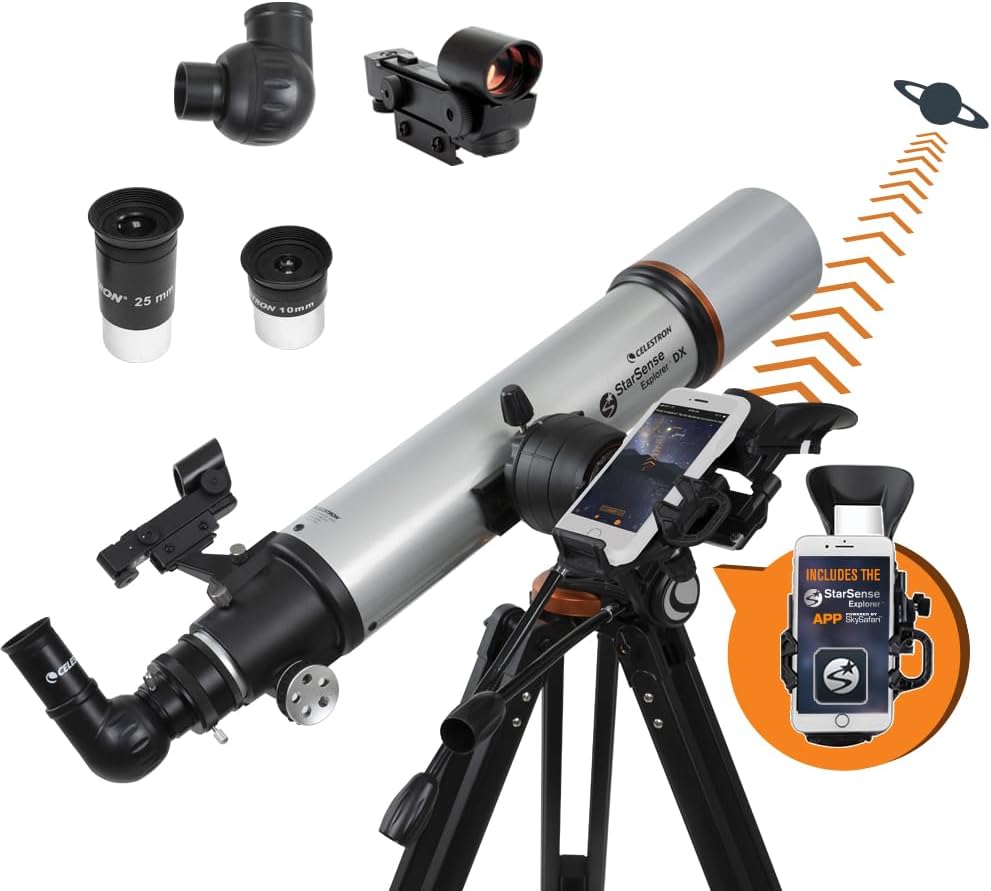
The StarSense Explorer DX 102AZ is a friendly travel refractor with enough aperture to be useful on the Moon, planets, clusters, and brighter nebulae. The app-guided system makes the telescope easier for beginners, and the refractor design keeps maintenance low. It is one of the better choices if you want simple setup over maximum aperture.
Best Cheap Travel Telescopes for Deep Space
The best cheap travel telescopes for deep space exploration offer an affordable yet capable option for aspiring astronomers on a budget.
These telescopes balance affordability and performance, allowing users to delve into the wonders of deep space without breaking the bank.
Here are some recommended options:
22. Celestron AstroMaster 130EQ
- Best for: budget aperture, clusters, brighter nebulae
- Travel style: Car travel with setup practice
- Keep in mind: The equatorial mount takes practice. Learn it at home before a trip.
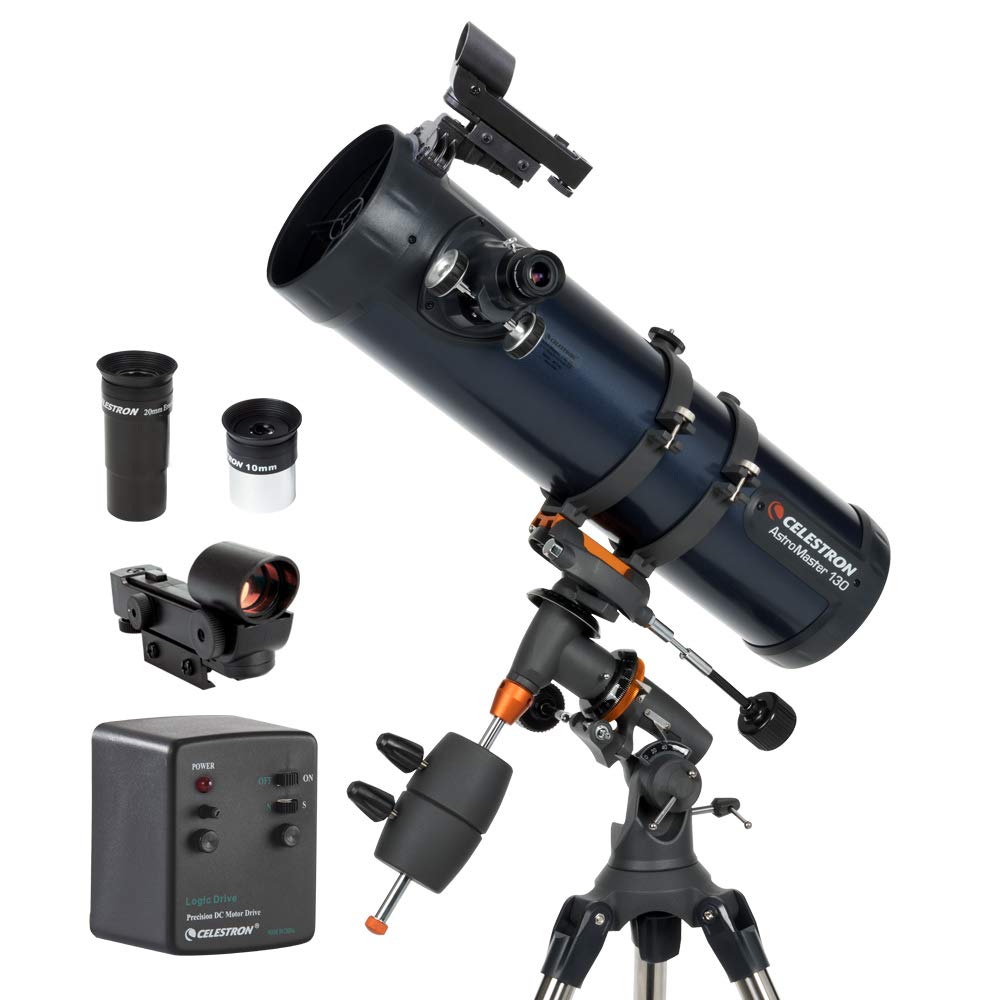
The AstroMaster 130EQ is a budget 130mm Newtonian that can do well under dark skies if you are willing to learn the mount. The aperture is useful on clusters, the Orion Nebula, and brighter galaxies, and the short tube is easier to move than many larger reflectors. It is not as effortless as a tabletop Dob, but it offers a lot of light gathering for the money.
23. Gskyer 600x90mm AZ Refractor
- Best for: budget lunar and planetary viewing with a little more aperture
- Travel style: Simple tripod travel
- Keep in mind: Use a sturdy surface and avoid pushing magnification too high.
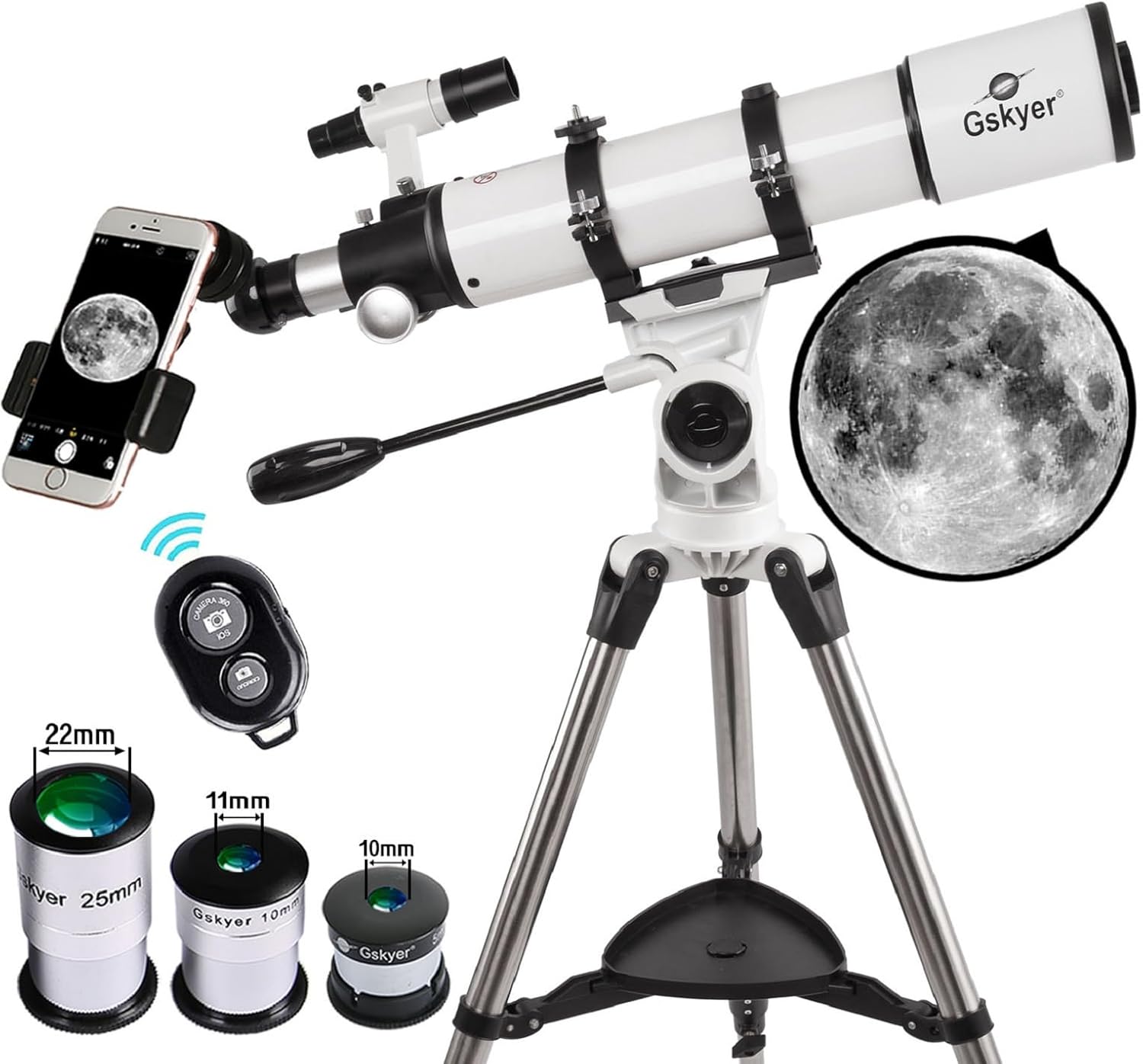
The Gskyer 600x90mm AZ is a budget refractor with more aperture than common 70mm starter scopes. That extra aperture helps on the Moon, planets, and bright clusters, while the alt-az mount keeps operation simple. It is a reasonable choice for casual travelers who want a low-cost scope that still feels more capable than a toy.
24. Orion SpaceProbe 130ST
- Best for: budget reflector users who want a shorter optical tube
- Travel style: Car travel and home use
- Keep in mind: Reflectors need occasional collimation, especially after travel.
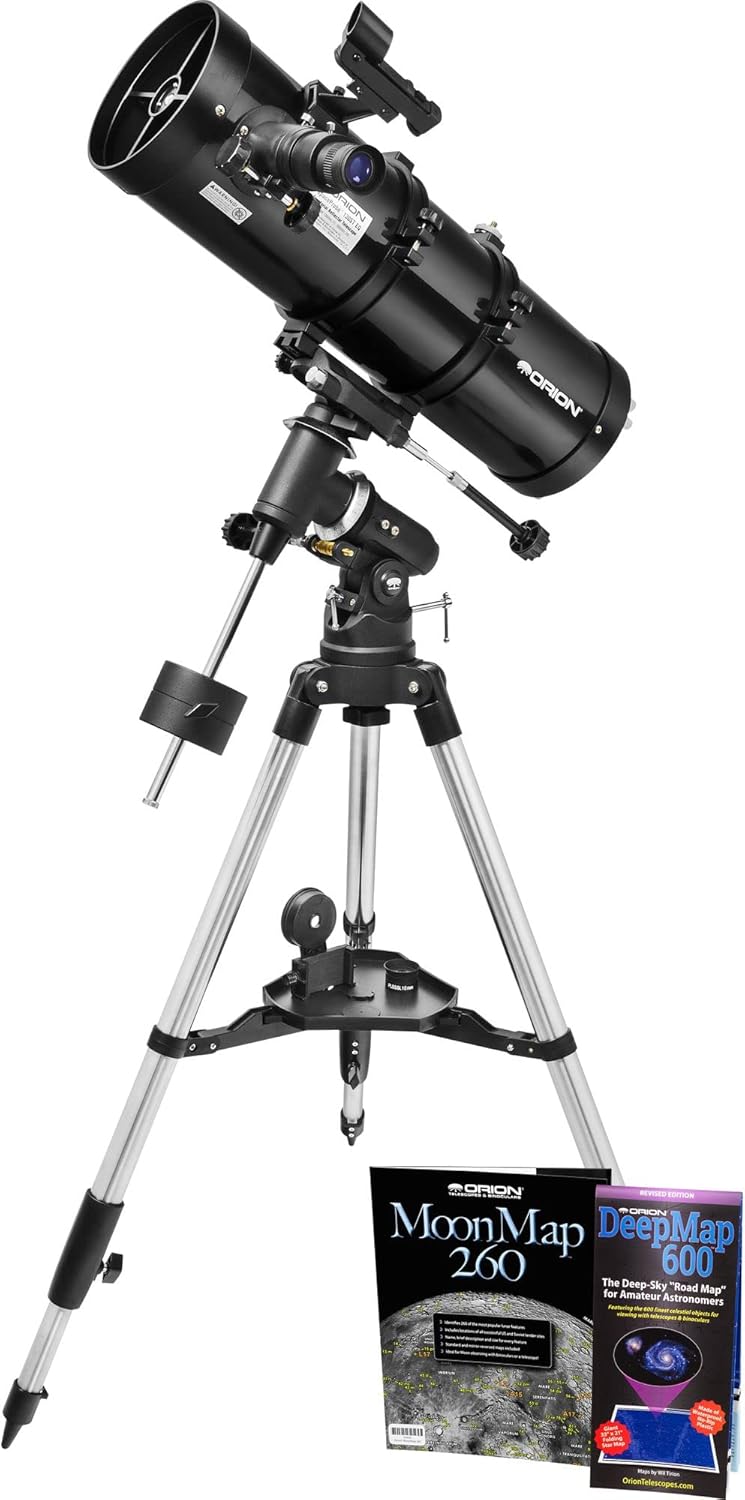
The SpaceProbe 130ST is a compact Newtonian reflector with enough aperture for satisfying beginner deep-sky sessions. The shorter tube is easier to transport than many full-length 130mm scopes, and the equatorial mount can track objects manually once you learn it. It is a good fit for budget-minded observers who do not mind a little setup.
25. Celestron 114LCM
- Best for: budget GoTo, beginners who want help finding targets
- Travel style: Small computerized car-travel setup
- Keep in mind: Smaller aperture than the 130mm and 150mm reflectors, but easier for guided target finding.
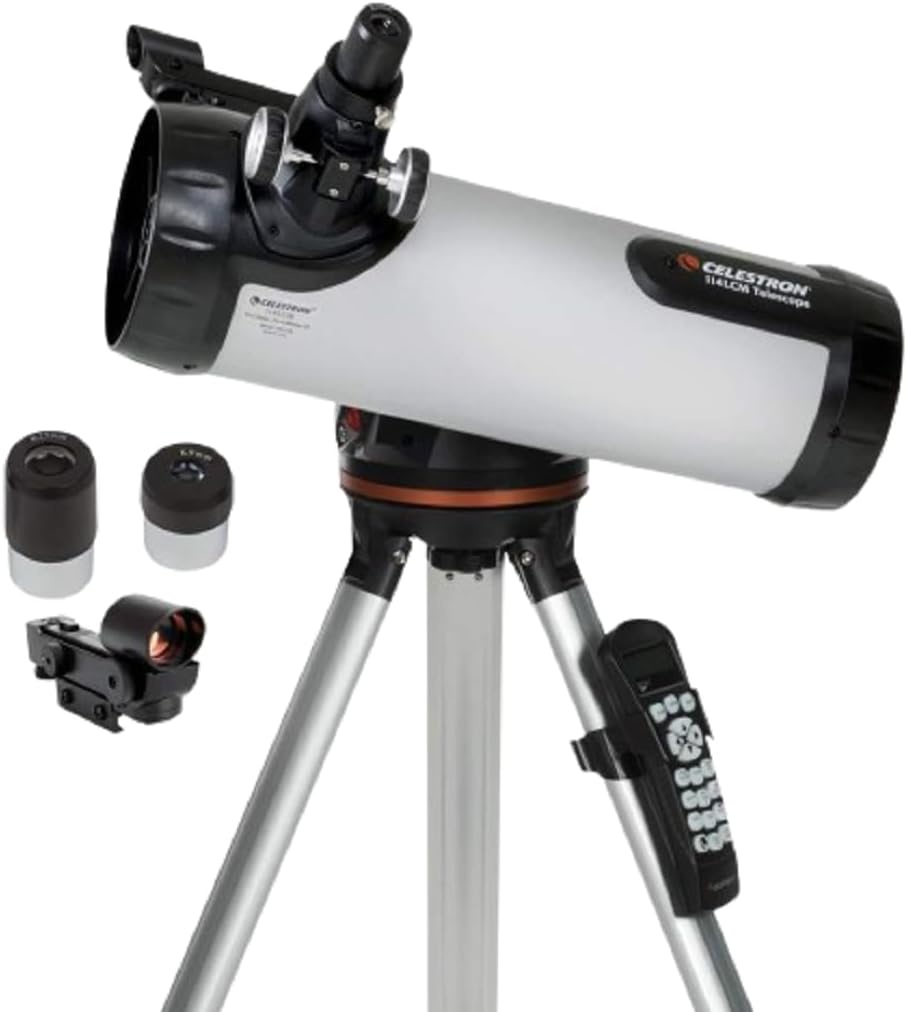
The 114LCM is the budget computerized option for travelers who want help finding targets without jumping to a NexStar SE. It gives beginners GoTo functionality in a small reflector package, which can make short observing sessions more productive. It is best for the Moon, planets, bright clusters, and learning the sky with electronic assistance.
- For flights, choose a small refractor or compact optical tube.
- For car camping, tabletop Dobsonians give the best views per dollar.
- For kids, simple mounts and app guidance matter more than maximum magnification.
- For planets, a compact Mak or SCT is easier to use at high magnification.
- For deep sky, aperture wins, so choose the largest Dobsonian you can comfortably transport.
- For astrophotography, the mount matters more than the telescope tube.
Do not buy the biggest telescope you can afford. Buy the biggest telescope you will still take outside after the novelty wears off.
How to Choose a Travel Telescope
FAQs About Travel Telescopes
Here are some frequently asked questions about travel telescopes:
What are the best Celestron travel telescopes?
Some of the best Celestron travel telescopes include:
What is the best travel telescope mount?
The best travel telescope mount depends on your specific needs and preferences.
However, here are a few popular options to consider from different brands:
- Sky-Watcher AZ-GTi Mount
- Sky-Watcher EQ-AL55i Pro Mount (an EQ5-class GoTo mount; Orion, maker of the SkyView Pro, closed in 2024)
What is the best travel telescope camera?
The best travel telescope camera depends on your specific imaging goals and preferences.
Here are a few popular options from different brands:
- Canon’s EOS Rebel series, such as the Rebel T7i (currently not sold new on Amazon) or Rebel T8i (currently not sold new on Amazon).
- ZWO ASI camera models like the ZWO ASI533MC Pro or ASI183MM. Pro
- Sony’s Alpha series, like the Alpha A7S III.
How do I travel with a telescope?
Traveling with a telescope requires careful planning and preparation.
Here are some essential tips to help you travel with a telescope:
- Choose a compact and lightweight portable telescope
- Use protective cases or padding for secure transportation
- Disassemble the telescope, tripod, and mount and pack them properly
- Check airline regulations for carrying telescopes if traveling by air
- Securely fasten the tripod and mount during car travel
- Consider portable power options for computerized mounts
- Research and select observing locations with minimal light pollution for optimal stargazing experience.
You may also like: Can I take a telescope as hand luggage?
Takeaway: Enjoy stargazing on the go with a portable travel telescope
Selecting a good portable telescope is crucial for astronomy enthusiasts who want to explore the night skies while on the go.
If you’re a beginner looking for an entry-level option, an astrophotographer seeking to capture stunning celestial images, or an adult seeking a portable telescope for stargazing, there are excellent choices available to suit your specific needs.
We have explored a range of travel telescopes, including those for beginners, stargazing, astrophotography, adults, viewing planets and galaxies, and even camping.
Each telescope offers unique features and advantages, ensuring an enjoyable, immersive experience under the stars.
The optical tube of a portable telescope is crucial for capturing clear and detailed views. Enjoy a compact tube design for easy transportation and storage.
Remember to consider factors such as aperture size, mount type, portability, and your budget when selecting.
With the right travel telescope in hand, you can embark on remarkable astronomical adventures, witness captivating celestial objects, and deepen your understanding of the vast universe.
Don’t forget to Free course sampler where you’ll find the latest cosmic discoveries, expert stargazing tips, and exclusive subscriber deals. Embark on your cosmic journey if you haven’t already!
You may also like:
- 9 Best Deep Space Telescopes
- Stargazing Date: Stargazing Date Essentials
- 21 Best Telescopes to See Planets (Read This First!)
- 15 Best Telescopes for Home Use
- 6 Best Telescopes With Phone Adapters
Frequently Asked Questions
What makes a telescope good for travel?
A good travel telescope is lightweight (under 5 lbs), compact enough to fit in carry-on luggage, quick to set up, and durable enough to survive transport. Refractors are typically the best choice for travel due to their sealed tubes.
Can I take a telescope on a plane?
Yes. Small refractors and tabletop Dobsonians can be packed in carry-on or checked baggage. Always remove eyepieces and store them separately in padded cases to prevent damage.
What is the best travel telescope for beginners?
The Celestron Travel Scope 70 is a top choice for beginners: affordable, lightweight at 3.3 lbs, and includes a backpack carry case for easy transport.
Are tabletop Dobsonians good for travel?
Yes. Tabletop Dobsonians such as the Sky-Watcher Heritage 130P give a lot of aperture for their weight and set up in a minute. They need a sturdy table, bench or stool outdoors, so plan the surface before the trip.
How much should I spend on a travel telescope?
A quality travel telescope costs between $100 and $400. Budget picks around $100-$150 work well for casual use, while $250-$400 gets you better optics and accessories suited for serious stargazing trips.