- Two main types: GoTo telescopes physically slew to objects via motors (connect via WiFi or Bluetooth). StarSense Explorer uses your phone camera to guide you by hand. Both work on iPhone and Android.
- Best beginner pick: Celestron StarSense Explorer DX 130AZ (~$350) — app navigation without the motor price tag.
- Best all-around GoTo: Celestron NexStar 6SE (~$1,199) — the single most recommended GoTo scope on this site.
- Best WiFi GoTo: Celestron NexStar Evolution 6 (~$1,500) — fully wireless control from your phone or tablet.
- Smart telescopes (Unistellar, Vaonis) are screen-based, not eyepiece-based. Worth it for astrophotography, not traditional stargazing.
- Download the app first — Celestron SkyPortal and Sky-Watcher SynScan Pro are actively maintained for iPhone and Android. Some older telescope apps have not been updated in years and may not work on current iOS or Android versions.
Gone are the days when finding a planet meant memorizing star charts. The best smartphone telescopes in 2026 let you tap a name on your iPhone or Android screen and watch the scope swing to it automatically, or follow on-screen arrows as your phone's camera maps the sky in real time.
But "telescope for smartphone" covers a wide range of technologies. Some scopes connect over WiFi or Bluetooth and physically drive motorized mounts — true GoTo telescopes controlled entirely from your phone. Others clip a dock onto the focuser and use your phone's rear camera as a real-time star solver to guide you manually. And a new class of smart telescopes shows live-stacked astrophotos directly on your phone screen, no eyepiece required.
This guide covers all three types. Every recommendation is from our tested catalog — no products we haven't verified on Amazon. Here's how to match the right smartphone telescope to your needs and budget.
Smart Phone Telescope Types: GoTo vs StarSense vs Smart Scope
There are three fundamentally different technologies sold as "phone app telescopes." Buying the wrong type is the most common expensive mistake in this category.
- GoTo (motorized + app): The mount has motors. Connect over WiFi or Bluetooth to your iPhone or Android, align, tap an object, the scope slews to it. Best for traditional visual observing. Requires a short alignment first. Examples: NexStar SE series, Evolution series, Astro Fi, Sky-Watcher Virtuoso GTi.
- StarSense Explorer (app-guided, no motors): A dock attaches to the eyepiece holder. Your phone's camera does "plate solving" — matching stars in frame to its database. App arrows guide you to push the scope by hand. No motors, no alignment, cheaper. Examples: StarSense Explorer LT 80AZ, DX 130AZ, 8" Dobsonian.
- Smart telescopes (fully app-controlled): No eyepiece. The scope auto-slews, auto-stacks exposures, and shows the image on your phone. Best for astrophotography sharing. Very expensive per aperture. Examples: Unistellar eQuinox 2, Vaonis Vespera.
Best for Beginners: StarSense Explorer (Smartphone Telescope, No Motors)
The StarSense Explorer line is Celestron's smartest budget move in years. A smartphone dock clips onto the focuser and works with any iPhone or Android phone. The StarSense app uses your phone's rear camera to scan the sky, plate-solve in real time, and show arrows pointing you to any of 200,000+ objects. No motor noise, no multi-star alignment, no controller. Just push the tube and follow the arrows.
The trade-off: you still move the scope yourself. But for under $400, this is the fastest way to go from box to Jupiter in 10 minutes.
1. Celestron StarSense Explorer LT 80AZ — Best entry-level app telescope
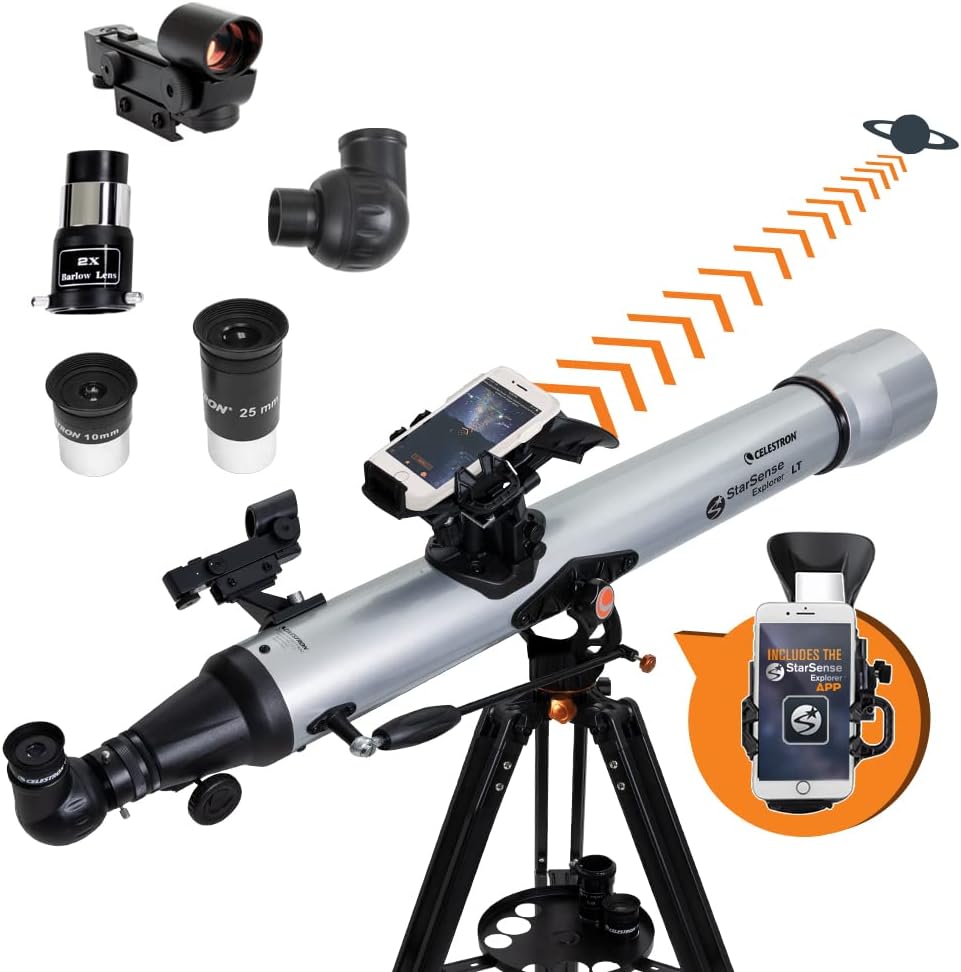
The LT 80AZ is the entry point into the StarSense ecosystem. The 80mm refractor gives sharp views of the Moon, Venus phases, Jupiter's cloud bands, and Saturn's rings. The AZ mount is lightweight and easy to move, which works well with StarSense's push-to-object system. The StarSense Explorer app supports iPhone (iOS 13+) and Android (8.0+).
What you give up versus the DX 130AZ: aperture (80mm vs 130mm) and therefore light-gathering for faint objects. But for a first telescope that teaches you the sky while helping you find things, it delivers well above its price.
Best for: Absolute beginners, kids, anyone who wants to learn constellations while still finding objects quickly. Works with iPhone and Android.
2. Celestron StarSense Explorer LT 114AZ — More aperture, still budget-friendly
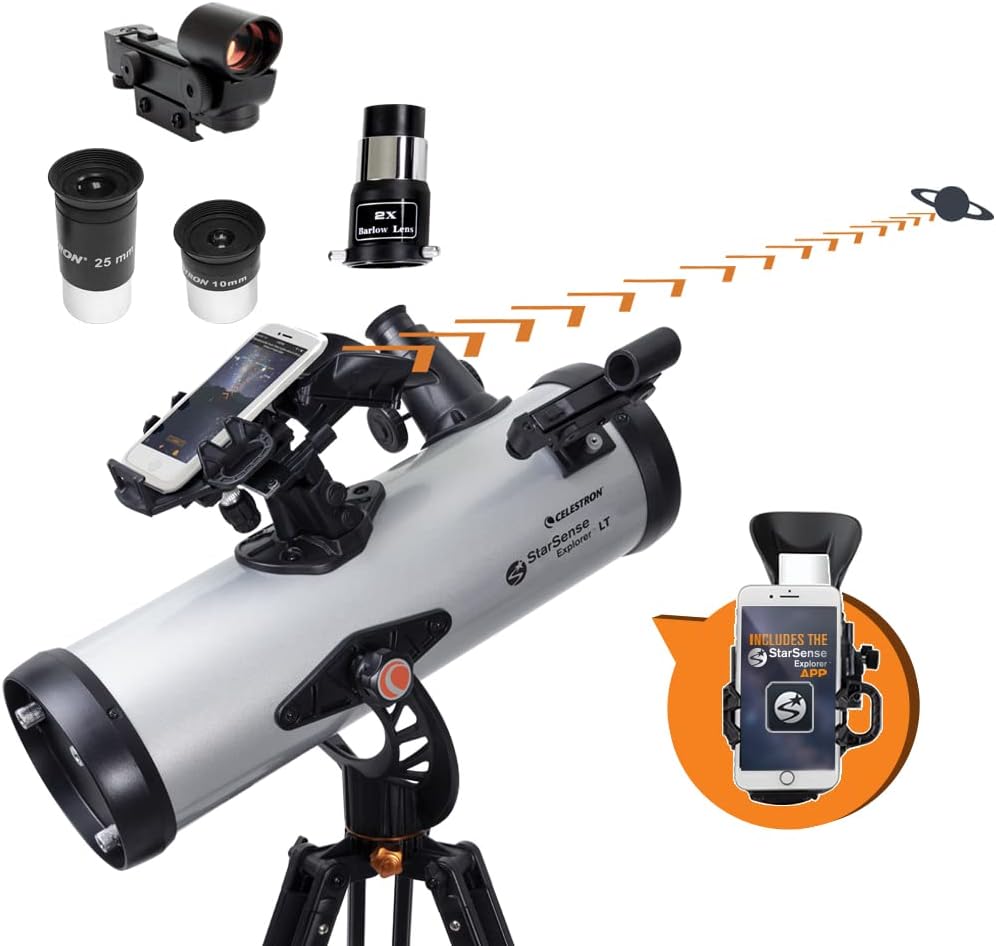
The step up from the LT 80AZ: same StarSense dock and app, but a 114mm Newtonian mirror instead of an 80mm refractor lens. That extra aperture makes a real difference on deep-sky objects like the Orion Nebula and globular clusters.
The Newtonian design requires occasional collimation (mirror alignment), but Celestron makes this straightforward. If you're choosing between the LT 80AZ and LT 114AZ and your budget allows, take the 114.
Best for: Beginners who want more aperture without paying for motors. Solid second scope for someone graduating from a 70mm.
3. Celestron StarSense Explorer DX 102AZ — Best beginner refractor
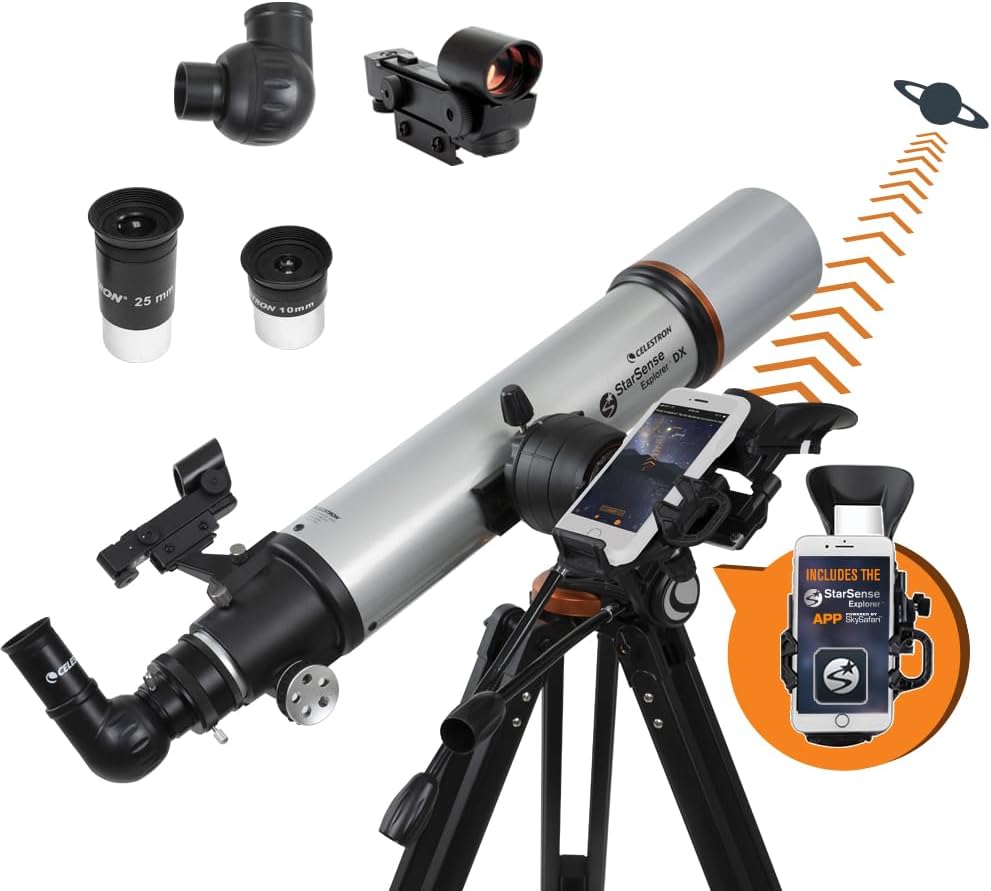
The DX line upgrades the mount quality over the LT series. The DX 102AZ pairs a solid 102mm achromatic refractor with the StarSense dock on a sturdier alt-az mount. Refractors at this aperture are excellent for planets: sharp contrast, crisp detail on Jupiter's Great Red Spot, Saturn's Cassini Division, and the Moon's craters.
The refractor design means zero maintenance and instant performance, no collimation needed, ever.
Best for: Beginners focused on planetary and lunar observation who want a crisp, low-maintenance scope with app guidance.
4. Celestron StarSense Explorer DX 130AZ — Best all-around app telescope under $400
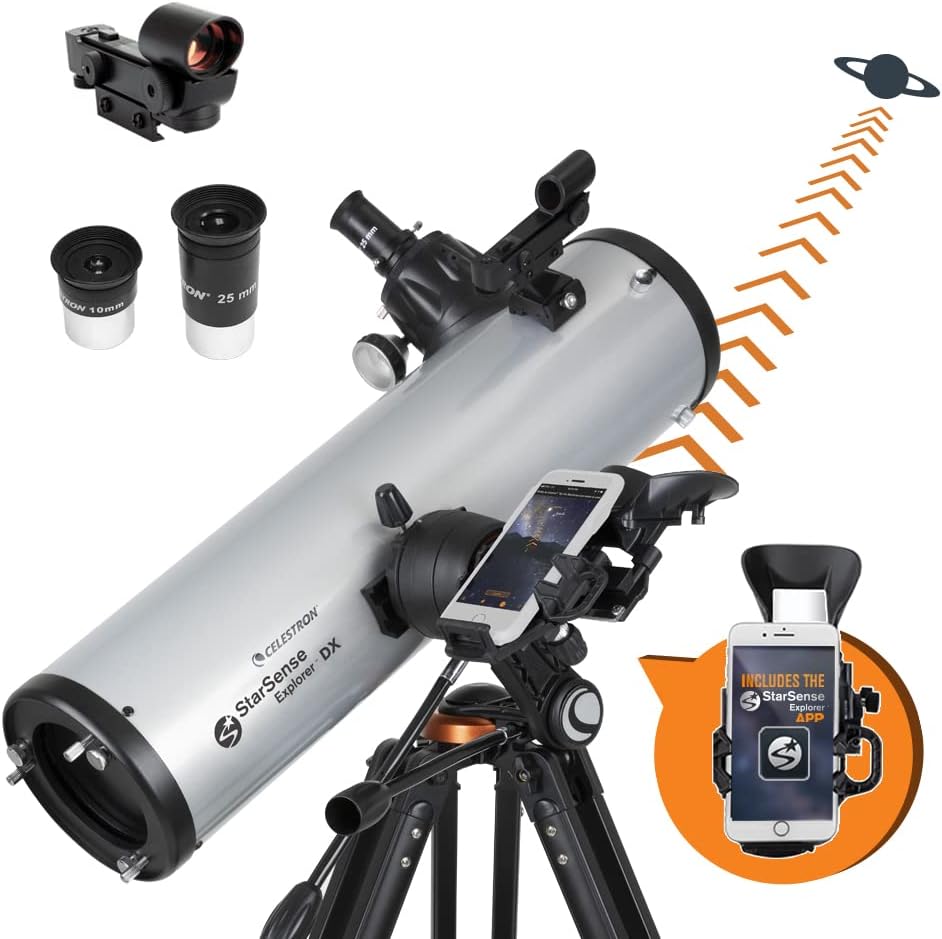
This is the StarSense model we recommend most often to beginners. The 130mm parabolic mirror is large enough to show genuine deep-sky detail: nebula structure in the Orion Nebula, individual stars resolved in the Pleiades, dark dust lanes in the Andromeda Galaxy under dark skies. Yet the scope stays light enough to carry with one hand.
The StarSense app on this scope does actual plate-solving — it photographs the star field you're looking at and matches it to its database in seconds. Point anywhere, get a precise sky map update, then follow the arrows to your target. The whole loop takes about 10 seconds per object once you've done it a few times.
This is our top pick for anyone who wants the app experience without spending $500+ on motors.
Best for: The best value beginner app telescope. Great for families, first-time buyers, and anyone who wants fast sky navigation at a reasonable price.
Before buying any app telescope, download the companion app and check its recent reviews. Celestron's StarSense Explorer app and SkyPortal are both actively maintained with regular updates. Some older telescope brands have apps that haven't been touched in 3+ years and may not work correctly on current iOS or Android versions.
5. Celestron StarSense Explorer 8-inch Dobsonian — Best aperture for app navigation under $400
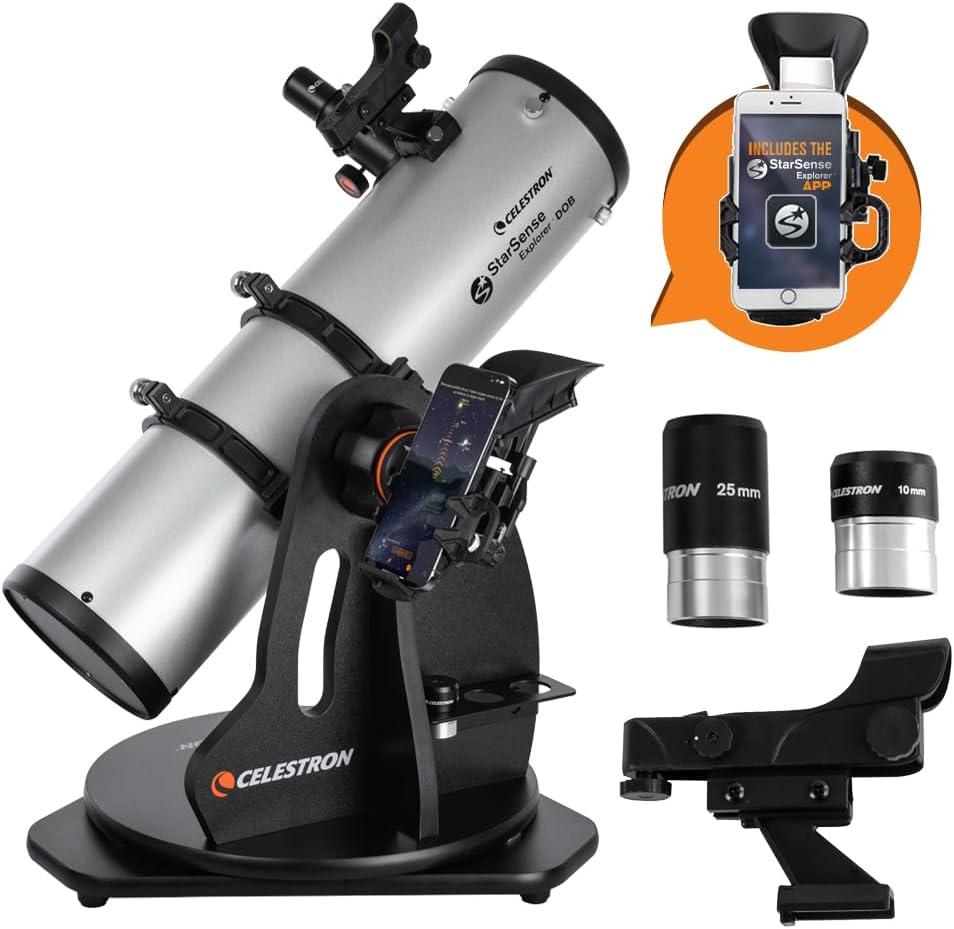
If maximum aperture is your priority and you don't mind a larger footprint, the StarSense 8-inch Dobsonian is remarkable value. An 8-inch mirror captures four times more light than a 4-inch scope. Galaxy structure, nebula filaments, and globular cluster resolution all take a meaningful jump.
The Dobsonian rocker-box design is simple and stable. You push it by hand to follow the StarSense arrows. No motor noise, no battery drain from slewing — just solid, quiet glass on a smooth mount. The trade-off is the physical size: this scope lives at home, not in a backpack.
Best for: Dark-sky observers who want serious aperture with app guidance on a budget. One of the best deals in amateur astronomy.
6. Celestron StarSense Explorer 8-inch Dobsonian — Maximum aperture, app-guided
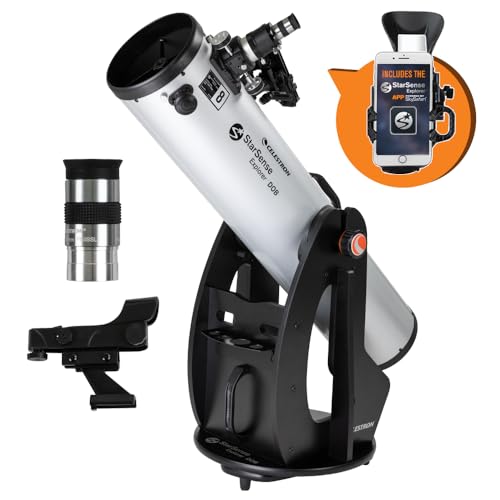
The 10-inch steps up from the 8-inch with significantly more light grasp. At this aperture, on a dark night, you'll see color in bright nebulae, dense star fields in the Milky Way core, and multiple galaxy companions visible simultaneously. The Andromeda Galaxy and its satellite galaxies M32 and M110 are all visible in the same field.
This is a two-hand scope — you won't carry it one-handed — but it assembles quickly and the rocker base is stable. The StarSense dock works identically to the smaller models.
Best for: Experienced observers who want maximum aperture with app navigation, and plan to use the scope from a fixed backyard or dark-sky site.
Best Entry GoTo Scopes for Smartphones ($400–$800)
GoTo telescopes have motorized mounts that physically slew to any object in the database at the tap of a button. After a short alignment (usually 2–3 bright stars), the mount knows where everything in the sky is. Tap "M42 Orion Nebula" in Celestron's SkyPortal app on your iPhone or Android, and the scope moves to center it. These are true Bluetooth and WiFi telescopes — the phone controls the mount wirelessly.
7. Celestron NexStar 4SE — Best entry GoTo telescope
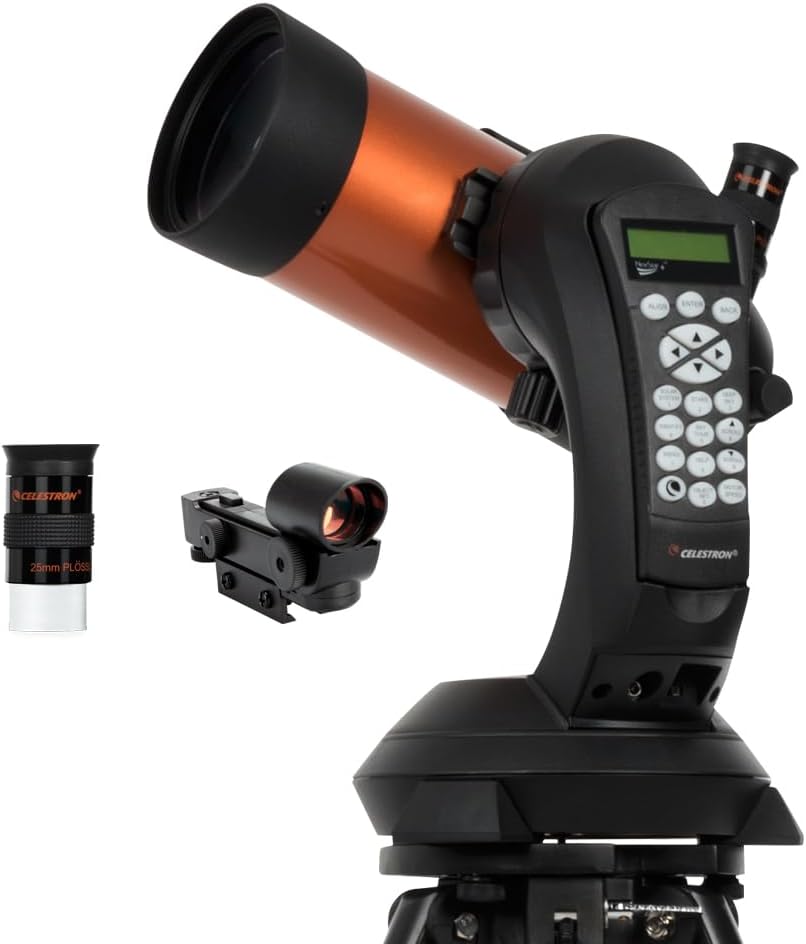
The NexStar 4SE is Celestron's smallest Schmidt-fork GoTo scope. The 4-inch (102mm) Maksutov-Cassegrain design packs into a compact 12-inch tube, making it the easiest GoTo scope to carry. The SkyPortal app works on iPhone and Android — connect via the hand controller port or add the SkyPortal WiFi Module (see accessories) for full wireless control. 40,000+ object database, audio descriptions, and sky tours included.
The Mak design excels at planetary and lunar detail — crisp, high-contrast views of Saturn's rings and Jupiter's cloud structure. It struggles on faint nebulae where a larger mirror would gather more light. But as a grab-and-go GoTo scope that fits in a bag, nothing touches it at this price.
Best for: Anyone who wants full GoTo functionality in the most portable smartphone telescope package. Urban observers and frequent travelers. Works with iPhone and Android via SkyPortal.
8. Celestron NexStar 90SLT — Budget Mak GoTo with SkyAlign
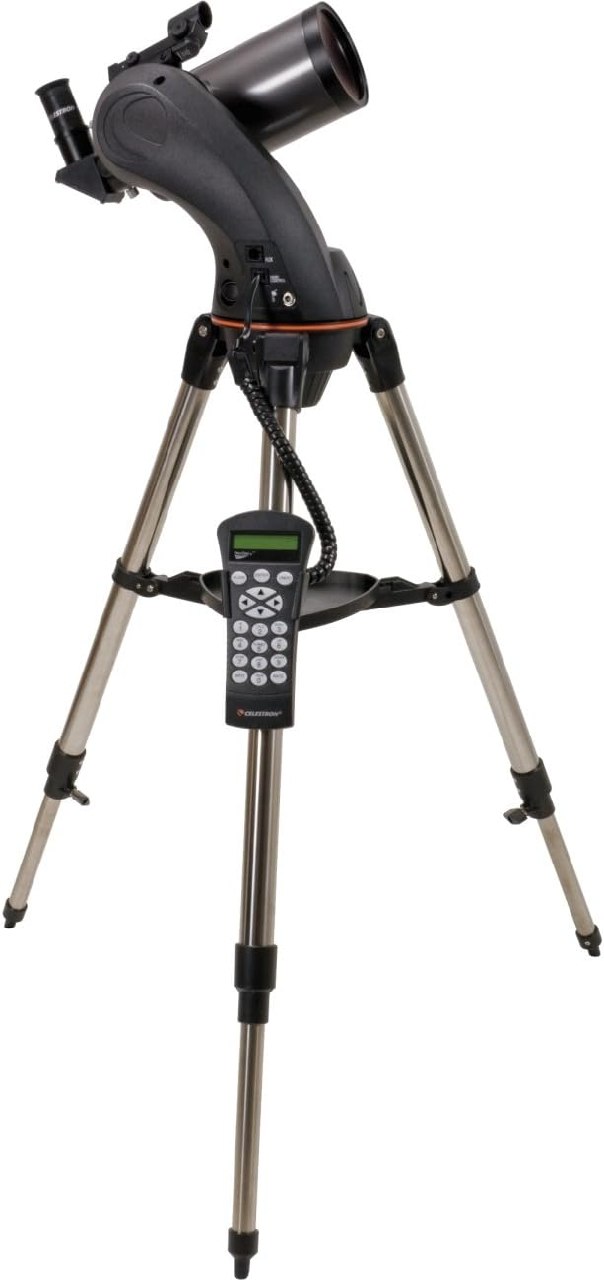
The NexStar SLT line is Celestron's most affordable GoTo entry point. The 90SLT uses a 90mm Mak tube on a single-arm computerized alt-azimuth mount. SkyAlign lets you align on any three bright objects without knowing their names — the scope figures it out. Connect to the SkyPortal app via the hand controller cable and you get the full NexStar app experience.
The single-arm mount is lighter and less rigid than the SE's fork, which is noticeable at high magnification. But for a first GoTo telescope that shows planets clearly and tracks objects automatically, the 90SLT delivers.
Best for: First GoTo scope buyers on a tight budget. Pair with the NexYZ DX adapter (see bonus accessories) for easy phone photography.
9. Celestron NexStar 127SLT — Best mid-size Mak GoTo under $700
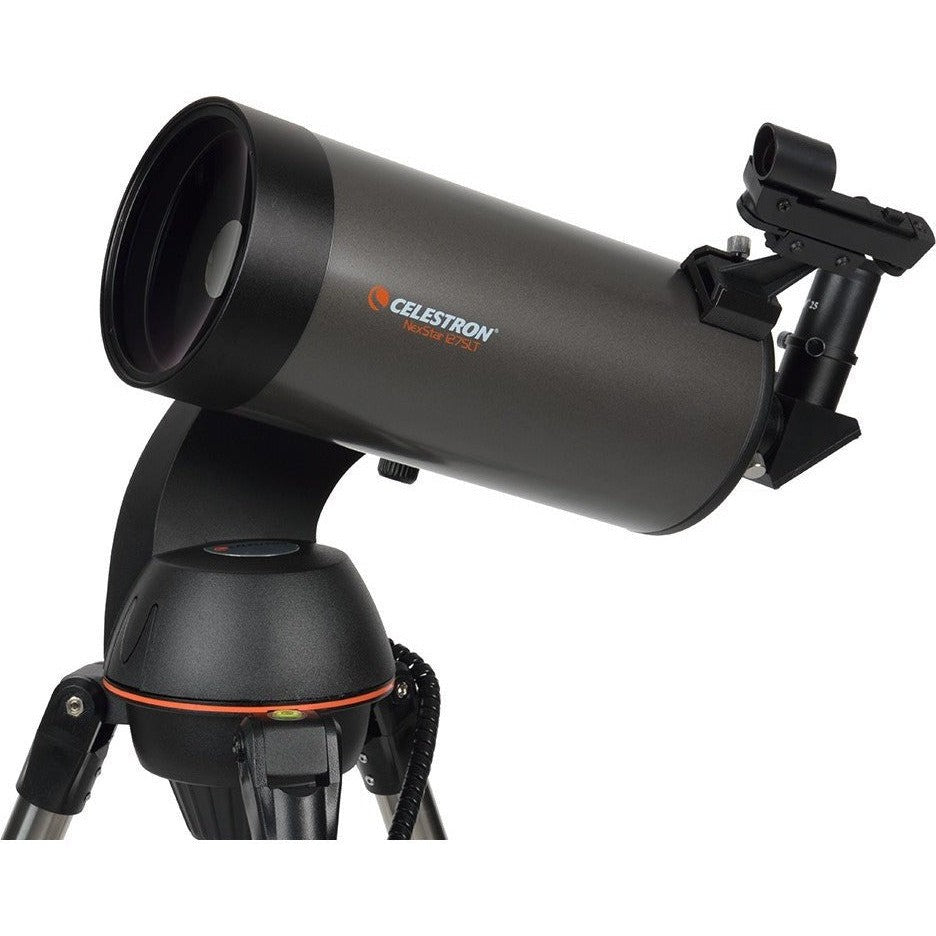
The 127SLT steps up to a 5-inch (127mm) Maksutov, which makes a genuine difference for planetary detail. Saturn's Cassini Division, Jupiter's festoons, and the polar ice caps on Mars all become visible at this aperture that a 90mm simply cannot resolve. The long focal length (1500mm, f/12) delivers excellent magnification per eyepiece.
Same SLT mount and SkyAlign system as the 90SLT. Full SkyPortal app compatibility. The larger, heavier tube does ask more of the single-arm mount at high power — tracking is still good, but vibration from tapping the focuser is noticeable. If you can stretch to the NexStar 5SE, the SE's fork mount handles the weight better.
Best for: Planetary observers who want more aperture than the 4SE or 5SE at a lower price, and don't mind the SLT mount's minor limitations.
10. Celestron NexStar 130SLT — Best GoTo for deep-sky on a budget
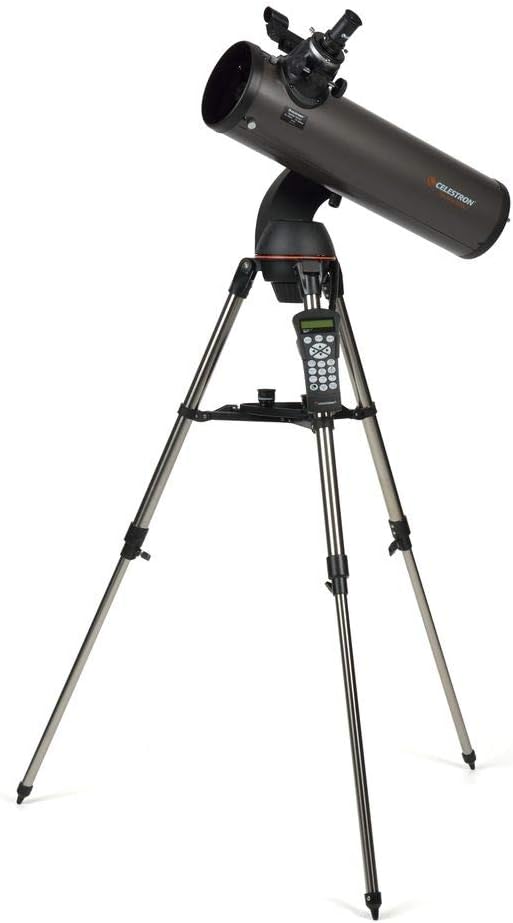
The 130SLT swaps the Maksutov tube for a 130mm Newtonian reflector. The fast f/5 focal ratio means a wider field of view and brighter images of extended objects. This is the better deep-sky choice in the SLT lineup: the Orion Nebula, Andromeda Galaxy, and star clusters all look more impressive through the 130's mirror than through a same-price Mak.
The Newtonian needs periodic collimation, which takes 5 minutes once you've learned it. Full SkyAlign and SkyPortal app compatibility.
Best for: Budget GoTo buyers whose priority is deep-sky objects (nebulae, galaxies, clusters) over planetary views.
Best Mid-Range GoTo Scopes ($800–$1,600)
11. Celestron NexStar 5SE — Best GoTo under $1,000
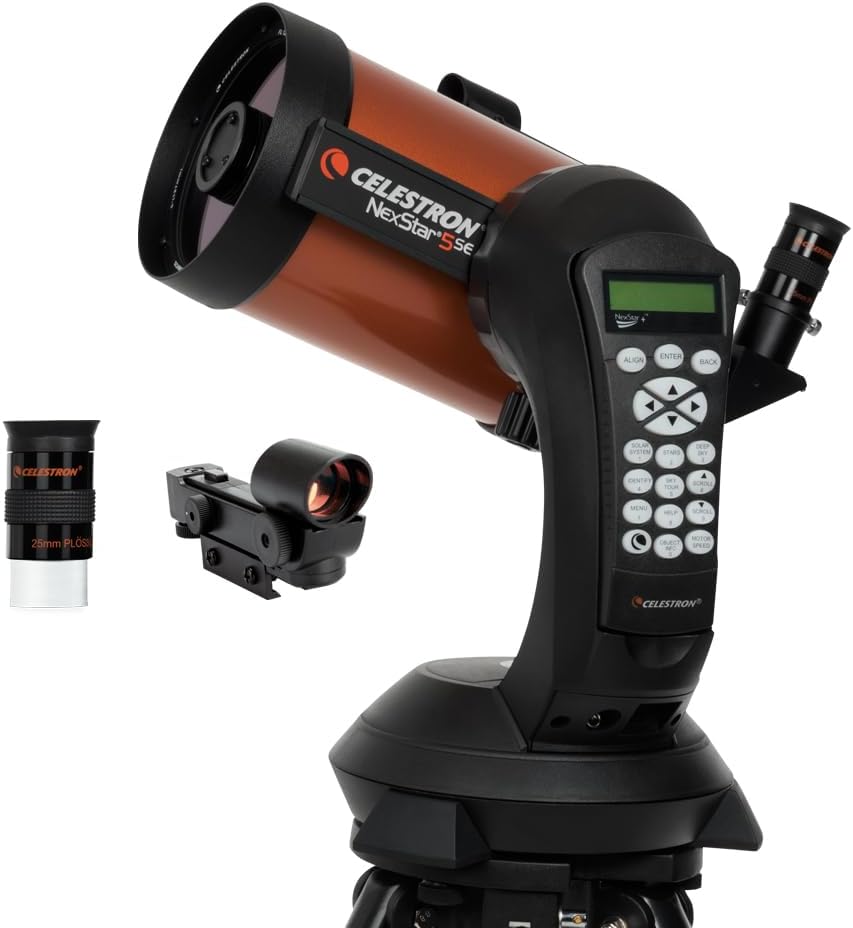
The NexStar 5SE is where the SE line starts earning its reputation. The 5-inch (127mm) Schmidt-Cassegrain on the SE's single-fork mount balances portability and optical performance well. It's FASTAR compatible, meaning you can convert it to f/2 for astrophotography with an optional reducer. The GoTo system uses SkyAlign (align on any three bright objects) and connects to the full SkyPortal app ecosystem.
For visual observing, the 5SE shows more nebula structure than the 4SE, more galaxy detail, and planetary views that rival much larger scopes at lower magnification. If the 4SE's aperture feels limiting, the 5SE is the natural upgrade.
Best for: Observers who want serious optical performance in a GoTo package without stepping into the 6SE's price range.
12. Celestron NexStar 6SE — Best all-around GoTo telescope
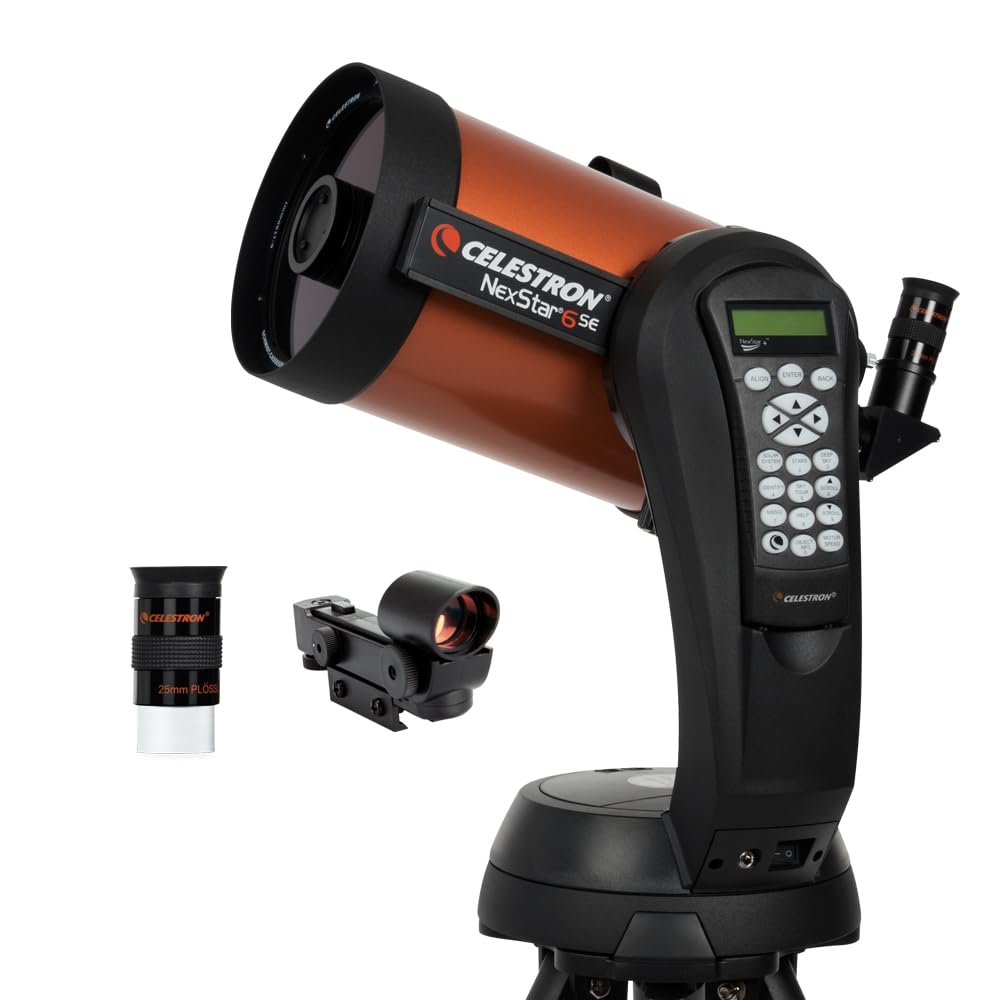
If we recommend only one GoTo telescope on this site, it's the NexStar 6SE. The 6-inch (150mm) Schmidt-Cassegrain hits a genuine sweet spot: enough aperture to deliver serious views of both planets and deep-sky objects, in a package that's still portable. A single person can set it up in 10 minutes.
On Saturn: visible ring detail including the Cassini Division and the A and B rings clearly separated. On Jupiter: multiple cloud belts, the Great Red Spot when it transits, and Galilean moon positions changing night to night. On deep sky: galaxy pairs in Leo, the globular cluster M13 resolving individual stars, the Ring Nebula's smoke-ring shape obvious.
The SkyPortal app connects over the hand controller and gives you full database access, sky maps, and object information. The SE fork mount is rigid, tracks smoothly, and has been field-proven by thousands of observers.
Best for: Anyone who wants the best balance of aperture, portability, and GoTo performance. This is the telescope most observers should buy if they're serious about the hobby.
Best Premium GoTo Scopes ($1,600+)
13. Celestron NexStar 8SE — Best GoTo for serious observers
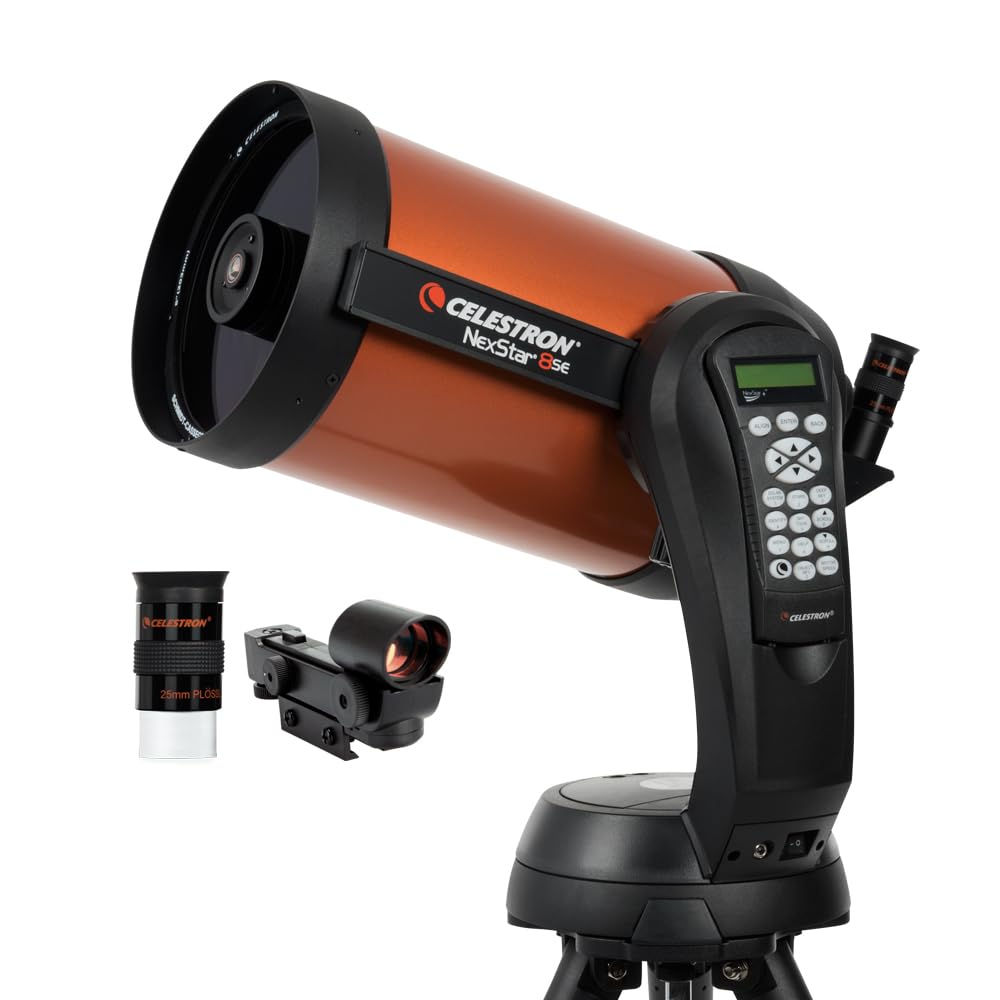
The NexStar 8SE is the largest scope in the single-fork SE line and the one where most observers stop upgrading for years. The 8-inch (203mm) Schmidt-Cassegrain gathers nearly twice the light of the 6SE, which becomes obvious on faint targets: distant galaxy pairs, faint globular clusters, and planetary nebulae that are near-invisible in smaller scopes.
It remains portable — one person can carry it, set it up, and be observing in 15 minutes. The GoTo system, SkyAlign, and SkyPortal app work identically to the rest of the SE line. The tube is FASTAR compatible for astrophotography.
The 8SE is heavy enough that the SE's single-fork mount can show vibration from eyepiece changes or wind. If you plan to do astrophotography at prime focus, consider the NexStar Evolution 8 for its more stable fork and built-in WiFi.
Best for: Intermediate to advanced observers who want maximum GoTo aperture in a portable package and primarily do visual observing.
WiFi Telescopes: Celestron Evolution & Astro Fi (Best Telescope for iPhone & Android)
The Evolution and Astro Fi series are Celestron's true wireless smartphone telescopes. Built-in WiFi — no hand controller cable, no Bluetooth adapter, no dongle. The scope broadcasts its own WiFi network. Open SkyPortal on your iPhone or Android, connect, and you're controlling the telescope from up to 30 feet away. This is the cleanest smartphone telescope experience Celestron makes — and what most people picture when they search for a "telescope for iPhone" or "telescope for Android phone."
14. Celestron Astro Fi 102 — Best WiFi GoTo under $450
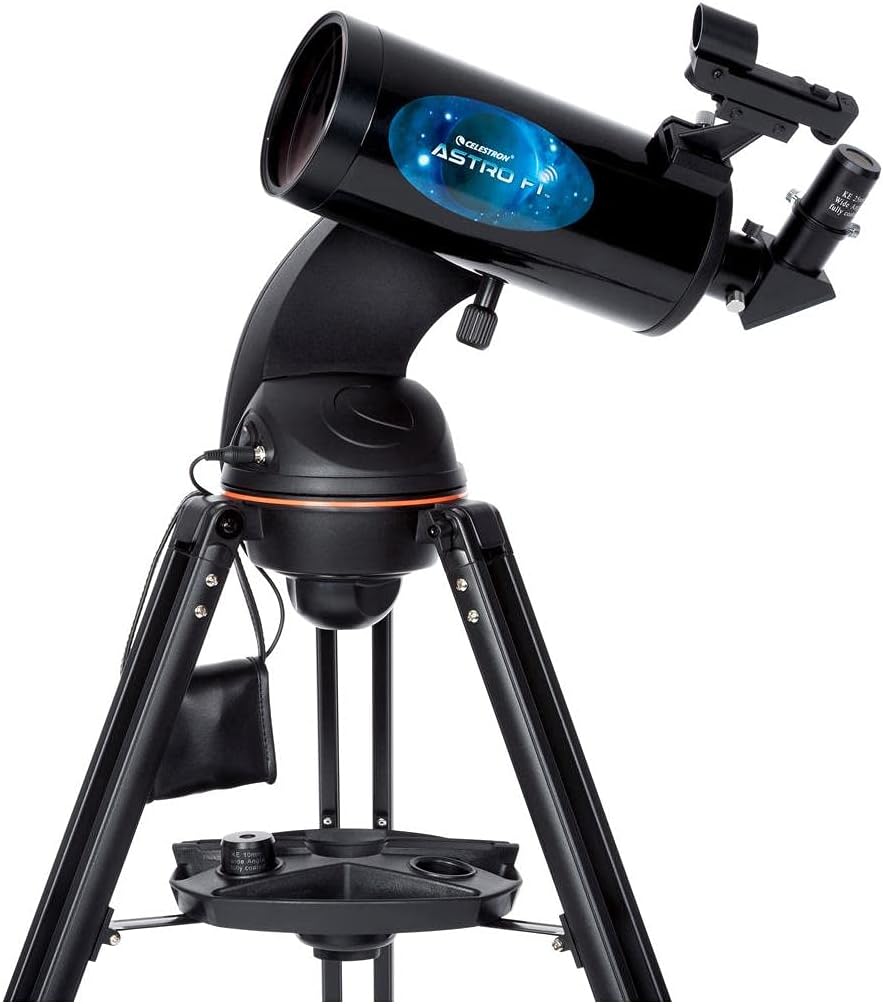
The Astro Fi 102 is the cleanest entry into wireless smartphone telescope territory. A 102mm refractor on a motorized alt-azimuth mount, controlled entirely through the SkyPortal app over WiFi on your iPhone or Android. No hand controller, no cable. Set up the scope, connect your phone, align on two or three stars, and tap any object to slew.
The 102mm refractor gives good planetary views and sharp lunar detail. As a pure refractor, it requires zero maintenance. The WiFi integration makes it the most app-friendly scope in this price range — ideal for anyone who finds hand controllers fiddly.
Best for: Beginners and casual observers who want a fully wireless telescope for iPhone or Android at an accessible price.
15. Celestron Astro Fi 130 — Best WiFi GoTo reflector under $500
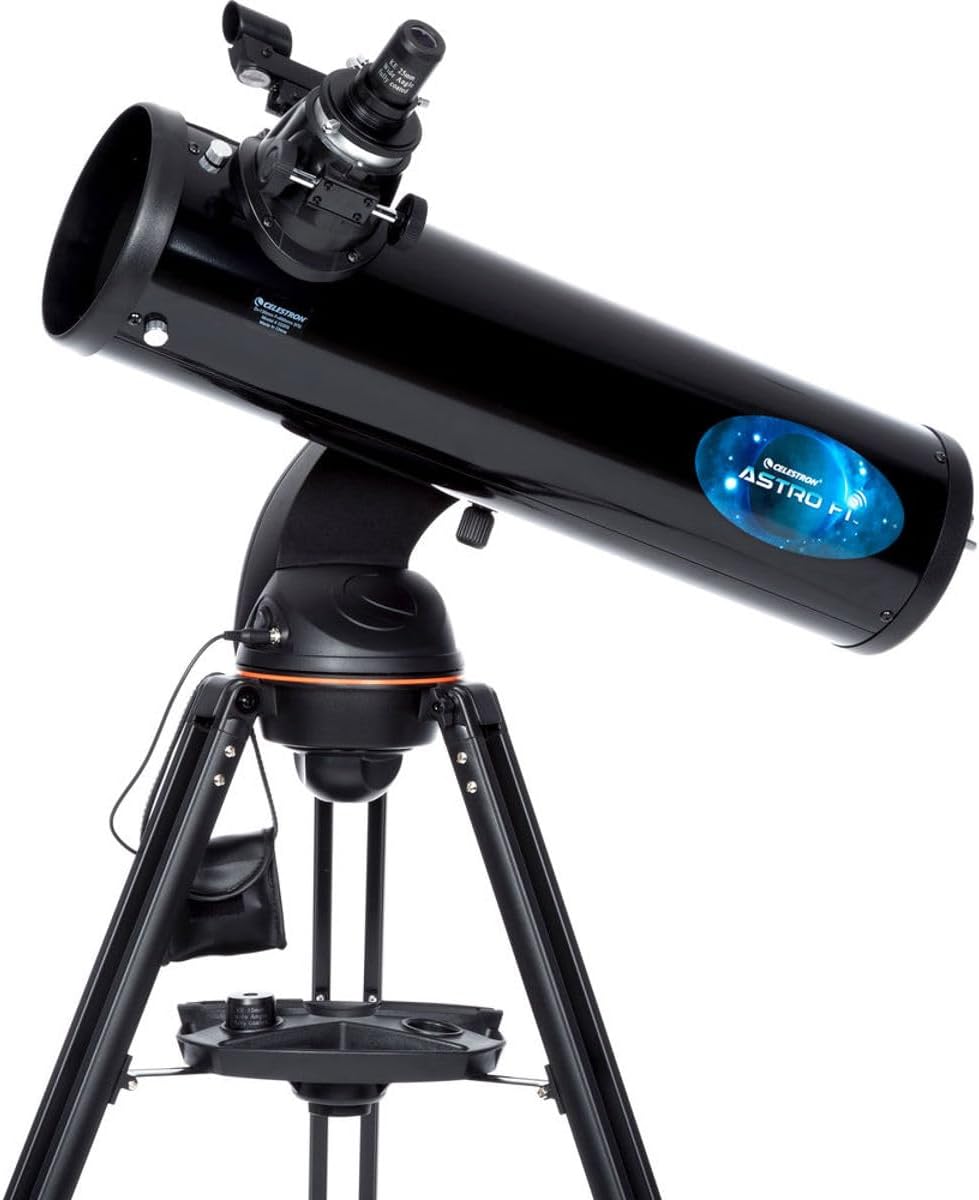
The step up from the Astro Fi 102: same WiFi GoTo system, but with a 130mm Newtonian reflector. The bigger mirror gathers significantly more light, making this the better choice for anyone interested in nebulae, galaxies, and star clusters alongside planets. The fast f/5 focal ratio gives a wider, brighter field of view.
The Newtonian needs occasional collimation (mirror alignment) — once you've done it twice, it takes 3 minutes. Worth the minor effort for the extra aperture.
Best for: Wireless GoTo buyers who want more light grasp for deep-sky objects. The better all-around choice vs the Astro Fi 102 if you're not exclusively a planetary observer.
16. Celestron NexStar Evolution 6 — Best mid-range WiFi GoTo
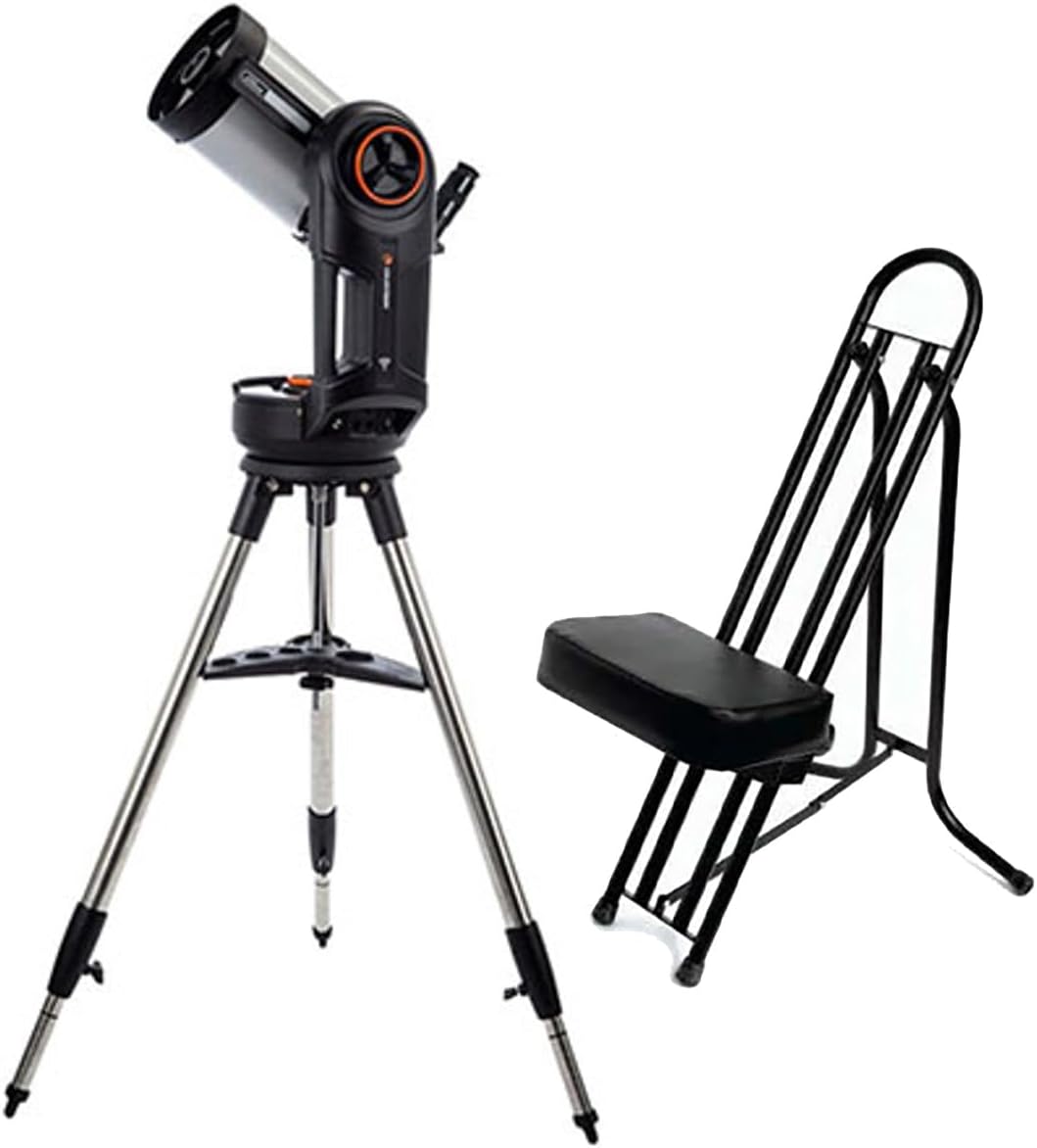
The NexStar Evolution is the NexStar SE's premium sibling. It adds three critical improvements: built-in WiFi (no adapter needed), a built-in rechargeable lithium battery (no external power pack), and a stainless steel tripod with wider leg spread for better stability. The optical tube is the same proven 6-inch SCT as the NexStar 6SE.
Control entirely through SkyPortal on your phone or tablet — no hand controller required. The dual-arm fork mount is stiffer than the SE's single arm, which benefits high-power observing and astrophotography. For anyone who does a mix of visual observing and casual imaging, the Evolution is the cleanest GoTo setup you can buy.
Best for: Observers who want the full modern WiFi GoTo experience with serious optics. The best mid-range phone-controlled telescope available.
17. Celestron NexStar Evolution 8 — Best premium WiFi GoTo
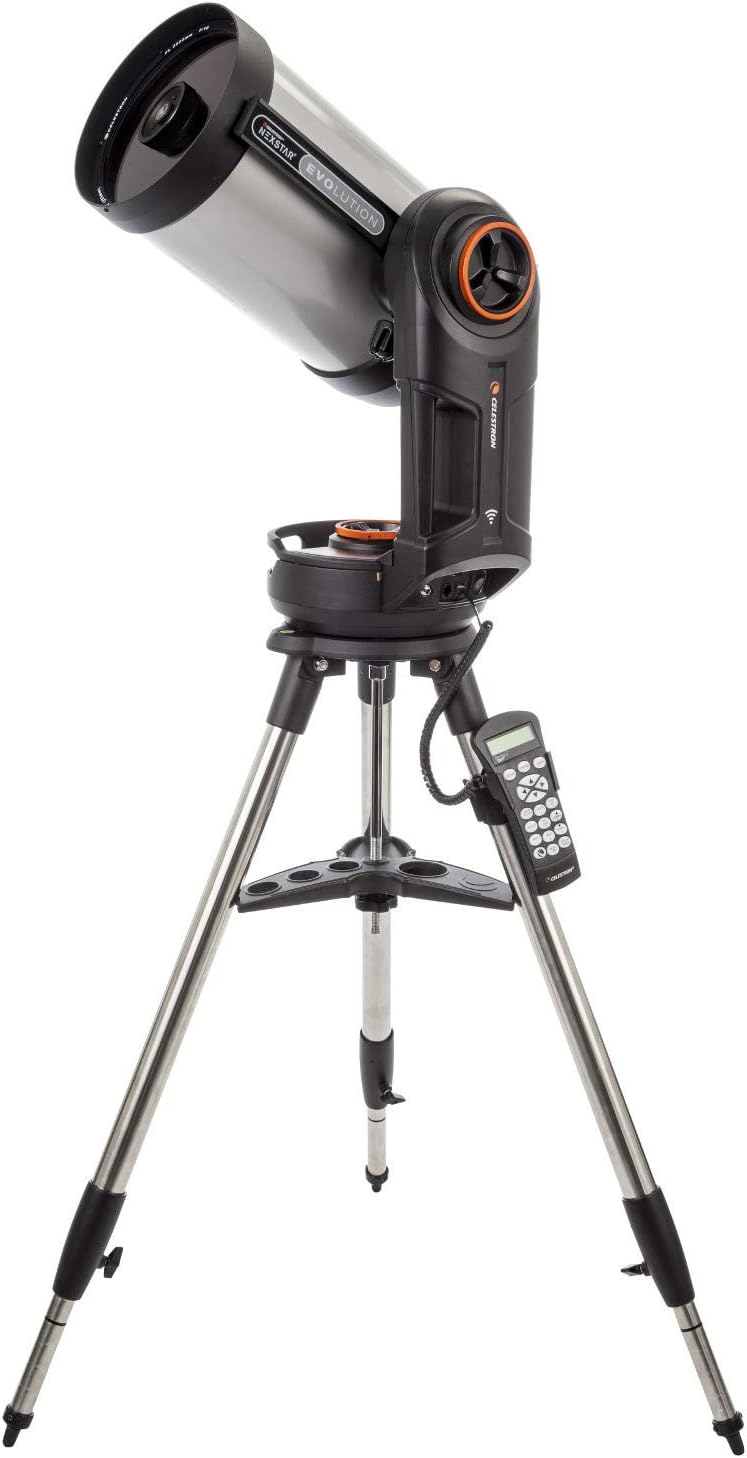
The Evolution 8 takes the Evolution 6's premium package and scales it up to an 8-inch aperture on a dual-arm fork. The result is Celestron's most capable portable GoTo telescope. Built-in WiFi, built-in rechargeable battery, stainless steel tripod, and 8 inches of light-gathering on the stiffest mount in the line.
At 8 inches, you're seeing things that simply don't exist in a 6-inch eyepiece: spiral arm detail in nearby galaxies, color in bright nebulae, dense globular clusters resolved to the core. The dual-arm fork handles the heavier tube without the vibration issues of the 8SE's single arm.
Best for: Serious observers who want maximum GoTo aperture with built-in WiFi, battery, and mount stability. The NexStar 8SE for those who want zero cables.
18. Celestron NexStar Evolution 9.25 — Best observatory-class portable GoTo
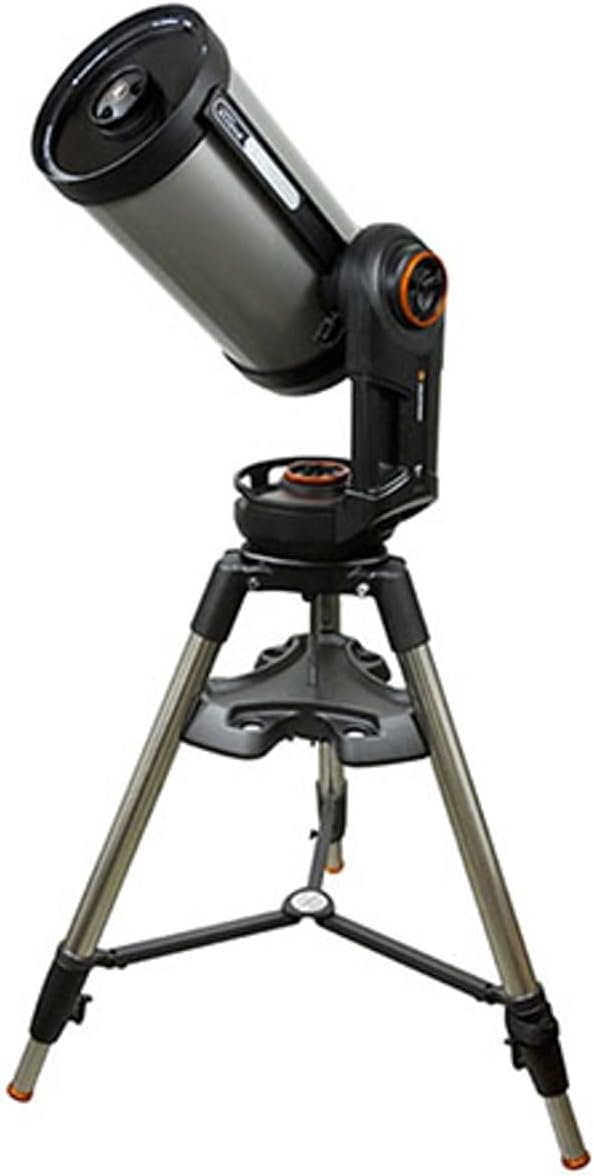
The Evolution 9.25 is the flagship Evolution, featuring Celestron's EdgeHD optical design. EdgeHD corrects the field curvature inherent in standard SCTs, producing flat, sharp stars across the full field of view. This matters primarily for astrophotography and wide-field observing, but experienced visual observers notice the improvement on extended objects.
At 9.25 inches, this is the largest GoTo scope most observers can set up and use solo. Full built-in WiFi, rechargeable battery, and dual-arm fork carry over from the Evolution line. This scope earns its price for those who have exhausted the 8SE or Evolution 8 and want the next level.
Best for: Advanced observers and astrophotographers who want the best portable GoTo Celestron makes.
GoTo Dobsonians: Maximum Aperture + App Control
GoTo Dobsonians combine the maximum aperture-per-dollar of the Dobsonian design with motorized alt-azimuth GoTo. You get the light-gathering power of a 10- or 12-inch mirror with the convenience of pointing your phone and watching the scope slew to any object. Sky-Watcher's SynScan Pro app handles the GoTo control wirelessly.
19. Sky-Watcher Virtuoso GTi 150P — Best tabletop GoTo Dobsonian
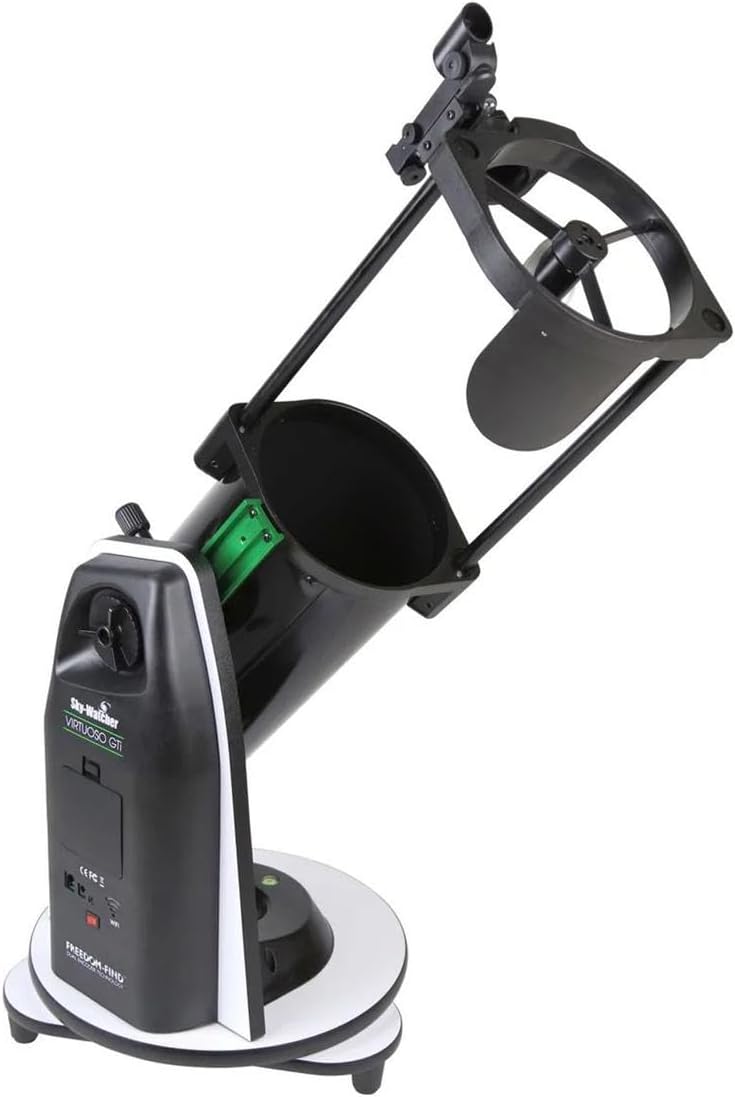
The Virtuoso GTi 150P is a standout product in the GoTo category. It's a 150mm (6-inch) parabolic Newtonian reflector on a motorized alt-azimuth tabletop base, controlled entirely through Sky-Watcher's SynScan Pro WiFi app. The entire setup folds into a package smaller than a carry-on bag.
The standout feature is Freedom Find technology: you can grab the tube and manually push it to any position without losing the GoTo alignment. The motor encoders track your movements. This makes casual star-hopping and GoTo navigation coexist, which no traditional GoTo allows.
At 150mm, the views are a genuine step up from 90mm or 102mm scopes in the same price range. This is one of the best telescope values for anyone who wants portability, aperture, and GoTo in one package.
Best for: Observers who want a capable GoTo scope in the most portable package. Perfect for balconies, travel, and impromptu dark-sky trips.
20. Sky-Watcher GoTo Collapsible 8-inch Dobsonian — Best full-size GoTo Dob under $1,400
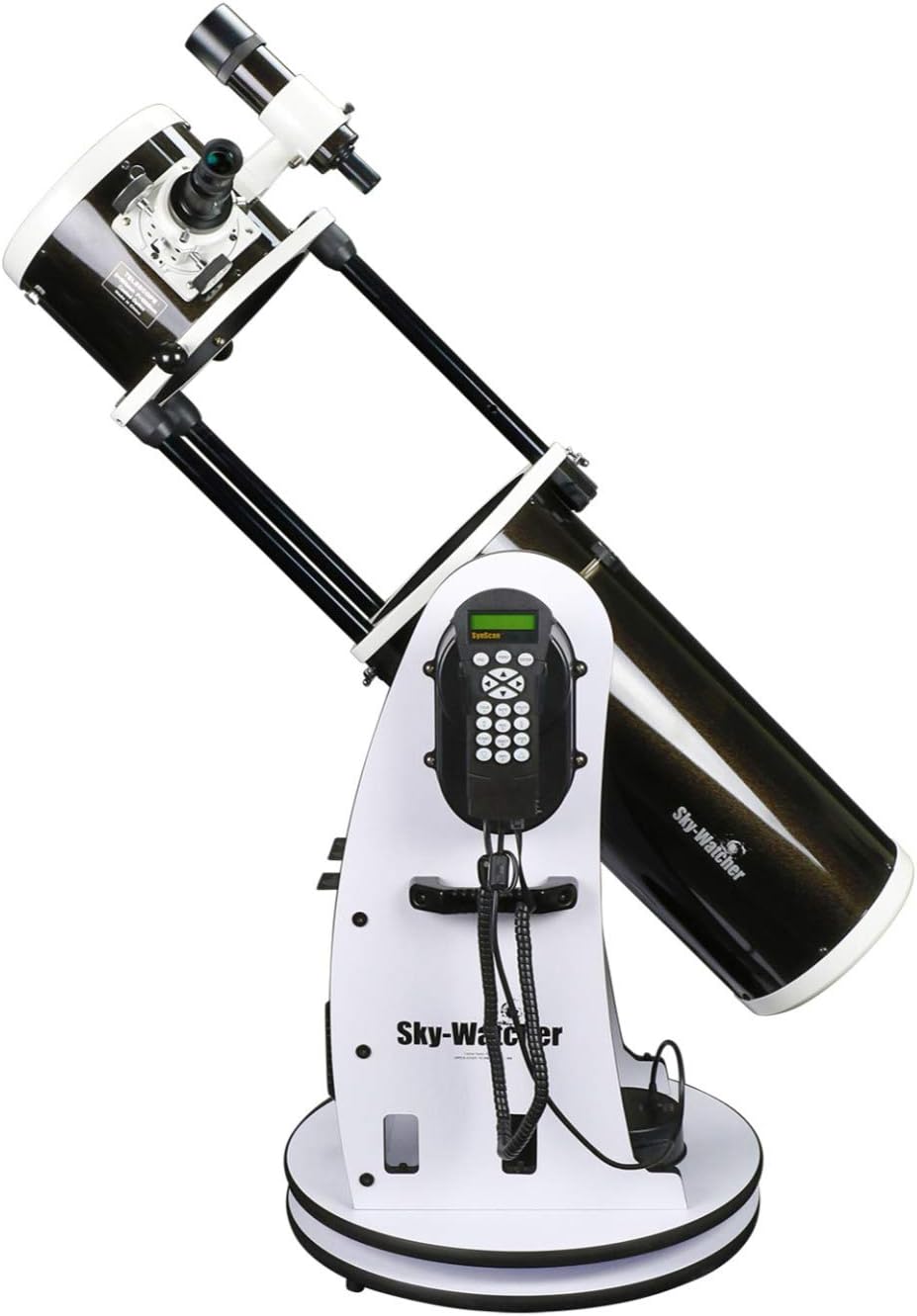
The Sky-Watcher GoTo Collapsible 8-inch is the step into serious GoTo Dobsonian territory. An 8-inch parabolic mirror on a collapsible truss tube assembly, with SynScan GoTo motors and WiFi control via the SynScan Pro app. The collapsible design reduces transport length significantly compared to a solid-tube 8-inch.
At 8 inches, the views enter a different league for deep-sky: spiral structure in the Whirlpool Galaxy M51, globular cluster M13 resolving to individual stars with hundreds visible, and dark nebulae silhouetted against star fields. GoTo makes these objects findable from suburban or semi-dark skies where star-hopping a Dobsonian by hand becomes frustrating.
Best for: Observers who want GoTo convenience combined with maximum aperture, and plan to use the scope regularly from home.
21. Sky-Watcher Flextube 250 SynScan Dobsonian — Best GoTo Dob for serious deep-sky
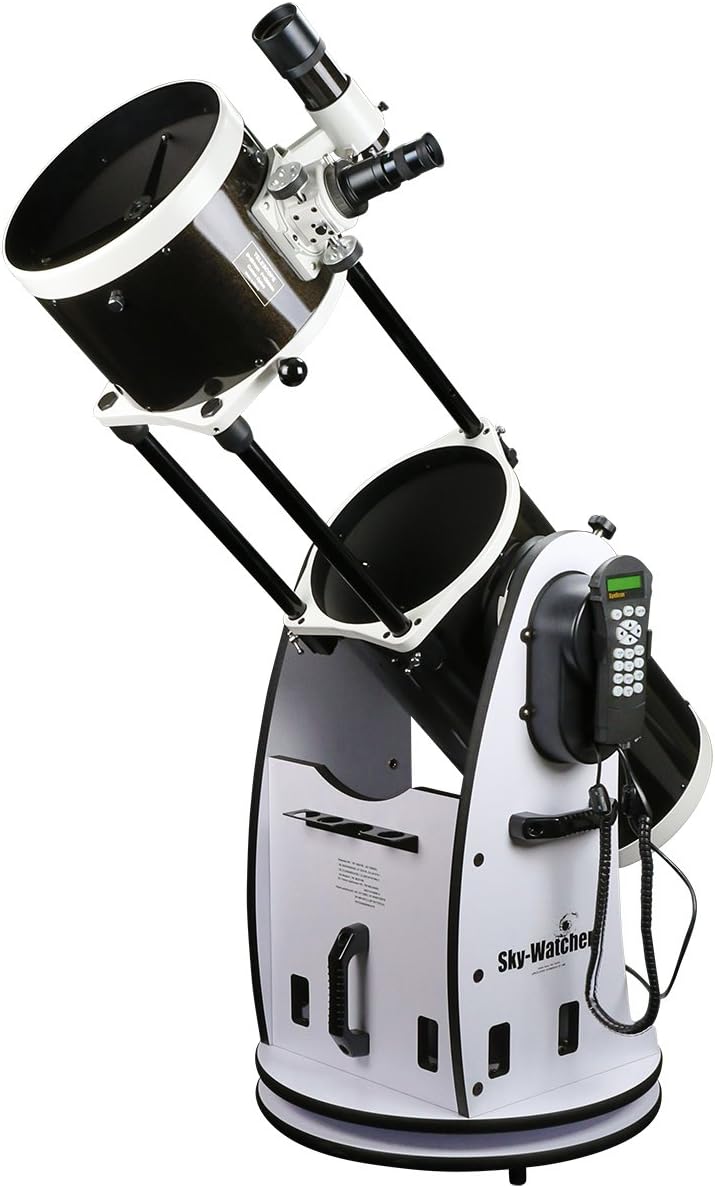
The Flextube 250 is a 10-inch (254mm) GoTo Dobsonian in a collapsible Flextube design. At this aperture, deep-sky observing becomes genuinely stunning: detailed galaxy structure, visible nebula filaments, and star cluster resolutions that smaller scopes can only hint at. The GoTo system routes through SynScan Pro via WiFi — you tap any of 42,000+ objects and watch the scope track to it.
The collapsible truss shortens the tube for transport without disassembling the optics. A real 10-inch experience in a package you can fit in an SUV.
Best for: Dedicated deep-sky observers who want the best GoTo Dobsonian experience short of observatory-grade equipment.
Smart Telescopes: Fully Phone-Controlled Astrophotography
Smart telescopes are not traditional eyepiece telescopes. There is no eyepiece. You observe entirely via live-stacked images on your smartphone screen — iPhone or Android. They excel at sharing views with groups, social media astrophotography, and urban use. If you want to look through a telescope, look at a GoTo scope instead. Smart telescopes cost significantly more per aperture-inch than GoTo scopes.
22. Unistellar eQuinox 2 — Best smart telescope for urban observers
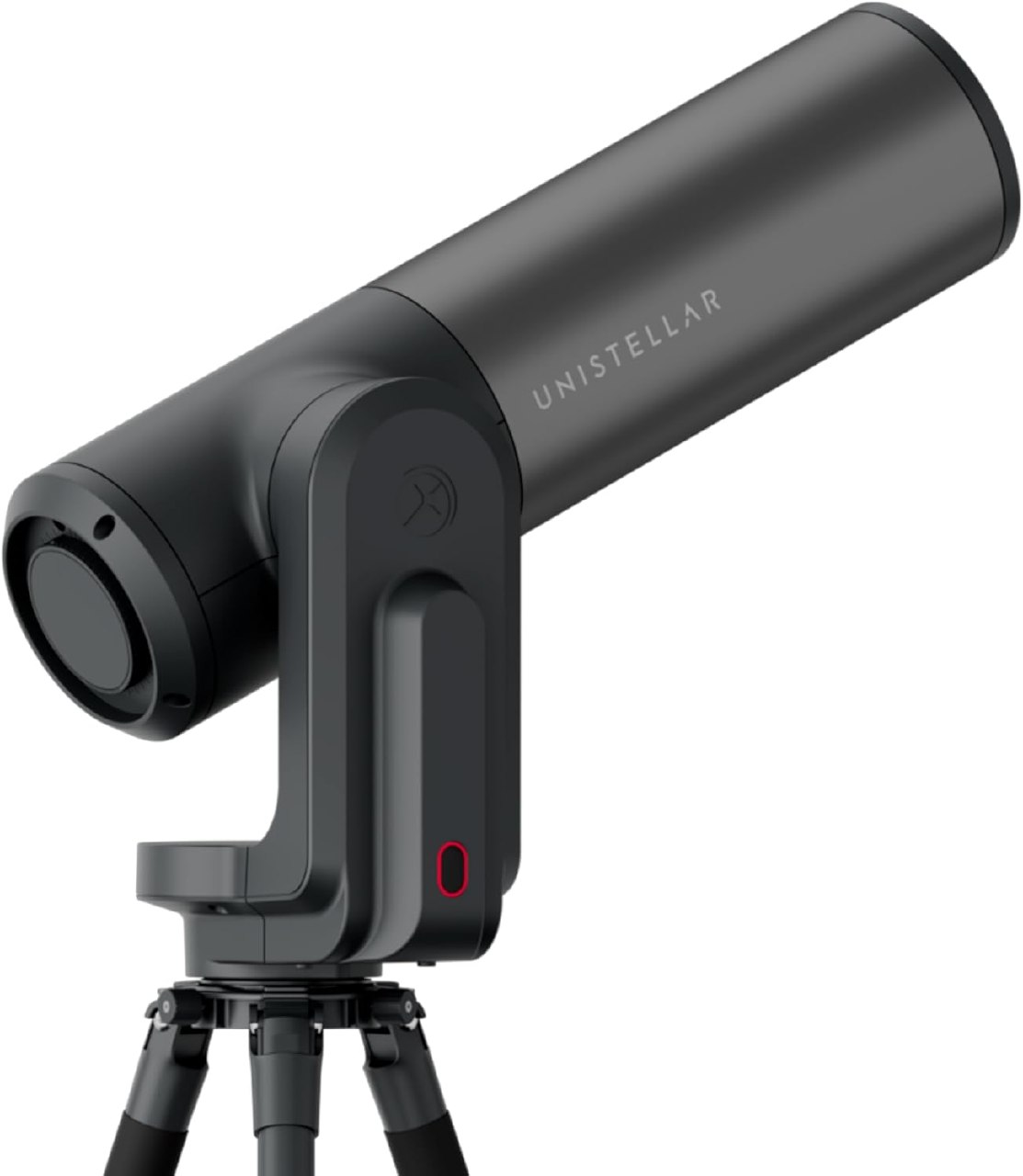
The Unistellar eQuinox 2 is fully app-controlled: open the Unistellar app, tap a target, the scope slews and immediately begins live-stacking exposures. Within 30 seconds you have a color image of a nebula or galaxy on your phone screen. No polar alignment, no dark adaptation, no star charts. The Enhanced Vision feature stacks multiple exposures to cut through urban light pollution effectively.
At 114mm aperture, it won't rival a 6-inch GoTo scope's raw light grasp, but the digital enhancement compensates considerably. The eQuinox 2 is best for observers who want to share sky views with family or friends, live in heavily light-polluted cities, or want the plug-and-play experience above all else.
Best for: Light-polluted urban observers, astrophotography beginners, and anyone who prioritizes the social sharing experience of stargazing.
23. Unistellar eVscope 2 — Smart telescope with electronic eyepiece
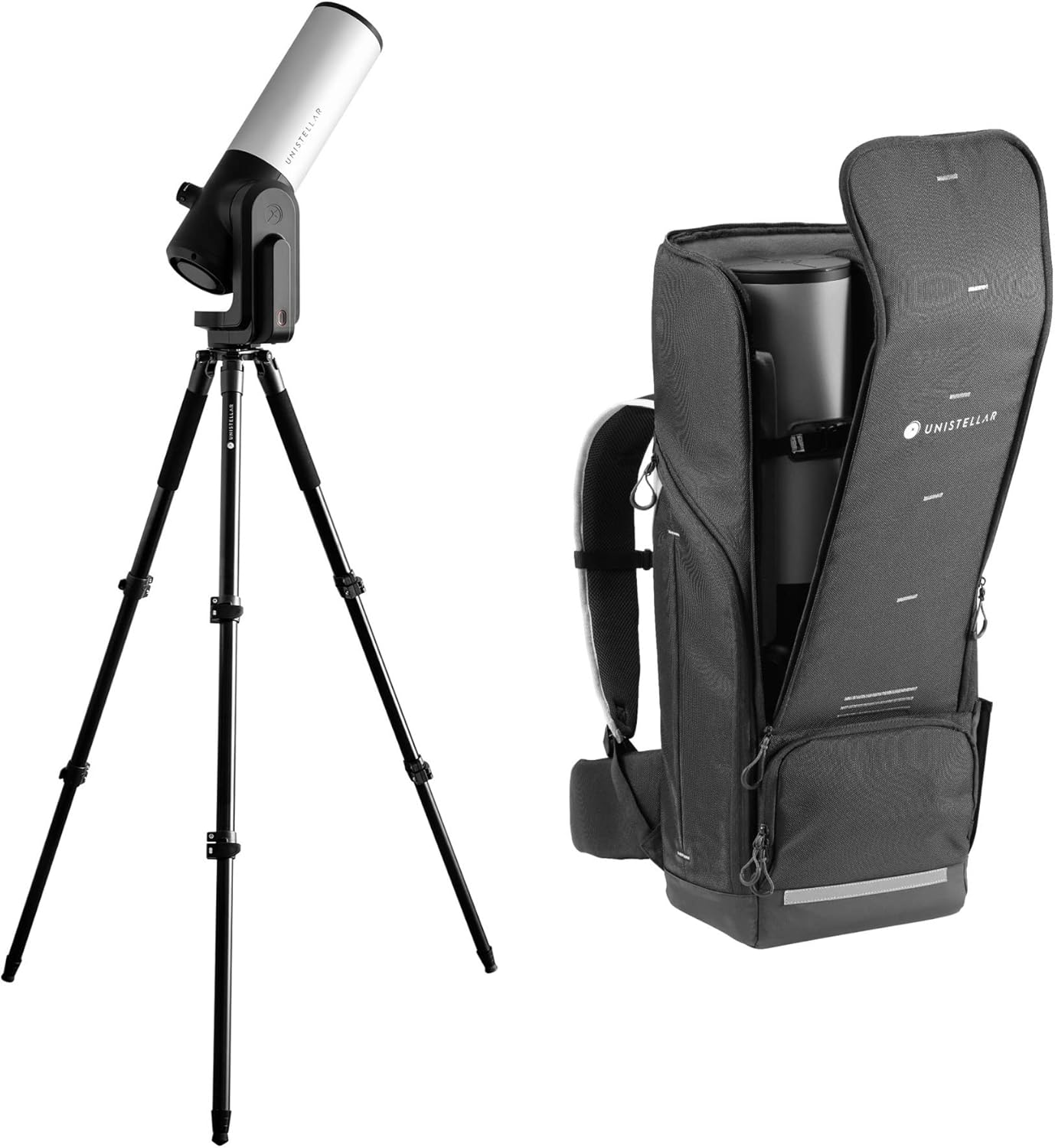
The eVscope 2 adds one feature over the eQuinox 2: a built-in electronic eyepiece that displays the live-stacked image without needing your phone out. The experience feels closer to traditional observing, while still delivering the enhanced vision and GoTo capabilities of the eQuinox. The app still controls everything.
The eVscope 2 is significantly more expensive than the eQuinox 2 for what is essentially a display upgrade. The optics are the same. If you're drawn to the electronic eyepiece experience, it's worthwhile. If you're happy with your phone screen, save the money and get the eQuinox 2 or a NexStar Evolution 8.
Best for: Smart telescope enthusiasts who specifically want the electronic eyepiece observing experience alongside full app control.
24. Vaonis Vespera — Best smart telescope for astrophotography
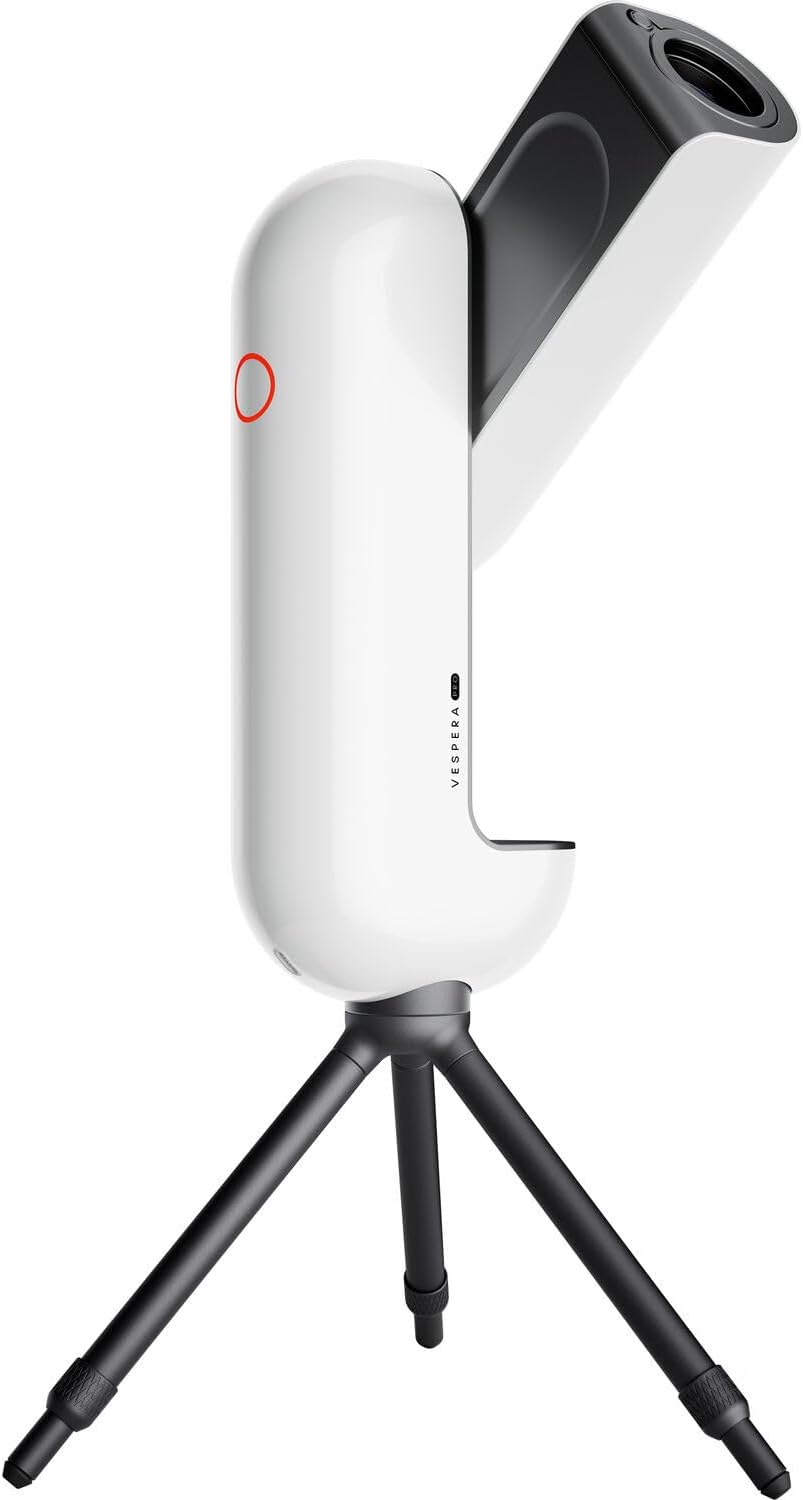
The Vaonis Vespera takes a different approach: a tiny, lightweight scope with a wide-field lens optimized for large nebulae and galaxy groups rather than tight planetary shots. The Singularity app controls everything: tap a target, the scope auto-slews, plate-solves, and begins live stacking. Images are immediately shareable from the app.
The Vespera produces beautiful wide-field views of large targets like the Orion Nebula, the Lagoon Nebula, and large galaxy groups — objects where a long focal length GoTo scope would see only part of the object. The trade-off is small aperture (50mm) and no eyepiece viewing.
Best for: Astrophotographers who want wide-field smart imaging in the most portable, grab-and-go package.
Bonus Accessories for App Telescope Owners
A few additions that make a real difference once you have an app telescope.
Celestron SkyPortal WiFi Module — Add wireless control to older NexStar scopes
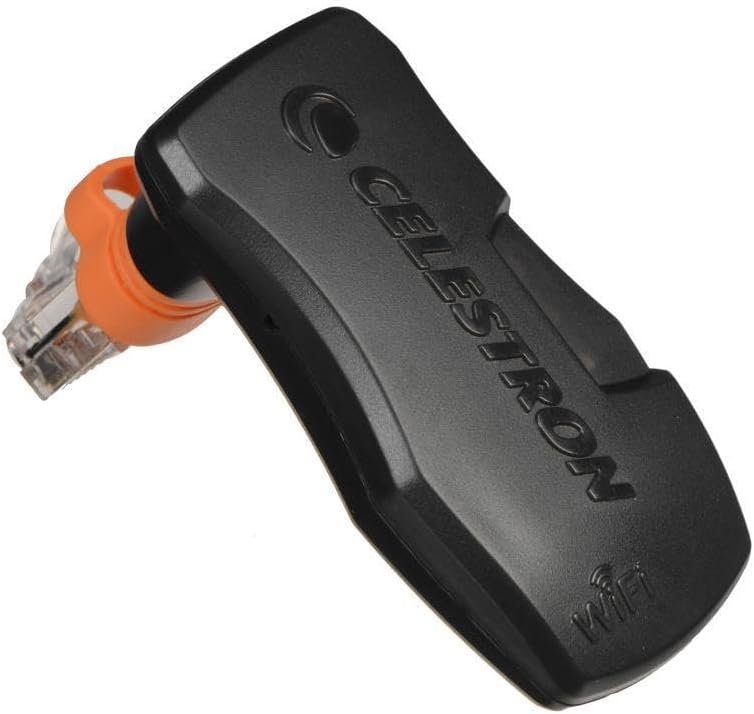
Already have a NexStar SE and want wireless app control? The SkyPortal WiFi Module plugs into the AUX port on any NexStar mount and broadcasts a WiFi network for the SkyPortal app. Turns a cabled GoTo scope into a fully wireless one for $100. Works with all NexStar SE, SLT, and CPC mounts.
Celestron NexYZ DX Universal Smartphone Adapter — Afocal phone photography
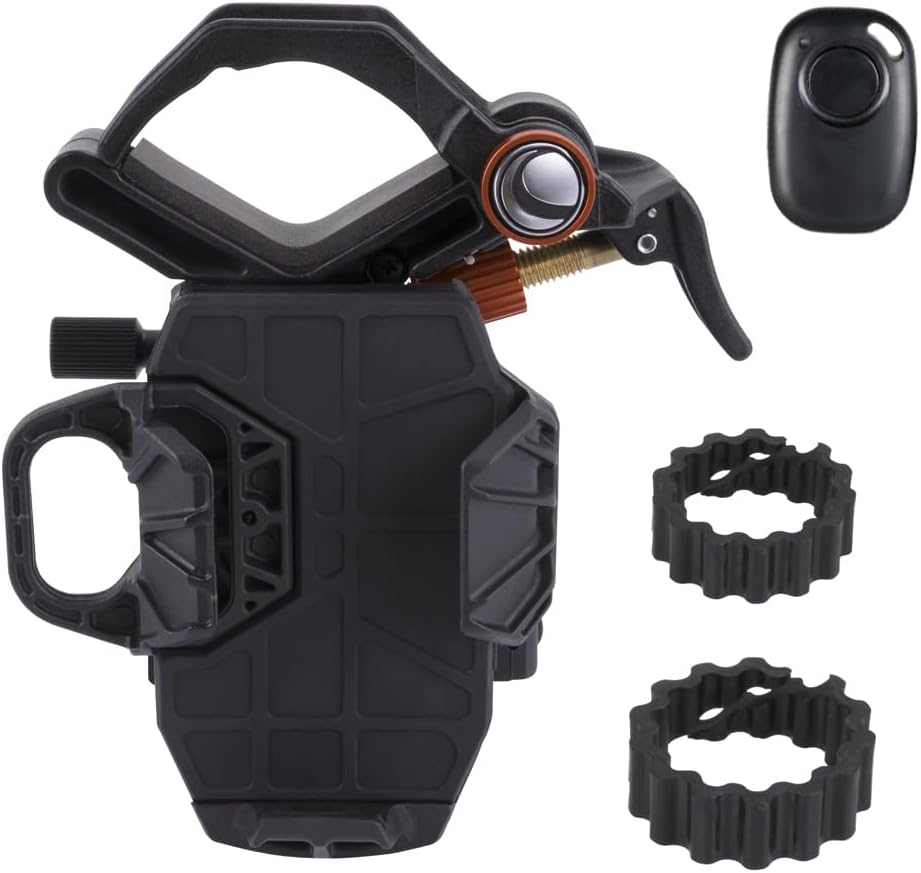
Once you've found an object with your GoTo telescope, the NexYZ DX lets you photograph it with your phone. The three-axis adjustment system centers your phone camera over any eyepiece precisely. Works with any phone (including large-format models), fits any 1.25" or 2" eyepiece holder, and takes about 60 seconds to set up. The best afocal phone adapter available for app telescope owners who want to document their views.
Gosky Universal Phone Adapter — Budget digiscoping adapter
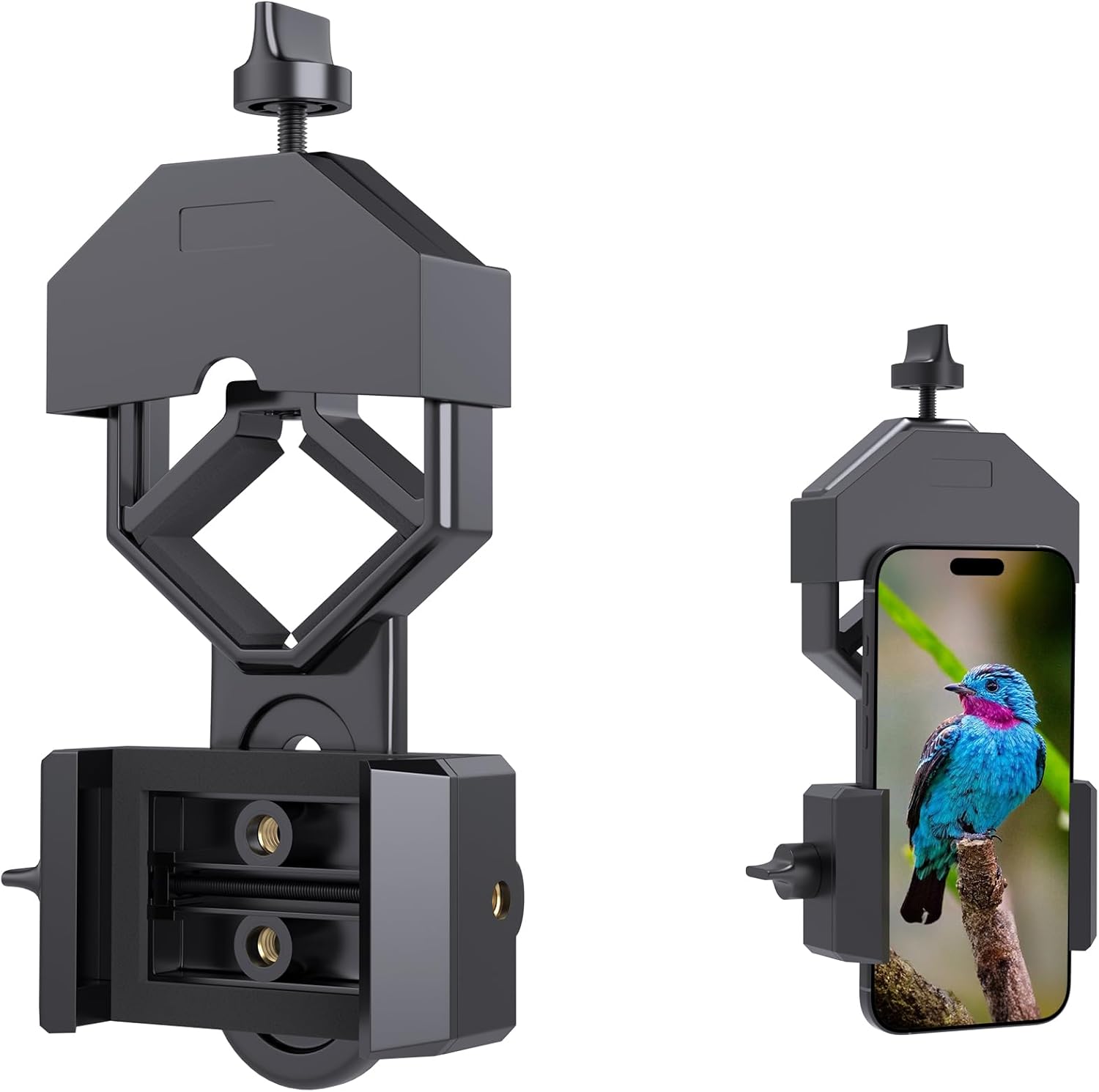
If you want a simple way to take Moon and planet photos through your telescope eyepiece without spending $50, the Gosky adapter clips to any 1.25" eyepiece barrel and holds your phone in position. Less precise than the NexYZ DX but completely serviceable for occasional Moon and Jupiter shots. The most popular digiscoping adapter on Amazon for good reason.
FAQs: Smartphone Telescopes for iPhone & Android
The right smartphone telescope depends on what experience you actually want. If you want to learn the sky while finding objects faster from your iPhone or Android, any StarSense Explorer model delivers that at an honest price. If you want to tap a button and watch the scope do the work, start with the NexStar 4SE and step up based on aperture needs. For Bluetooth-free WiFi control with serious optics, the Astro Fi or Evolution lines are the best telescope for iPhone and Android owners who want a seamless wireless experience. And if you want astrophotography images on your phone screen with zero complexity, the Unistellar and Vaonis smart scopes are built for exactly that.
The NexStar 6SE remains our benchmark recommendation in this category — it's the telescope that consistently earns its place across beginner, intermediate, and experienced observer use cases.