For a mid-northern-latitude U.S. observer in September 2026, Venus is brilliant after sunset, Saturn rises in the evening, and Jupiter and Mars are morning planets. Mercury is a brief twilight challenge. Uranus and Neptune need optical aid and an accurate location-aware chart.
Want to try this yourself?
The gear this article covers. Details are below.
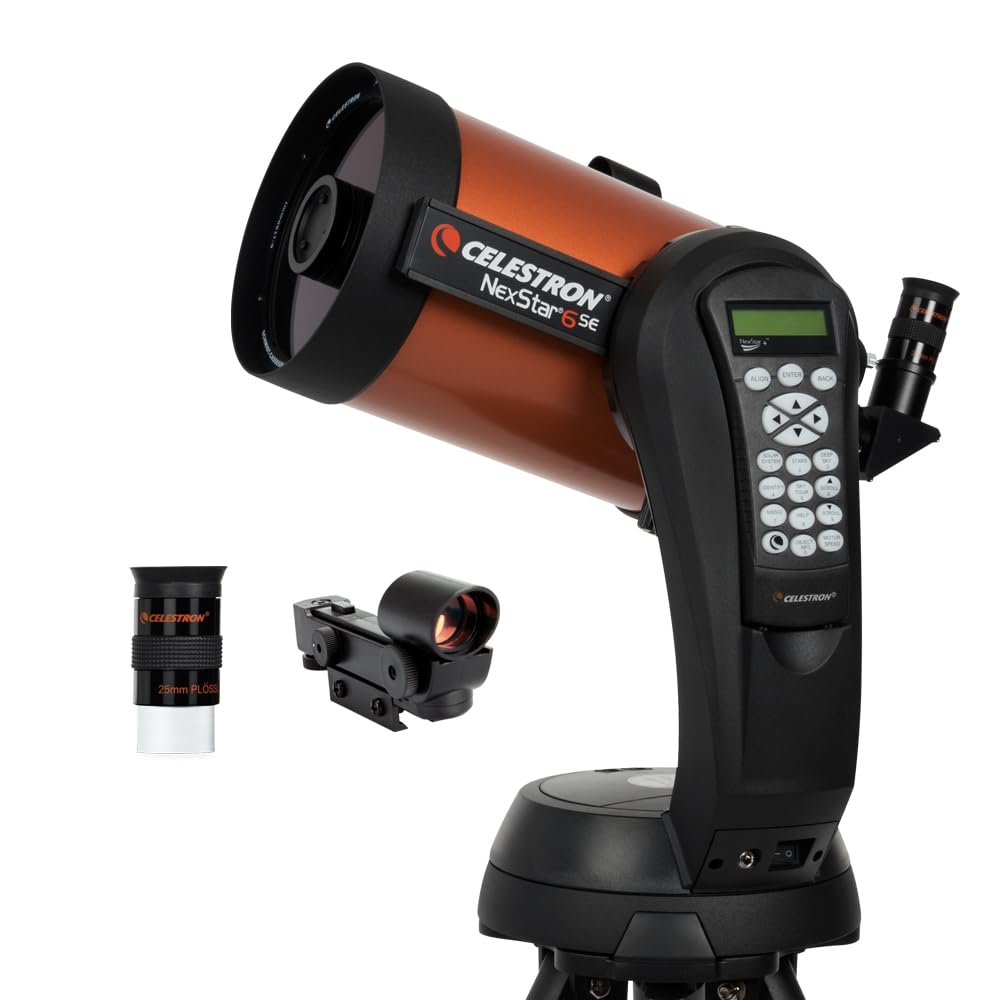 In this guideCelestron NexStar 6SESee today's price →
Opens the store for your region in a new tab. We may earn a commission at no extra cost to you.
Tonight at a glance, September 2026
- After sunset: Venus shines low in the west and reaches peak brilliance on September 18.
- Evening through night: Saturn rises in the east; the Harvest Moon appears near Saturn and Neptune on September 26.
- Before sunrise: Jupiter and Mars are in the morning sky.
- Optical aid: Neptune needs a telescope; Uranus is best treated as a binocular or telescope target.
- Local check required: exact times and directions change with latitude, longitude, and date.
Which planets can you see tonight?
| Planet | September 2026 window | General direction | Naked eye? | Best approach |
|---|---|---|---|---|
| Mercury | Brief twilight windows; changes quickly | Near the sunrise or sunset horizon | Difficult | Use a current chart and stop before bright twilight |
| Venus | Shortly after sunset | Low west | Very easy | Clear western horizon |
| Mars | Predawn | East | Yes | Identify its orange-red color |
| Jupiter | Predawn | East | Easy | Binoculars may show four bright moons |
| Saturn | Evening through dawn | Rising east, then higher overnight | Easy | Telescope for rings |
| Uranus | Late night to dawn | Along the ecliptic | Usually not | Binoculars or telescope plus chart |
| Neptune | Evening through dawn, near opposition season | Near Saturn's region of sky | No | Telescope plus precise chart |
This is a monthly baseline, not a live ephemeris. A planet can be technically above the horizon and still be hidden by a roof, hill, haze, twilight, or cloud.
Venus is the easiest evening planet
Venus dominates the western sky after sunset and reaches peak brilliance on September 18, according to NASA's September skywatching guide. It sets relatively soon after the Sun, so a clear western horizon matters more than driving to a perfectly dark site.
Wait until the Sun is fully below the horizon before aiming binoculars or a telescope. Through a small telescope, Venus shows a phase rather than surface detail. Its low altitude can make the image shimmer or show colored edges through turbulent air.
Saturn is the best evening telescope target
Saturn rises in the east and remains visible through much of the night. It appears as a steady yellowish point to the unaided eye. A small telescope reveals the rings, although their tilt changes from year to year.
NASA highlights September 26, when the Harvest Moon rises near Saturn and faint Neptune. Saturn is visible to the eye; Neptune, around magnitude 8, requires optical aid and a chart.
Start at low power to center Saturn, then increase magnification gradually. The clearest image usually comes when the planet climbs higher and its light passes through less turbulent atmosphere.
Jupiter and Mars are morning planets
Jupiter is the brightest predawn planet and is easy to recognize. Binoculars held steady may show its four Galilean moons as tiny points arranged near the planet. A telescope can reveal the main cloud belts under steady conditions.
Mars is also visible before sunrise as a steadier orange-red point. Its apparent size changes greatly over its orbit, so do not expect the same surface detail in every month.
Set a firm stop time for dawn observing. Never sweep binoculars or a telescope near the rising Sun.
Can you see Mercury, Uranus, and Neptune?
Mercury stays close to the Sun and its useful visibility changes quickly. Use a current chart for the exact date and local horizon. If the sky has become bright, do not try to recover it with binoculars.
Uranus can be technically visible without optical aid under exceptional conditions, but most observers need binoculars and a precise chart. Neptune requires a telescope. Both can resemble ordinary stars at low power, so match the surrounding star pattern rather than relying on color.
The Tonight Check: four local steps
- Set your actual location and time. Make sure the app clock is not paused or set to another date.
- Check altitude. A planet two degrees above a blocked horizon is not a practical target.
- Check Sun, Moon, and cloud. Twilight, glare, haze, and cloud can erase an otherwise favorable planet.
- Confirm in the sky. Begin with Venus, Jupiter, or Saturn, then use nearby stars as landmarks.
NASA's September 2026 skywatching guide provides the month's main events. A location-aware planetarium app supplies the local timing NASA's general guide cannot.
Key insight: “visible tonight” is a combination of geometry and conditions. Rise time alone does not tell you whether a planet clears your actual horizon in a dark-enough sky.
How can you tell a planet from a star?
Planets remain close to the ecliptic, the broad path followed by the Sun and Moon. Bright planets also tend to glow more steadily than stars, although any object near the horizon may flicker.
- Venus is dazzling and appears only around dawn or dusk.
- Jupiter is bright and cream-white.
- Mars is orange-red.
- Saturn is fainter and yellowish.
- Mercury is always found in twilight near the Sun.
Our guide to recognizing planets gives a longer identification method.
What equipment do you need?
Begin with your eyes. Mercury, Venus, Mars, Jupiter, and Saturn are naked-eye planets when favorably placed. Binoculars help with Jupiter's moons and twilight identification. A telescope shows Venus's phase, Jupiter's belts and moons, Saturn's rings, and sometimes markings on Mars.
Use a low-power eyepiece first. Let the telescope adjust toward outdoor temperature and observe when the planet is high. More magnification cannot repair poor atmospheric seeing.
Planet-observing safety
Never point binoculars or a telescope near the Sun without a properly fitted front-mounted solar filter designed for that instrument. A brief accidental view can cause permanent eye injury.
For predawn targets, stop before sunrise and put optics away as the eastern sky brightens. For Venus after sunset, confirm the Sun has fully set.
How current is this guide?
This page was manually verified on September 3, 2026. It does not detect your location and does not update automatically. Use a location-aware chart for exact rise, set, altitude, and direction data tonight.
Ready to try it?
The gear from this article, in the order we cover it.
In this guideCelestron NexStar 6SESee today's price →Opens the store for your region in a new tab. We may earn a commission at no extra cost to you.
Frequently asked questions
What is the brightest planet visible tonight?
Venus is the brightest September 2026 evening planet, appearing low in the west after sunset. Jupiter is the standout bright planet before sunrise.
What planet is visible in the east before sunrise?
Jupiter and Mars are in the eastern morning sky. Jupiter is much brighter; Mars has a distinctive orange-red color.
What planet rises in the east during the evening?
Saturn rises in the east and remains visible through much of the night. It looks like a steady yellowish point, and a telescope shows its rings.
Can I see Neptune tonight?
Neptune is observable with a telescope and accurate chart during September evenings, but it is too faint for unaided eyes. The Moon appears near Neptune and Saturn on September 26.
Why does my sky app show a planet I cannot see?
The planet may be too low, blocked by terrain or buildings, lost in twilight, or hidden by cloud. Check altitude and direction rather than only the “above horizon” label.
Does this page update automatically?
No. This guide was manually verified on September 3, 2026. Check a location-aware chart for tonight's exact conditions.