As an Amazon Associate, we earn from qualifying purchases. We may also earn a commission through other retailer links. Check the exact model, condition, delivery and current price before ordering.
The most powerful telescope you can buy for home use is the Celestron 14" EdgeHD OTA, packing 356mm of aperture into flat-field optics designed for both visual observing and serious astrophotography. For the best all-in-one system with a built-in mount, the Celestron CPC Deluxe 1100 HD with its 280mm aperture and computerized GoTo tracking is the top pick for most serious amateurs.
If you came here for the strongest home telescope, start with aperture, then decide whether you need tracking or portability.
The biggest serious consumer optical tube in the list, but it needs a real mount.
Huge light gathering for less money if you mainly observe by eye.
Strong planetary and deep-sky performance with tracking built around convenience.
The most powerful scope is only useful if you can set it up often.
Rule of thumb: Rule of thumb: aperture creates real power. Magnification claims do not matter unless the optics, mount, and atmosphere can support it.
We ranked these 13 telescopes by raw optical power: aperture first, then optical quality, then features. Every telescope on this list is one we have in our product catalog, meaning we have vetted the specs, verified current Amazon availability, and stand behind the recommendation.
No filler picks. No discontinued models. Just the most powerful scopes you can actually buy and use right now.
Quick Comparison: 13 Most Powerful Telescopes at a Glance
Aperture is the diameter of the primary mirror or lens. Bigger = more light = fainter objects visible. Max useful mag is the theoretical ceiling (50x per inch). Limiting magnitude tells you the faintest stars the scope can see (higher = fainter = better).
| Rank | Telescope | Aperture | Type | Max Mag | Lim. Mag | Price |
|---|---|---|---|---|---|---|
| 1 | Celestron 14" EdgeHD OTA | 356mm | SCT | 700x | 15.3 | ~$5,500 |
| 2 | Sky-Watcher Flextube 300 12" Dob | 305mm | Dob | 600x | 15.0 | ~$1,350 |
| 3 | Celestron CPC Deluxe 1100 HD | 280mm | SCT | 550x | 14.7 | ~$4,299 |
| 4 | Celestron StarSense Explorer 8" Dob | 203mm | Dob | 400x | 14.0 | ~$879 |
| 5 | Sky-Watcher Quattro 250P | 254mm | Newt | 500x | 14.5 | ~$750 |
| 6 | Celestron Advanced VX 8" EdgeHD | 203mm | SCT | 400x | 14.0 | ~$2,800 |
| 7 | Celestron NexStar 8SE | 203mm | SCT | 400x | 14.0 | ~$1,699 |
| 8 | Celestron NexStar Evolution 8 | 203mm | SCT | 400x | 14.0 | ~$2,000 |
| 9 | Sky-Watcher GoTo Collapsible Dob 8" | 203mm | Dob | 400x | 14.0 | ~$1,299 |
| 10 | Sky-Watcher Skymax 180mm Mak-Cass | 180mm | Mak | 354x | 13.6 | ~$1,100 |
| 11 | Sky-Watcher EvoStar 120 APO | 120mm | Refr | 240x | 12.7 | ~$1,100 |
| 12 | Unistellar eVscope 2 | 114mm | Smart | 150x* | ~16* | ~$4,200 |
| 13 | Unistellar eQuinox 2 | 114mm | Smart | 150x* | ~16* | ~$2,500 |
*Smart telescopes use digital sensor stacking. Effective limiting magnitude and detail rival much larger traditional scopes.
What Actually Makes a Telescope "Powerful"?
Most people think telescope power means magnification. It doesn't. Aperture is the single most important number. A larger mirror or lens collects more light, which means:
- Fainter objects become visible. An 8" scope shows thousands of galaxies that a 3" scope cannot detect at any magnification.
- More detail resolves. Larger aperture means finer angular resolution, so you see more structure in planets, nebulae, and star clusters.
- Higher magnification becomes usable. The rule is roughly 50x per inch of aperture. Push beyond that and the image turns dim and mushy.
That is why this list is ranked by aperture, not price, not features, not brand. Aperture is the one spec you cannot upgrade later.
Before chasing maximum aperture, consider your storage space, vehicle size, and how often you will realistically set up. The best telescope is the one you actually use. A 14" scope in the garage collecting dust loses to an 8" Dob that gets pulled out every clear night.
1. Celestron 14" EdgeHD Optical Tube (CGE Dovetail) - Most Powerful Consumer Telescope
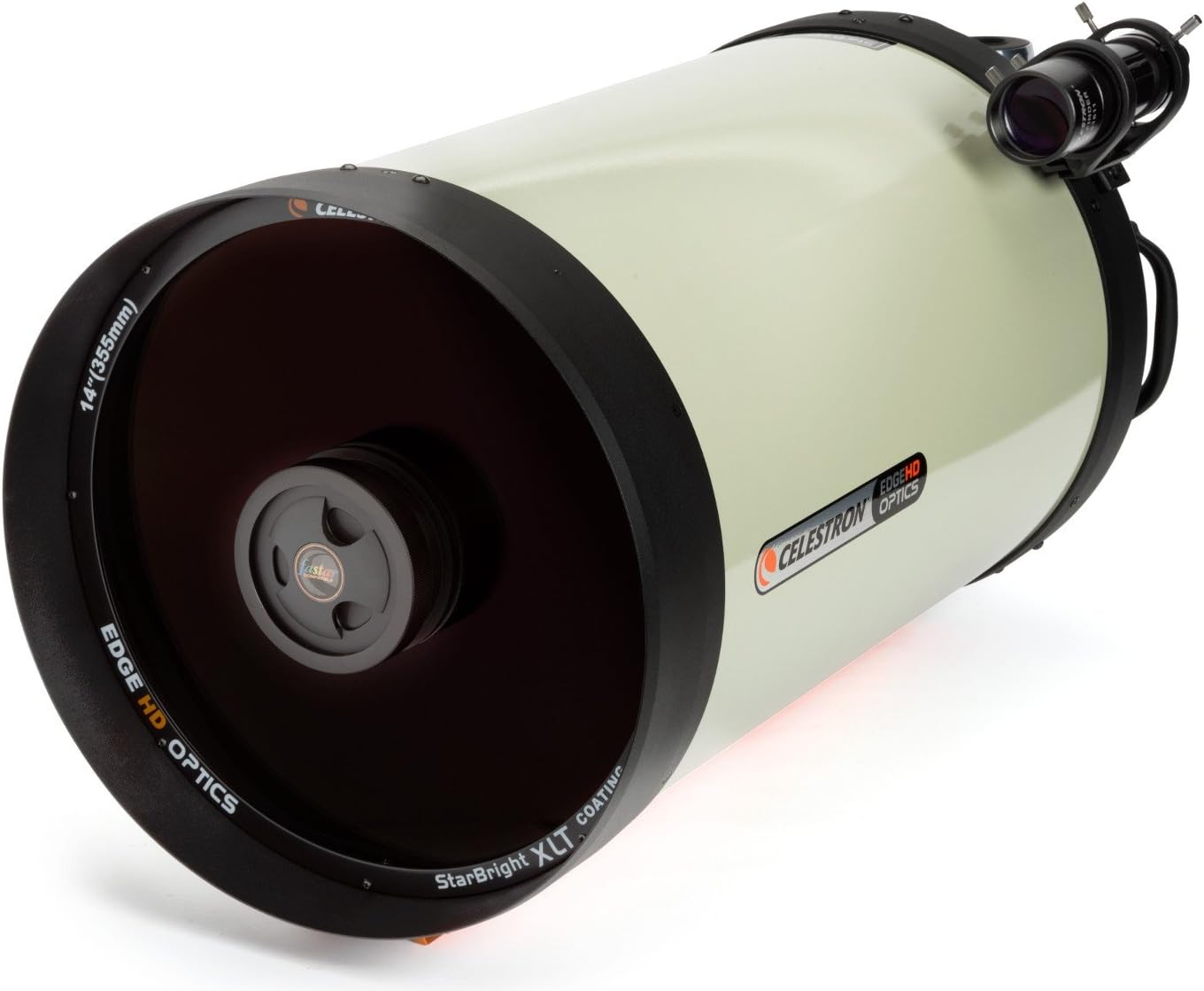
Nothing on the consumer market touches the raw light-gathering power of a 14-inch aperture. The EdgeHD optical design eliminates coma and field curvature across the entire sensor, making this OTA a dual-purpose weapon for both visual observing and deep-sky astrophotography.
At 356mm, you are working with a mirror that gathers over 2,500 times more light than the naked eye. Galaxies show spiral arm structure. Planetary nebulae reveal internal shells. Jupiter's cloud bands display subtle festoon detail that smaller scopes simply cannot resolve.
What you need to know: This is an optical tube only, no mount included. You will need a serious equatorial mount (the CGX-L or equivalent) which adds significant cost and weight. Total setup weight exceeds 100 lbs. This is an observatory-class instrument, not a grab-and-go scope.
Best for: Dedicated astrophotographers with a permanent or semi-permanent setup, and serious visual observers who want the absolute maximum detail available in a consumer product.
2. Sky-Watcher Flextube 300 Dobsonian 12" - Best Big Visual Scope
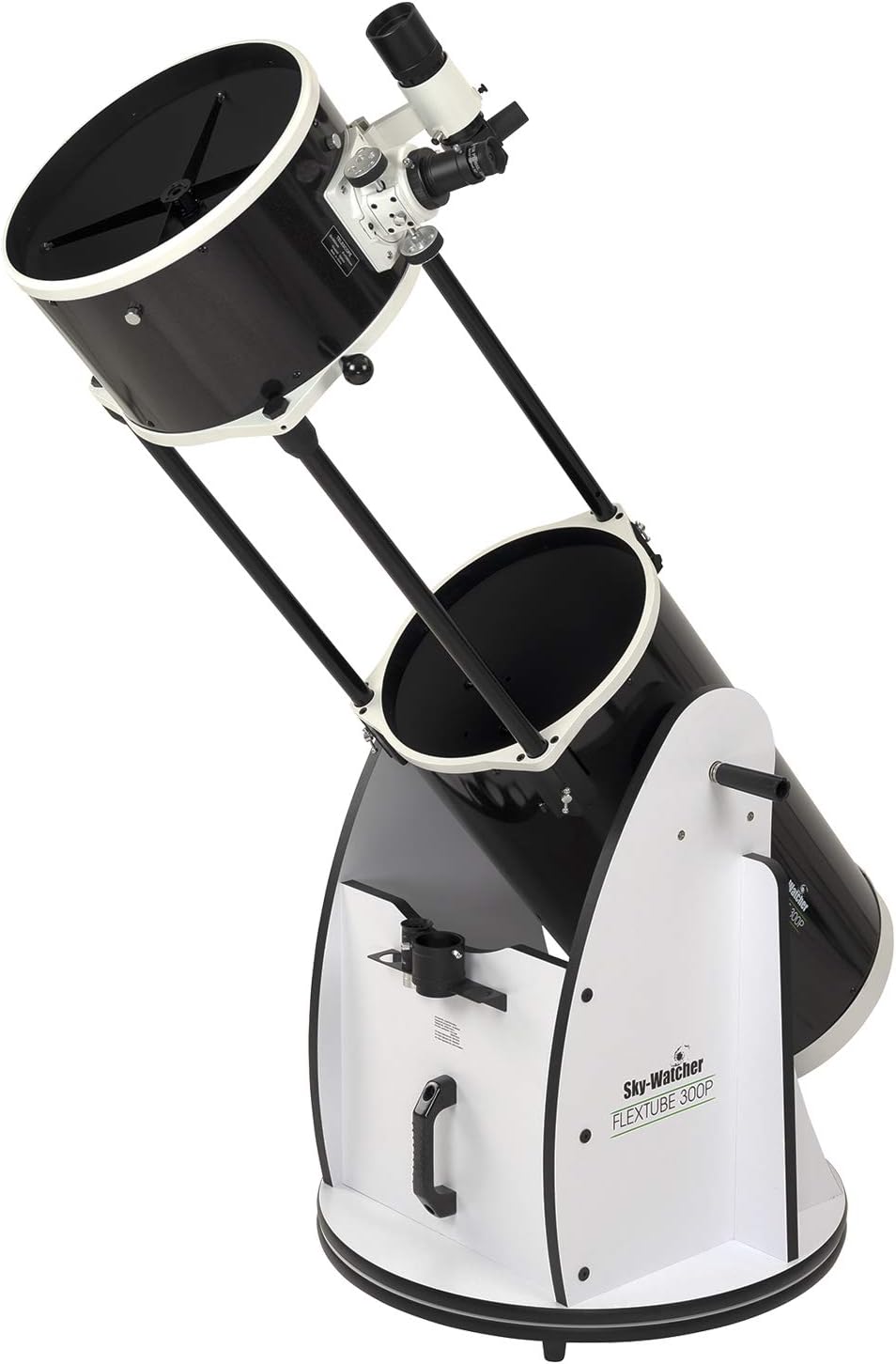
The Flextube design solves the biggest problem with large Dobsonians: storage and transport. The truss tube collapses, cutting the overall length nearly in half. You get 305mm of aperture that actually fits in a car trunk.
Optically, 12 inches of parabolic mirror delivers views that make 8-inch owners jealous. Globular clusters resolve to the core. The Veil Nebula shows intricate filament structure. Galaxies in the Virgo Cluster become more than faint smudges; they show shape, orientation, and companion galaxies.
The 2-inch Crayford focuser handles heavy eyepieces without sagging. The Dobsonian base provides smooth altitude-azimuth motion for manual tracking. Setup time is under 10 minutes once you have the collimation dialed in.
Best for: Visual observers who want maximum aperture with reasonable portability. The classic "biggest scope that still travels" choice.
3. Celestron CPC Deluxe 1100 HD - Best All-In-One Powerhouse
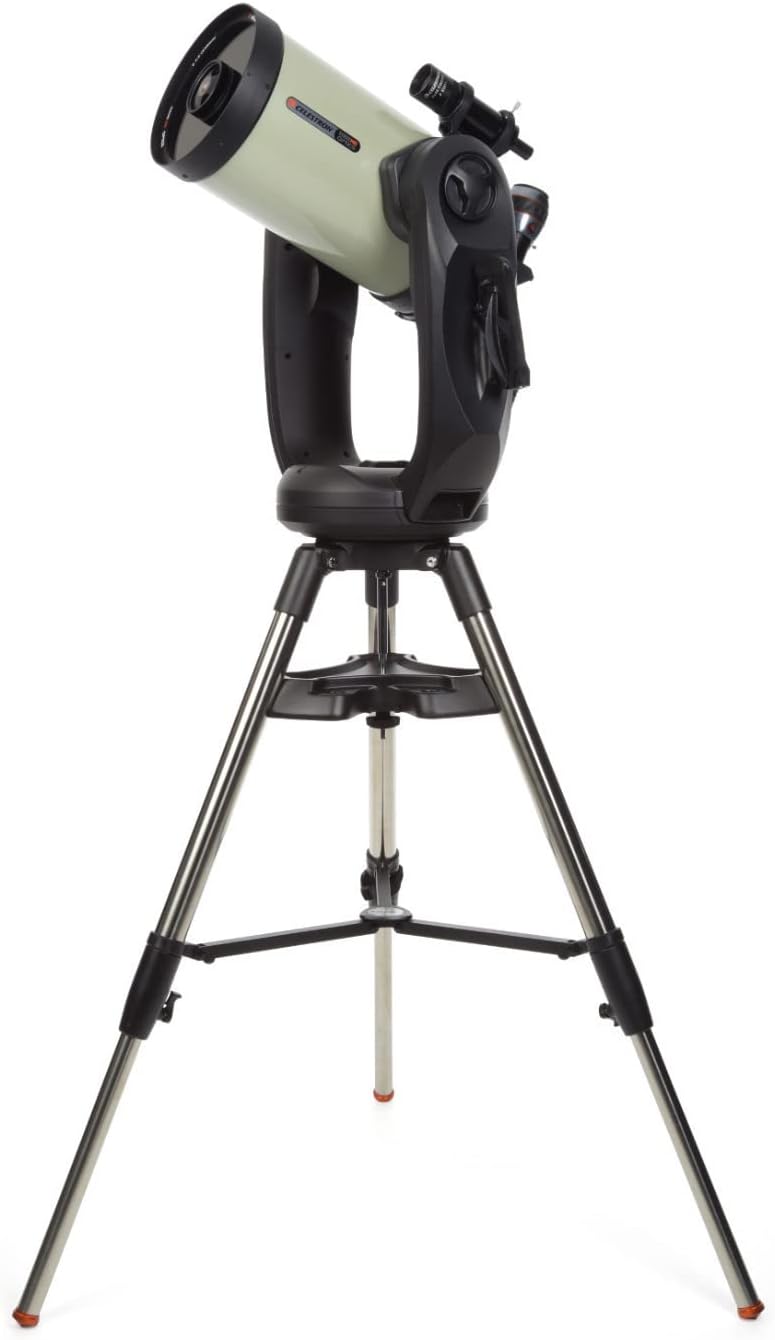
This is the most powerful telescope you can buy as a complete, ready-to-observe system. The CPC Deluxe 1100 HD includes the optical tube, the dual fork-arm mount with GoTo tracking, the NexStar+ hand controller with a 40,000-object database, and StarBright XLT coatings that maximize light transmission.
At 280mm (11 inches), it sits in a sweet spot: enough aperture to show serious deep-sky detail, compact enough that one person can move it (barely; the OTA alone is about 28 lbs). The f/10 focal ratio gives you 2,800mm of focal length, which is exceptional for planetary observation and lunar detail.
SkyAlign technology gets the GoTo system aligned by centering three bright objects. No need to know star names or polar align. From there, the mount slews to any of its 40,000+ cataloged objects with precision good enough to keep targets centered for visual observation and short-exposure imaging.
Best for: Advanced amateurs who want one system that does everything: deep-sky visual, planetary, lunar, and entry-level astrophotography, without assembling separate OTA and mount components.
4. Celestron StarSense Explorer 8" Dobsonian - Best Value Large Scope
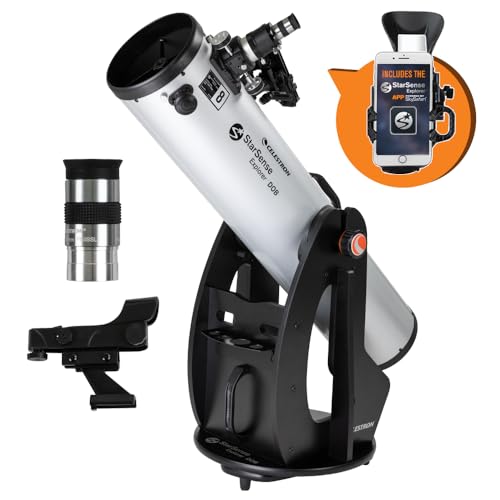
This might be the most disruptive telescope on the market right now. Eight inches of aperture, a solid Dobsonian base, and Celestron's StarSense technology that uses your smartphone camera to plate-solve the sky in real time, for well under the price of a computerized 8-inch telescope. High Point listed it at $879, back ordered, on October 11, 2026.
The StarSense system works by mounting your phone in a dock on the telescope. The app analyzes the star field through the phone's camera, determines exactly where the scope is pointing, and draws arrows on screen telling you which way to push. No alignment procedures. No star charts. Point and push until the bullseye turns green.
With 203mm of aperture, you are into serious deep-sky territory. The Orion Nebula shows green/teal tinting. Globular clusters resolve into hundreds of individual stars. Saturn's Cassini Division is clean and sharp.
Best for: Anyone who wants maximum power on a budget. The StarSense integration makes this the most beginner-friendly large telescope ever made. Also excellent as a second scope for experienced observers who want a quick-setup visual instrument.
5. Sky-Watcher Quattro 250P Imaging Newtonian - Best for Astrophotography
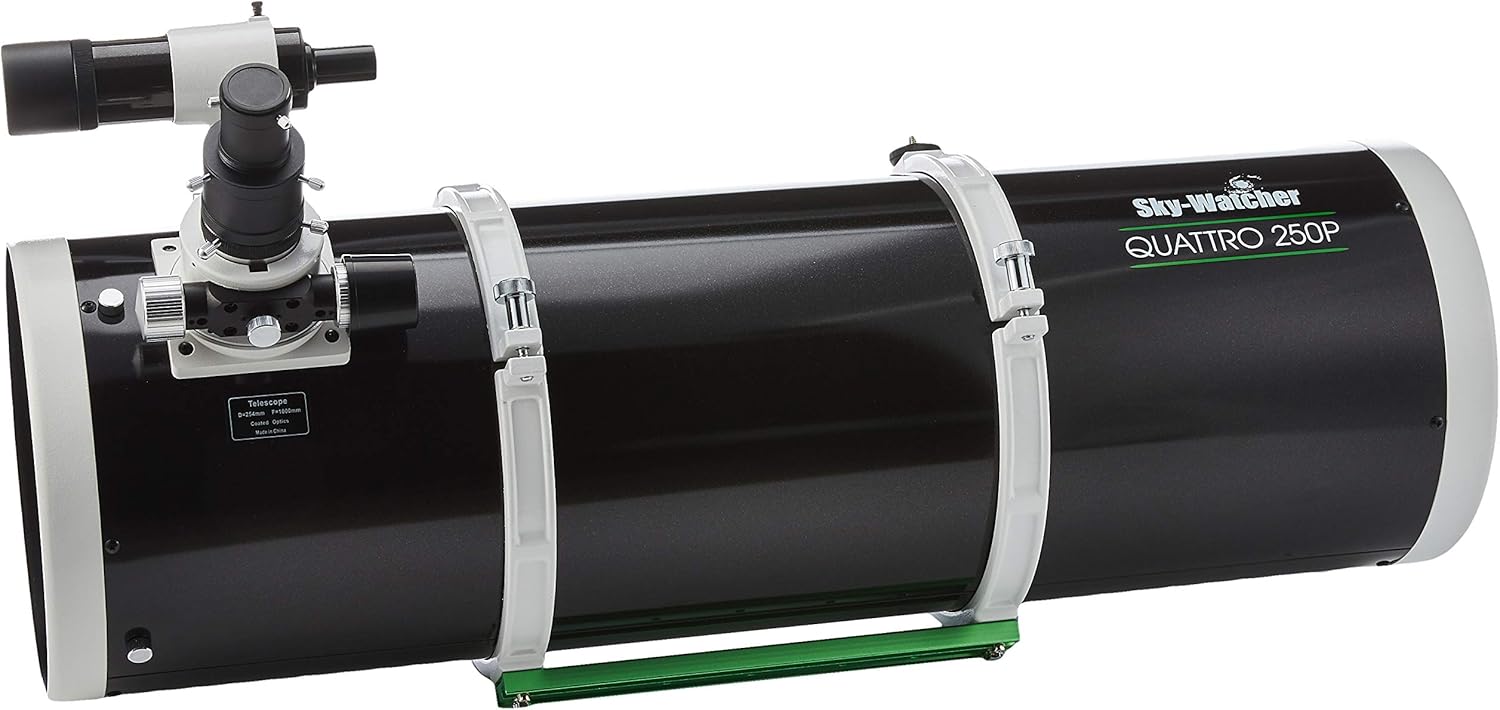
The Quattro line exists for one purpose: deep-sky astrophotography. The f/4 focal ratio means dramatically shorter exposure times compared to f/10 Schmidt-Cassegrains, so you spend less time per frame and get more total integration time in a night.
At 203mm of aperture, it collects serious photons. The dual-speed linear-bearing focuser handles heavy camera setups without flexure. The tube design minimizes thermal issues with proper ventilation. It is an imaging instrument through and through.
You will need a coma corrector (the Quattro's fast focal ratio produces coma at the field edges without one) and a solid equatorial mount like the Sky-Watcher EQ6-R Pro. Budget for these when planning your purchase.
Best for: Dedicated astrophotographers who want maximum light-gathering speed in a Newtonian package. Not ideal for visual-only observers due to the fast focal ratio and lack of tracking.
6. Celestron Advanced VX 8" EdgeHD - Best Imaging System Under $3,000
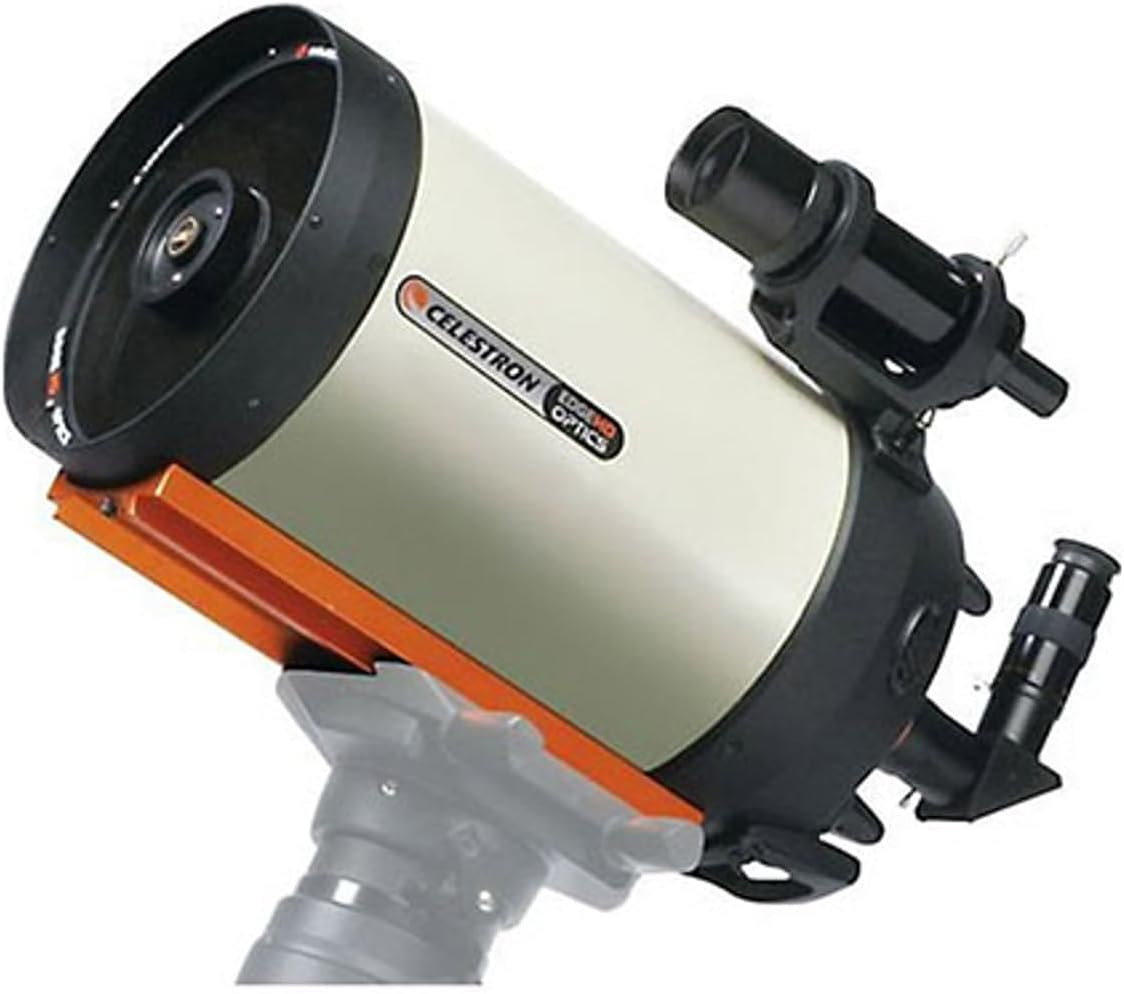
The Advanced VX mount paired with EdgeHD optics is one of the most popular entry points into serious astrophotography. The EdgeHD design produces flat, coma-free images across the full sensor, which is critical once you start imaging with large-format cameras.
The AVX mount supports up to 30 lbs of payload with PEC (Periodic Error Correction), an autoguider port, and all-star polar alignment. It is not an observatory-grade mount, but for 2-3 minute sub-exposures (or longer with autoguiding), it performs well above its price point.
Visually, the 8-inch aperture delivers the same excellent planetary and deep-sky views as the NexStar 8SE, but on a German equatorial mount that tracks accurately enough for imaging. You get a dual-purpose instrument.
Best for: Astronomers who want one system for both visual observing and astrophotography. The GEM mount is more complex to set up than the NexStar's alt-az fork, but the imaging capability is worth it if photography is in your plans.
7. Celestron NexStar 8SE - Most Popular Serious Telescope
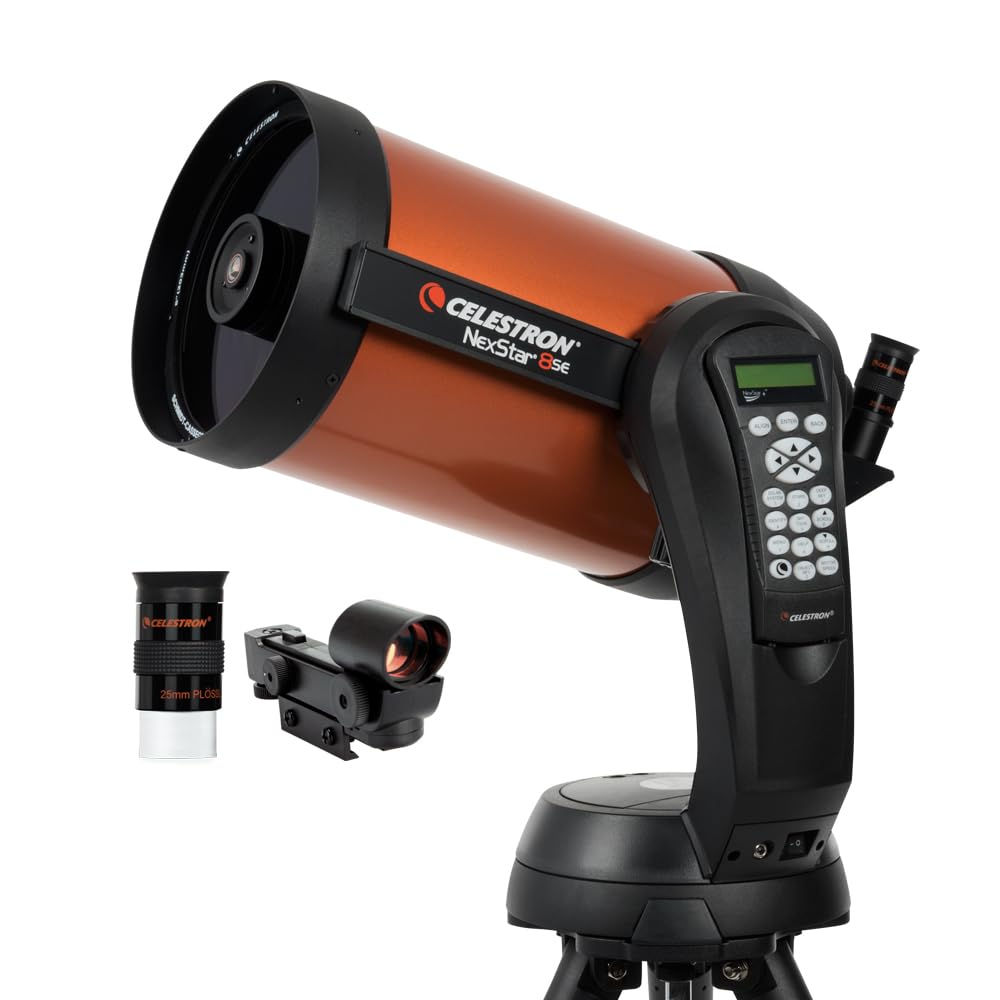
There is a reason the NexStar 8SE appears on every "best telescope" list: it hits the sweet spot of aperture, portability, and automation that no other scope matches at its price.
Eight inches of Schmidt-Cassegrain optics in a compact tube that mounts on a single fork arm with GoTo tracking. The entire system weighs about 33 lbs and fits in a car back seat. Setup takes 10-15 minutes including alignment. The NexStar+ hand controller locates and tracks any of 40,000+ cataloged objects.
Optically, 203mm resolves Jupiter's Great Red Spot, Saturn's Cassini Division, and Mars's polar caps and dark surface features during favorable oppositions. For deep-sky, it shows hundreds of galaxies, dozens of nebulae with visible structure, and globular clusters resolved to individual stars.
The SkyAlign alignment process is forgiving: center three bright objects (you do not need to know their names) and the mount calibrates itself. The learning curve is gentle enough for an ambitious beginner, while the 8-inch aperture satisfies observers for years.
Best for: The single best telescope for someone stepping up from a beginner scope, or anyone who wants a powerful, computerized instrument that one person can set up and tear down solo.
8. Celestron NexStar Evolution 8 - Best WiFi-Enabled Scope
Think of the Evolution 8 as the NexStar 8SE's premium sibling. Same 203mm Schmidt-Cassegrain optics, same excellent views, but with three major upgrades: built-in WiFi, a rechargeable lithium-ion battery (10+ hours), and smartphone/tablet control via the SkyPortal app.
The battery eliminates the need for external power packs or extension cords. The WiFi means your phone becomes the controller instead of the hand paddle. For observers who find the NexStar+ hand controller limiting or want to show guests what they are looking at on a screen, this is the upgrade that matters.
The Celestron SkyPortal app is solid: it shows a real-time sky map, lets you browse catalogs, and slews the scope with a tap. It is more intuitive than button-pressing on a hand controller, especially for beginners or guests at star parties.
Best for: NexStar 8SE buyers who want the convenience of wireless control and built-in power. Also excellent for star parties where passing a tablet around is easier than huddling over a hand controller.
9. Sky-Watcher GoTo Collapsible Dobsonian 8" - Best Tracking Dob
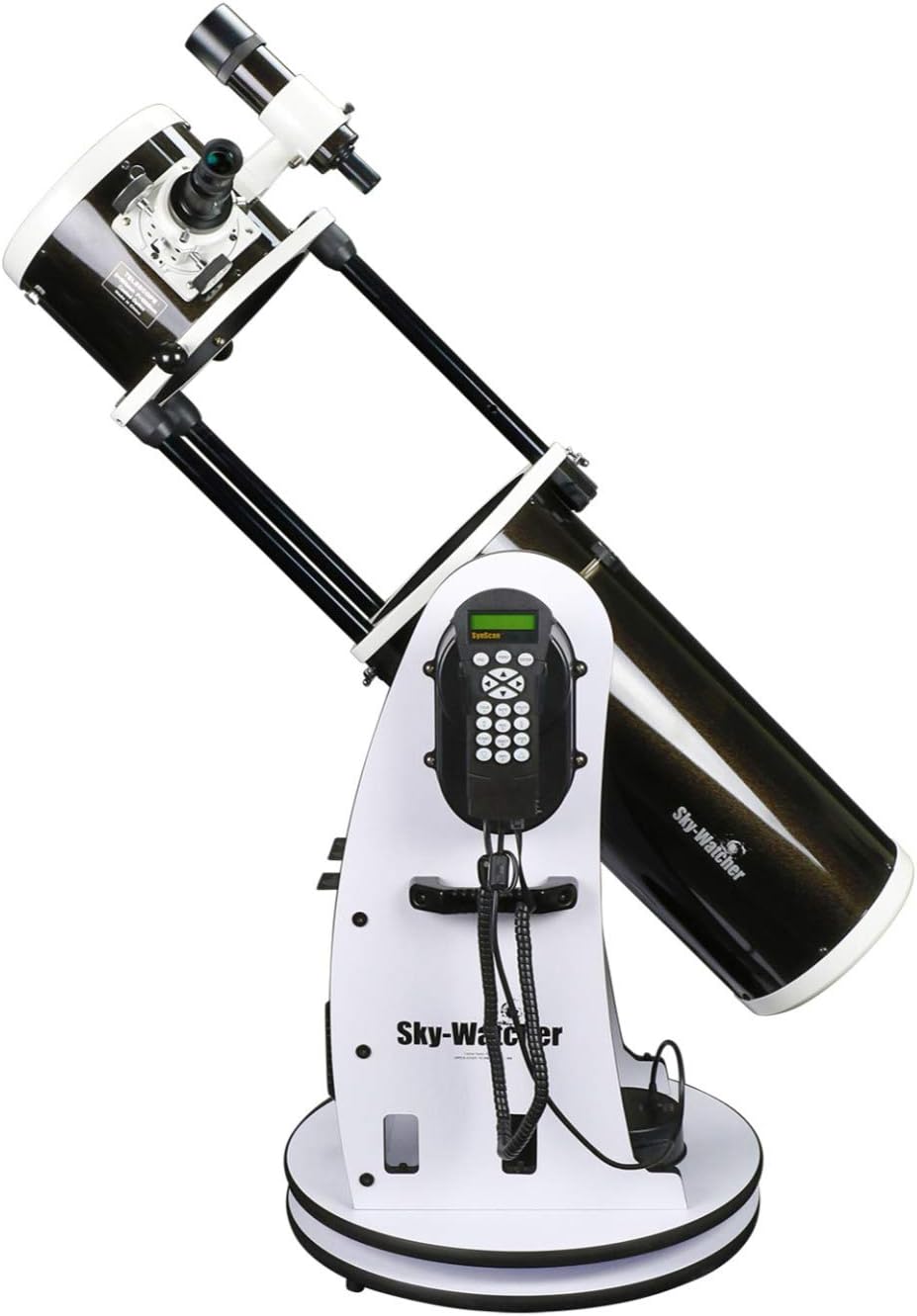
Traditional Dobsonians have one limitation: they do not track. Objects drift out of the eyepiece as the Earth rotates, requiring constant manual nudging. The Sky-Watcher GoTo Collapsible Dob solves this with motorized tracking built into the Dobsonian base.
The SynScan hand controller gives you access to over 42,000 objects. Align on two stars, and the scope slews to targets and tracks them automatically. The collapsible tube shrinks the scope for storage and transport, same as the Flextube design.
At f/6, the optical system delivers a wider true field of view than the f/10 SCTs on this list, which makes it better for large, extended objects like the Andromeda Galaxy, the Pleiades, and the North America Nebula.
Best for: Observers who want the wide-field views and aperture value of a Dobsonian but refuse to give up GoTo convenience. Particularly good for high-magnification planetary viewing where manual tracking gets tedious.
10. Sky-Watcher Skymax 180mm Maksutov-Cassegrain - Best Planetary Scope
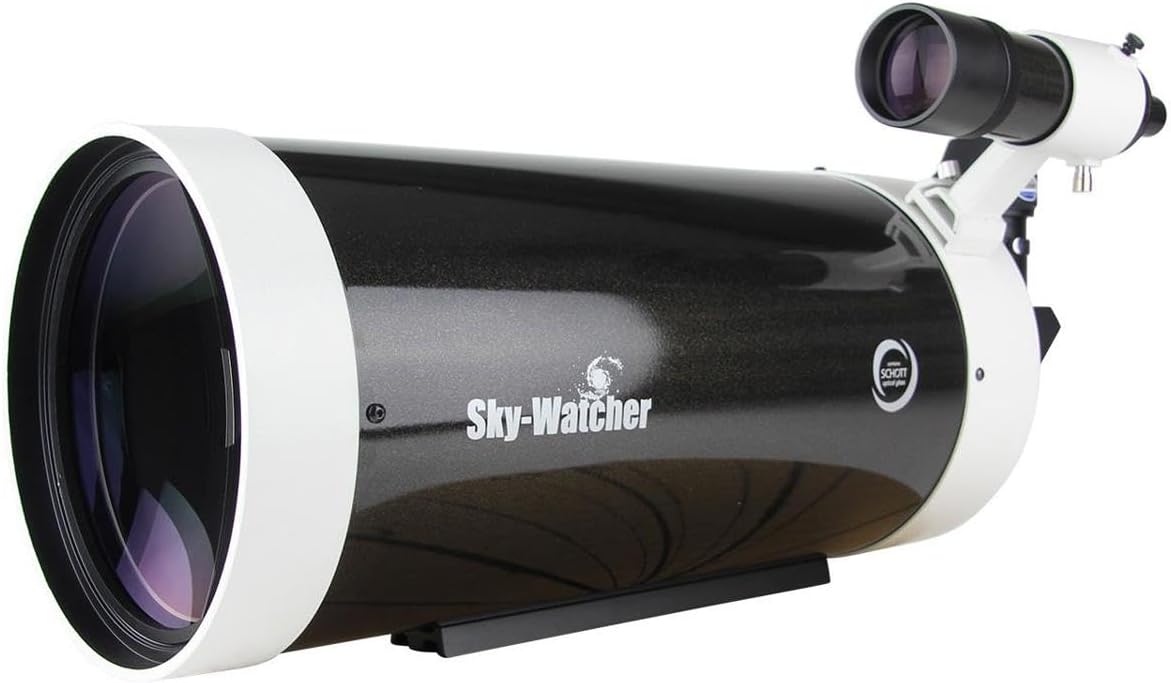
Maksutov-Cassegrain telescopes are specialists. The sealed tube, long focal length (f/15 in this case), and meniscus corrector plate produce exceptionally sharp, high-contrast images with minimal optical artifacts. They are the planetary observer's weapon of choice.
At 180mm, the Skymax collects enough light for serious work while the f/15 focal ratio delivers 2,700mm of focal length in a tube that is only about 20 inches long. Jupiter shows cloud band detail, festoons, and the Great Red Spot with textbook clarity. Saturn's rings display the Cassini Division, the Encke gap on steady nights, and cloud banding on the planet itself.
The trade-off is narrow field of view. This is not the scope for sweeping through wide star fields or framing large nebulae. It is a precision instrument for high-magnification targets: planets, the Moon, double stars, and small planetary nebulae.
Best for: Dedicated planetary and lunar observers who prioritize contrast and sharpness over field of view. Also excellent for double star work and detailed views of compact deep-sky objects.
11. Sky-Watcher EvoStar 120 APO Doublet Refractor - Best Premium Refractor
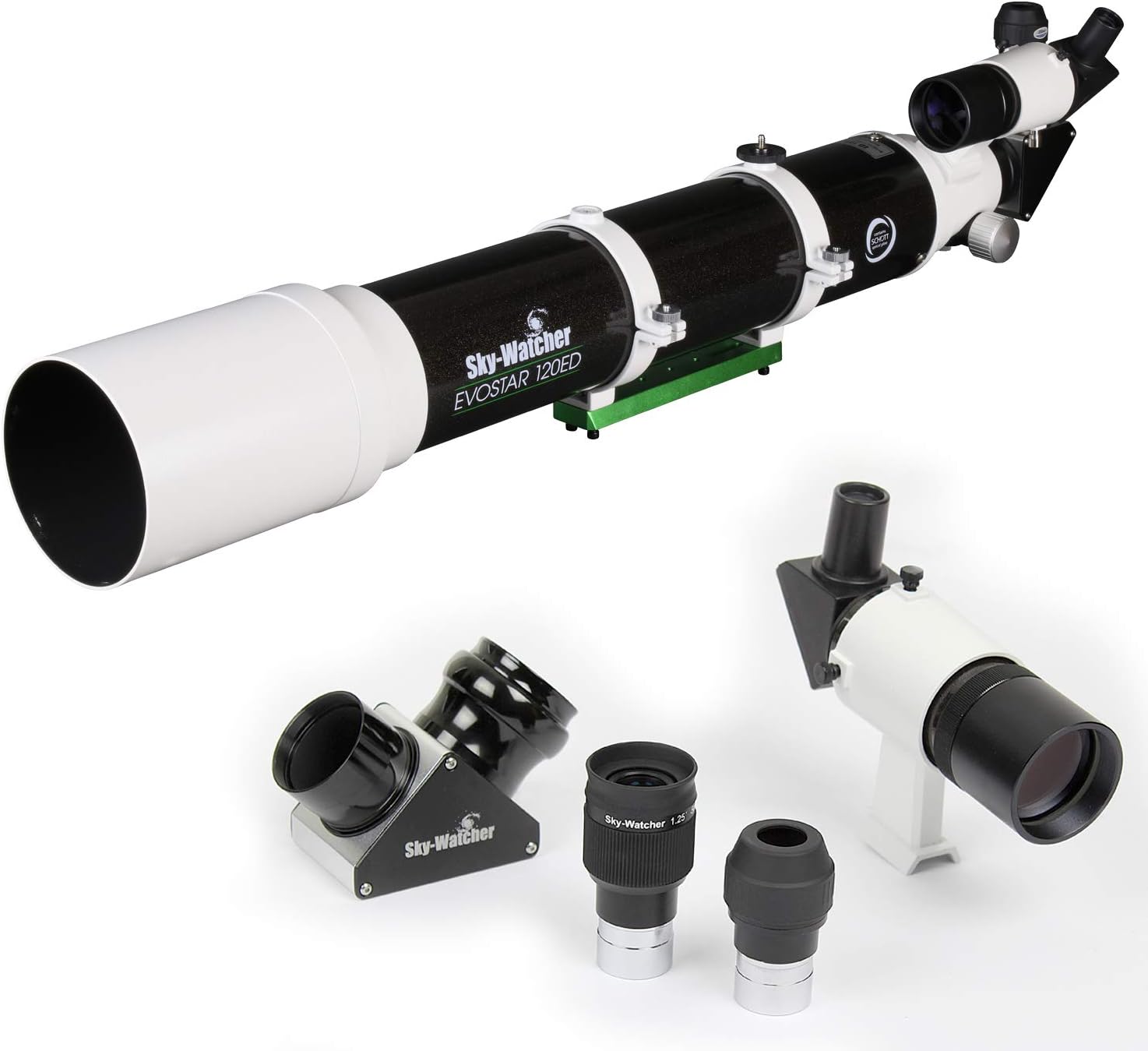
Refractors play a different game than reflectors and SCTs. You get less aperture per dollar, but you gain contrast, sharpness, and zero maintenance. No collimation. No cool-down time. No diffraction spikes from a secondary mirror. The image is clean from the moment you point the scope at the sky.
The EvoStar 120 APO uses apochromatic glass to virtually eliminate chromatic aberration (the colored fringe around bright objects that plagues cheap refractors). At 120mm and f/7.5, you get an 840mm focal length that works well for both visual observation and widefield astrophotography.
This is an OTA only. Pair it with a solid equatorial mount (the Sky-Watcher EQ6-R Pro, for example) for imaging, or a sturdy alt-az mount for visual observing. The 120mm aperture is large enough to show satisfying deep-sky detail while remaining light enough for portable setups.
Best for: Observers and imagers who value contrast, color accuracy, and maintenance-free operation. Excellent as a widefield astrophotography instrument on an equatorial mount.
12. Unistellar eVscope 2 - Best Smart Telescope
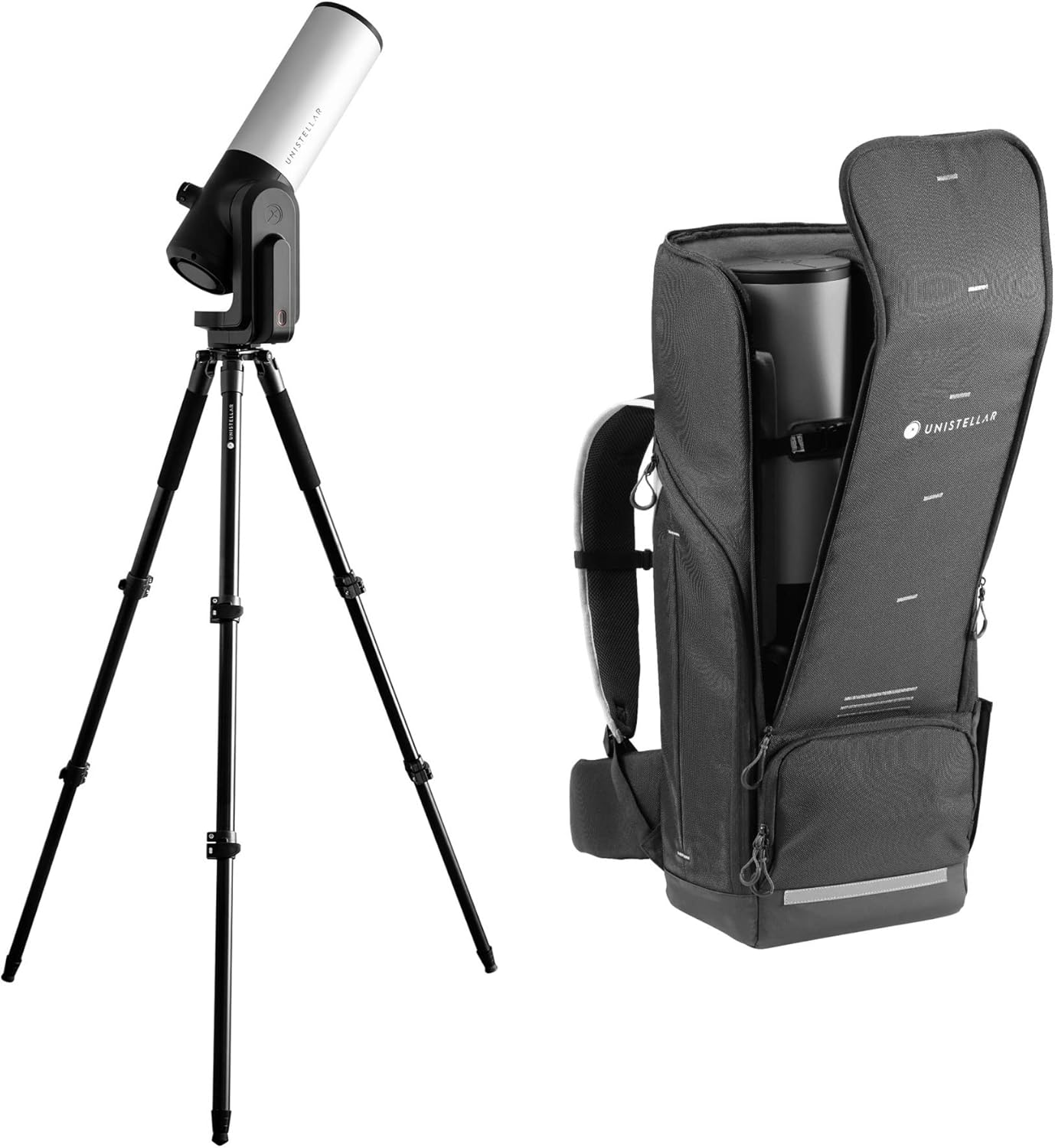
The eVscope 2 represents a fundamentally different approach to observing. Instead of collecting light through an eyepiece with your eye, a Sony IMX347 sensor captures frames continuously, stacks them in real time using Unistellar's Enhanced Vision technology, and displays the accumulated result on a built-in OLED eyepiece.
The result is extraordinary for its aperture class. Within 10-30 seconds of pointing at a nebula, color and detail appear that you would need a 10-12 inch traditional scope under dark skies to match visually. From a suburban backyard, the eVscope 2 shows the Horsehead Nebula, the Crab Nebula's filaments, and spiral arms in galaxies, all in color, all in real time.
The automated field detection eliminates alignment entirely. Turn it on, wait 30 seconds for the GPS and plate-solving to finish, and tap an object in the app. The scope slews, centers, and starts stacking. Total setup time: under 2 minutes.
The trade-off is obvious: you are looking at a screen, not photons hitting your retina. For many observers, that distinction matters. For city dwellers who have no realistic access to dark skies, this technology is the only way to see deep-sky objects at all.
Best for: City and suburban observers, star party hosts who want to show guests colorful nebulae, and anyone who values ease of use and instant results over the traditional observing experience.
13. Unistellar eQuinox 2 - Best Smart Scope Under $3,000
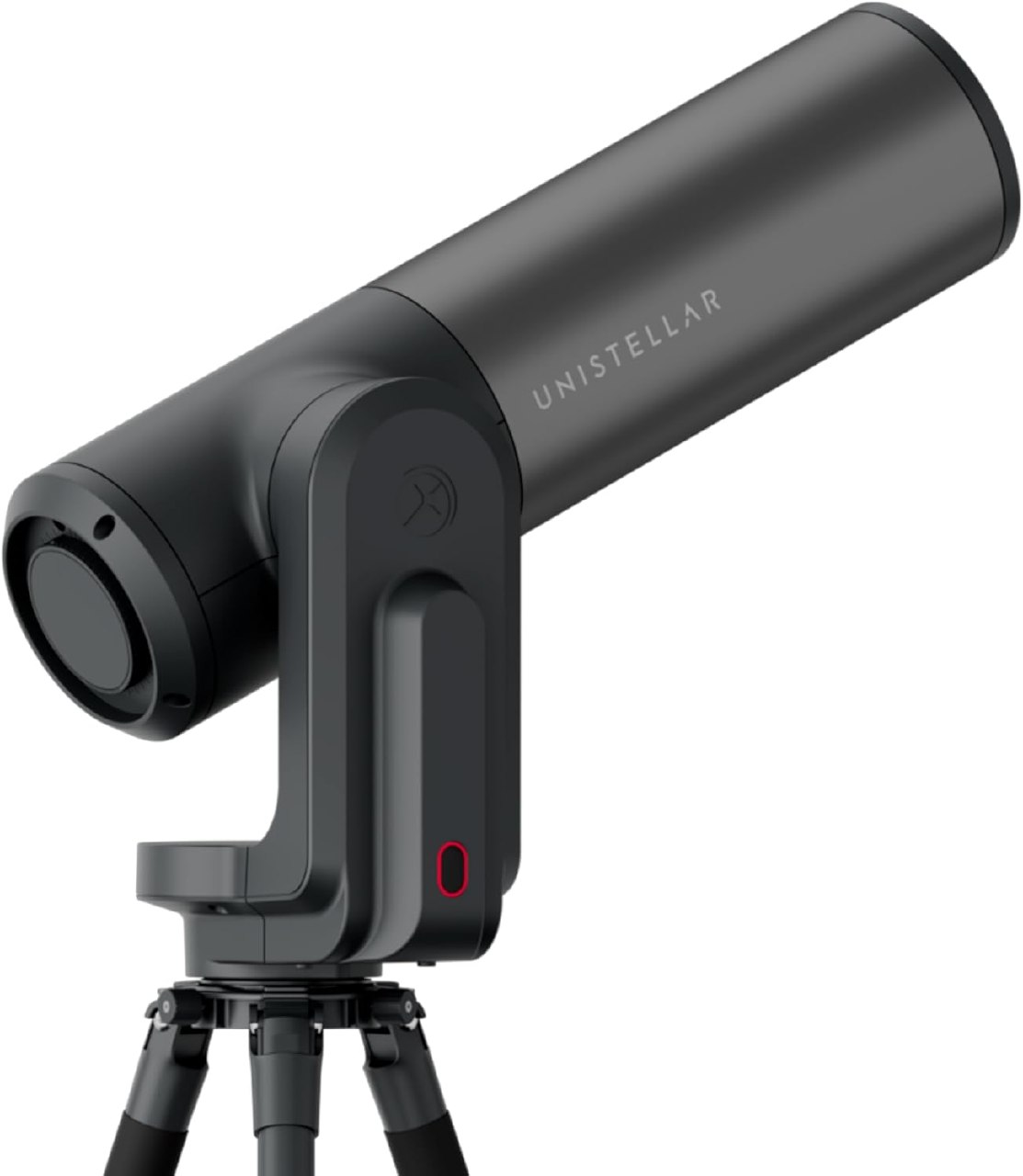
The eQuinox 2 uses the same optical system and Enhanced Vision stacking technology as the eVscope 2. The difference is how you view the image: instead of a built-in OLED eyepiece, you view through your phone or tablet via the Unistellar app.
This trade-off saves roughly $1,700. The imaging performance is identical. The stacking quality, the GoTo accuracy, the automated alignment: all the same. You lose the dedicated eyepiece experience (which some users prefer for that "looking through a telescope" feel) and gain the ability to pass a tablet around at a star party so everyone sees the same image simultaneously.
For most buyers, the eQuinox 2 is the smarter purchase. The money saved can go toward accessories, a better mount for a traditional scope, or simply staying in budget.
Best for: Smart-scope buyers who are comfortable viewing on a phone/tablet. Delivers the same light-pollution-fighting capability as the eVscope 2 at a significantly lower price.
Best Accessories to Maximize Your Telescope's Power
The telescope gets you 80% of the way there. The right accessories unlock the last 20%. Here are the upgrades that make the biggest difference with the scopes on this list:
Eyepieces
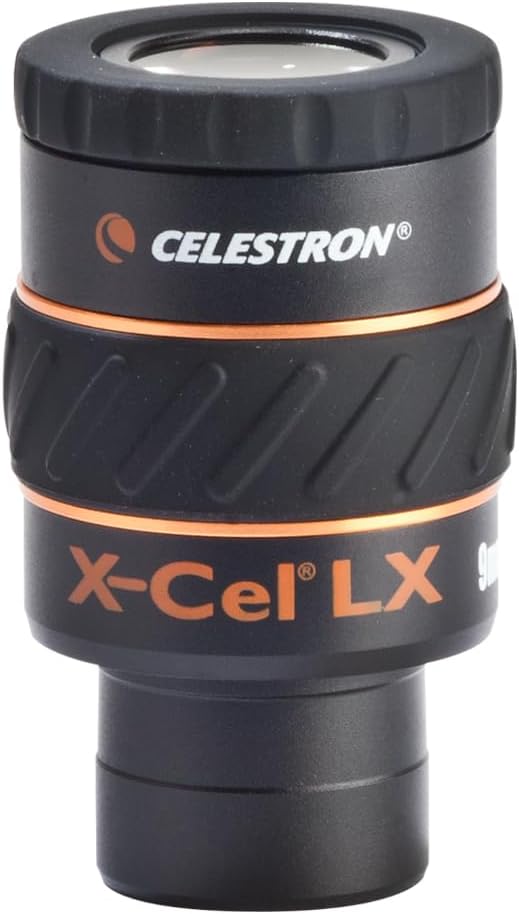
In an f/10 Schmidt-Cassegrain (NexStar 8SE, Evolution 8, CPC 1100), the 9mm X-Cel LX gives you 222x magnification, which is the sweet spot for planetary detail on most nights. The 60-degree apparent field of view and 16mm of eye relief make it comfortable to use for extended observing sessions. This single eyepiece will be the one you reach for most often.
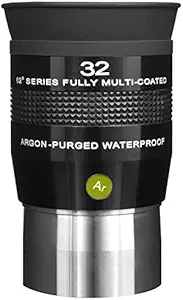
The opposite end of the spectrum: maximum field of view. The 32mm focal length in a 2-inch barrel delivers the widest possible true field in any telescope that accepts 2-inch eyepieces. In an f/6 Dobsonian, this gives you about 63x magnification with a huge 1-degree true field. Perfect for large objects: the Andromeda Galaxy fills the view, the Pleiades fit in a single frame, and the Orion Nebula complex shows its full extent.
Imaging Accessories

If you buy the Quattro 250P or the Advanced VX 8" EdgeHD for astrophotography, this is the camera to pair with them. The ASI294MC Pro features a cooled sensor (reduces thermal noise during long exposures), one-shot color (no filter wheel needed), and a Micro Four Thirds sensor large enough to fill the field of view on most telescopes. It connects via USB 3.0 and works with all major capture software.
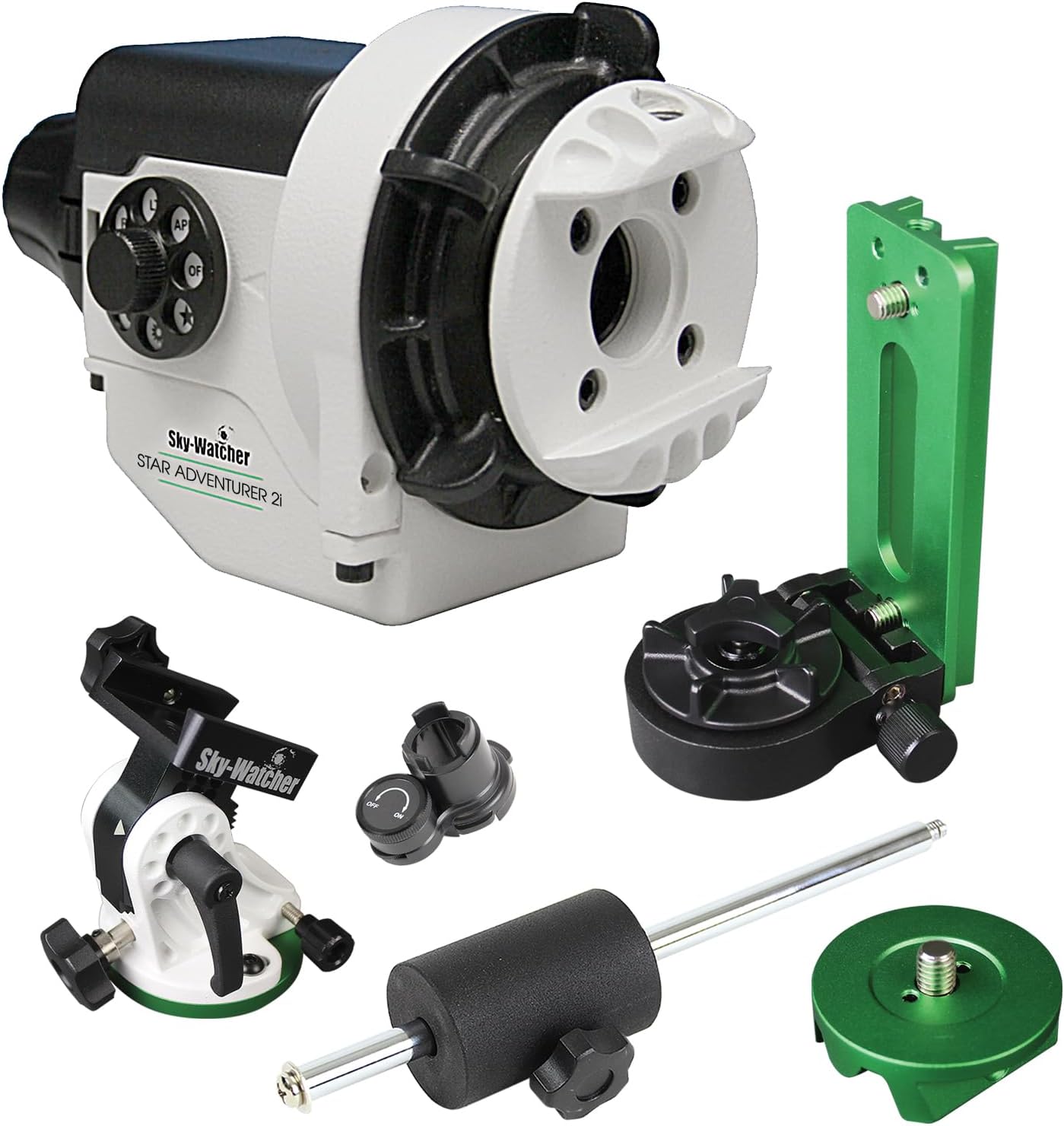
Not everyone needs a full telescope for astrophotography. The Star Adventurer Pro mounts on a standard photo tripod and tracks the sky accurately enough for 1-3 minute exposures with a DSLR and a telephoto lens. The Milky Way, wide-field Andromeda shots, and constellation portraits are all within reach. It is also a capable mount for small refractors like the SV503 or EvoStar 72.
How to Choose the Right Powerful Telescope
Buying the most aperture you can afford sounds logical, but it is not always the right move. Here is a decision framework based on how you will actually use the scope:
- "I want the most power for the least money." → Apertura AD8 ($699.95 at High Point on October 11, 2026) or StarSense Explorer 8" Dob. Eight inches of aperture, no motors to break, simple to use. Orion, maker of the XT8, closed in 2024.
- "I want power AND a computer to find objects." → Celestron NexStar 8SE ($1,699 at High Point on October 11, 2026). Same 8-inch aperture as the Dobs, plus GoTo tracking and a 40,000-object database.
- "I want to do astrophotography." → Celestron Advanced VX 8" EdgeHD ($2,800) for a complete system, or Sky-Watcher Quattro 250P ($750 OTA only) if you already own a mount.
- "I live in a light-polluted city." → Unistellar eQuinox 2 ($2,500). Digital stacking fights light pollution in ways that raw aperture cannot.
- "I want the absolute maximum visual power." → Sky-Watcher Flextube 300 12" Dob ($1,350) if portability matters, or save up for the Celestron 14" EdgeHD OTA if you have a permanent setup.
- "I want the best all-in-one system money can buy." → Celestron CPC Deluxe 1100 HD ($4,299). 11-inch aperture, GoTo tracking, ready to observe.
Key Factors Beyond Aperture
Mount type matters. A Dobsonian base is simple and stable but does not track. An alt-az GoTo mount (NexStar, CPC) tracks objects but cannot do long-exposure imaging. A German equatorial mount (Advanced VX) tracks and supports serious astrophotography. Choose the mount based on what you want to do, not just the OTA.
Cool-down time is real. Large mirrors need 30-60 minutes to reach thermal equilibrium with the outside air. Until they do, the image quality suffers from tube currents. A 14-inch scope might need an hour to settle. An 8-inch Dob is ready in 20 minutes. Factor this into your observing plans.
Dark skies multiply power. An 8-inch scope under Bortle 3 skies shows more deep-sky detail than a 14-inch scope under Bortle 7 suburban light pollution. If you have access to dark sites, a simpler, cheaper scope can outperform premium equipment used from your driveway.