- Explore the universe through photography - Capture stunning images of celestial bodies with the right telescope.
- Choose based on your astrophotography goals - Different telescopes excel at photographing various celestial objects.
- Consider budget and experience level - There are excellent options for beginners and advanced astrophotographers alike.
- Understand telescope types - Refractors, reflectors, and SCTs serve different purposes in astrophotography.
Do you know what is more exciting than looking through your telescope’s eyepiece to catch captivating views of celestial bodies in the night sky? Taking pictures of those captivating views and sharing them with others.
Astrophotography, also known as astronomical imaging, is the art of taking photographs of celestial objects, ranging from landscape picture pops to close-ups of distant deep-sky objects.
Some of the best telescopes for astrophotography include the Celestron Advanced VX 8" EdgeHD smart telescope, Celestron AstroMaster 130EQ Newtonian reflector, and SkyMaster EvoStar 120 APO doublet refractor.
Finding a telescope that not only meets your imaging needs but also aligns with your skill level is essential. In this comprehensive guide, we’ll explore some of the best telescopes specifically designed for astrophotography. From entry-level options perfect for beginners to advanced models favored by experts, we’ll delve into a range of telescopes that offer the precision and image quality needed to capture the beauty of the night sky.
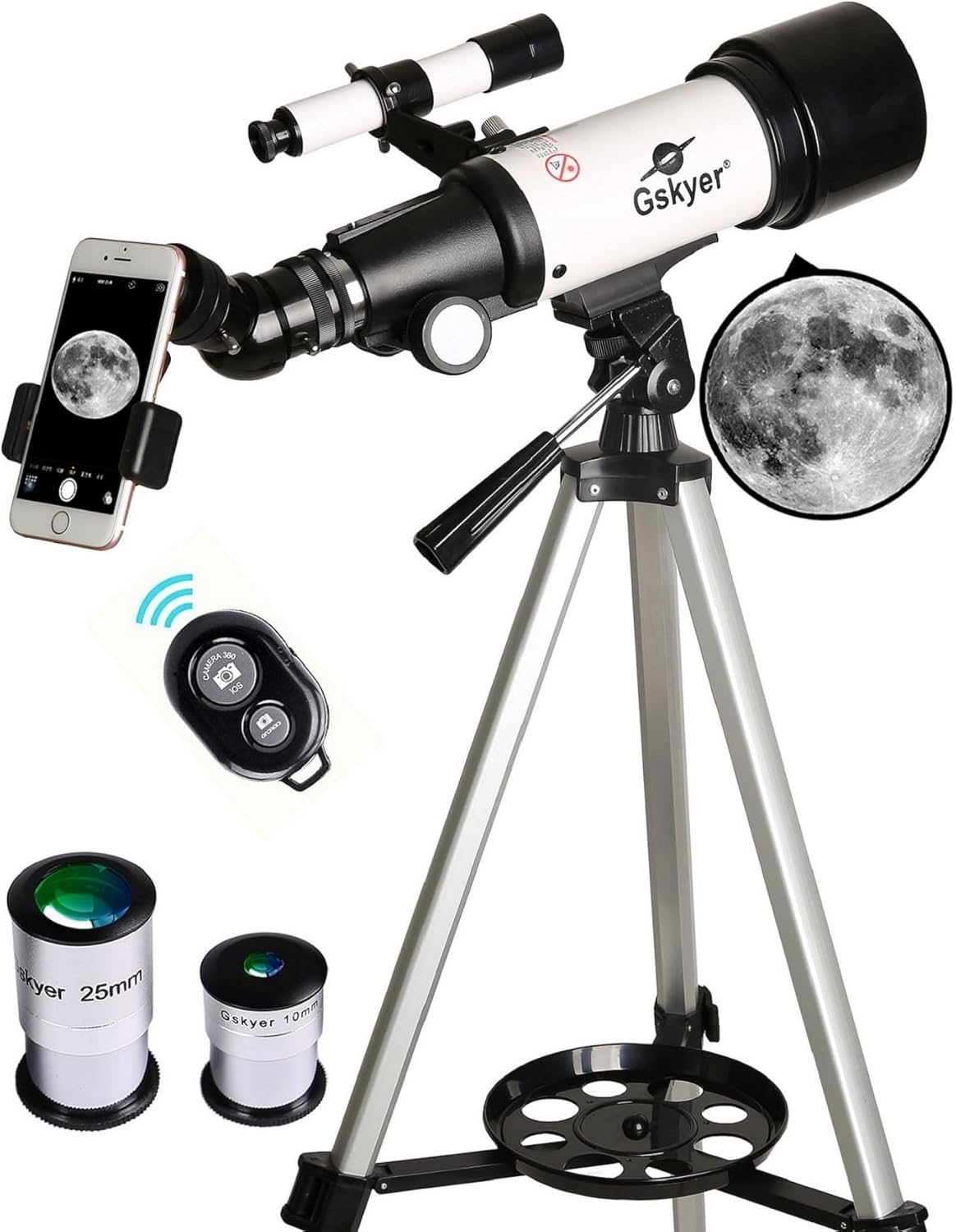
Our Team’s top picks for the best telescopes for astrophotography
Updated May 2026: this list now prioritizes models in the TelescopeGuides product catalog so the recommendations, images, and Amazon links stay consistent. Discontinued or hard-to-source models were replaced with closest catalog alternatives.
- Best serious imaging platform: Celestron Advanced VX 8" EdgeHD.
- Best wide-field starter refractor: Sky-Watcher Evostar 80 APO.
- Best portable GoTo for Moon/planets: Celestron NexStar 5SE or NexStar 127SLT.
- Best budget starter: Celestron AstroMaster 130EQ.
Best telescopes for all types of astrophotography
Whether your interest lies in deep-sky astrophotography of galaxies and nebulae or taking high-magnification shots of our solar system’s objects, some of the best telescopes to use include:
Celestron Advanced VX 8" EdgeHD - Best serious astrophotography platform
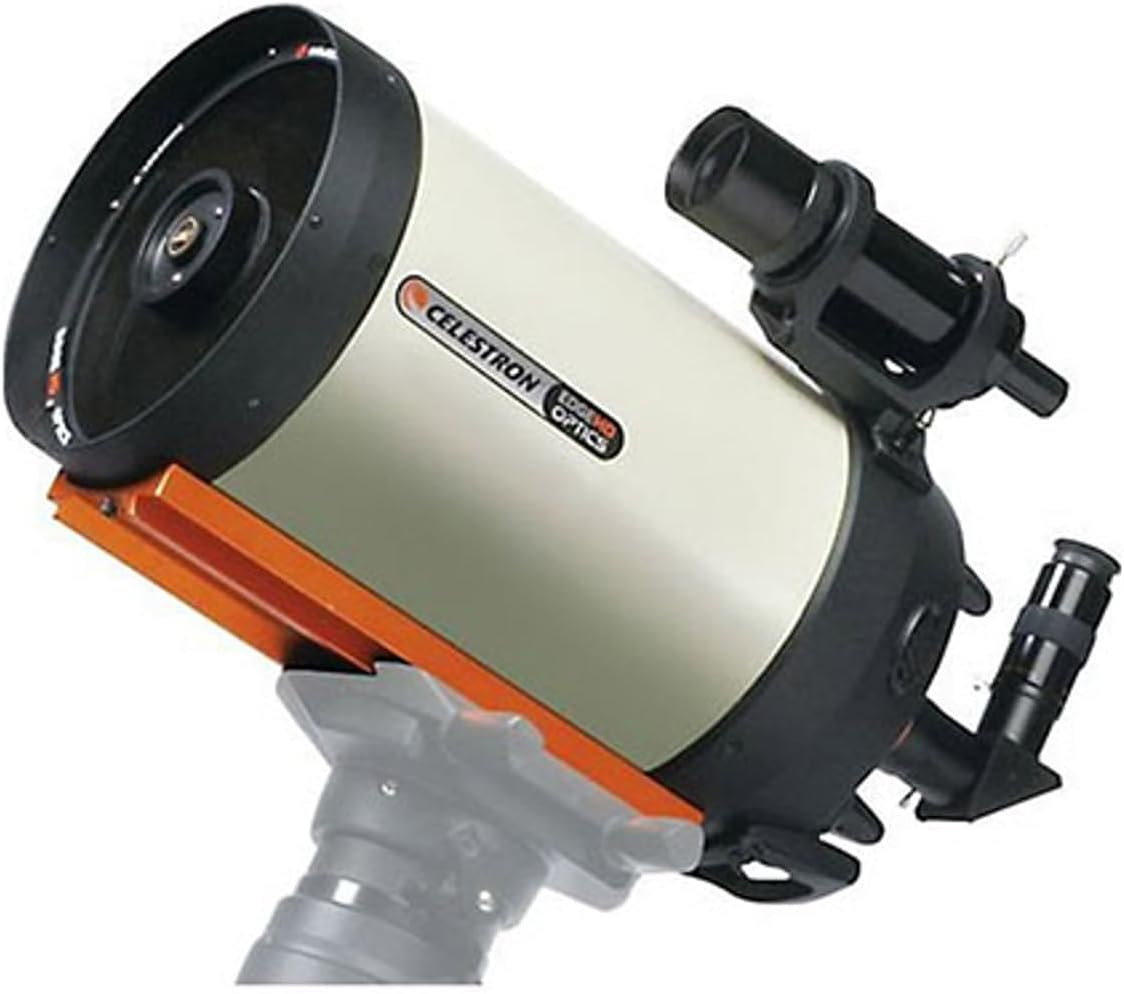
The Advanced VX 8" EdgeHD is the closest catalog-aligned replacement for the old smart-scope recommendation. It is a real imaging platform: EdgeHD optics, an equatorial tracking mount, and enough focal length for galaxies, globular clusters, the Moon, and planets.
- Best for: serious deep-sky and high-resolution work.
- Keep in mind: heavier setup, needs polar alignment, camera, and learning time.
Sky-Watcher Evostar 80 APO - Best wide-field starter refractor
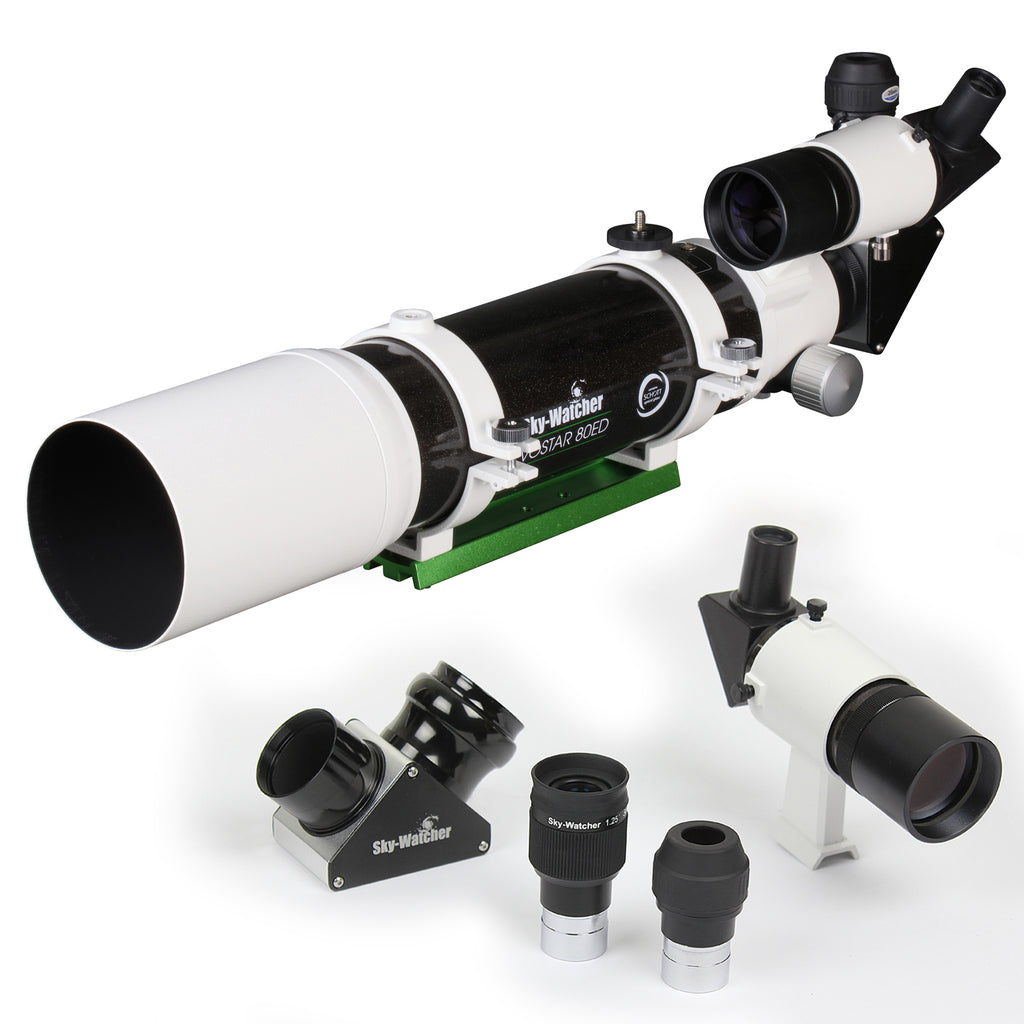
The Evostar 80 APO is the safer wide-field astrophotography pick than older achromat recommendations. The ED glass controls color fringing, and the short refractor format is much easier to guide than a long focal-length SCT.
- Best for: nebulae, star fields, large galaxies, and learning deep-sky imaging.
- Keep in mind: you still need a tracking mount and camera adapter.
Best beginner telescopes for astrophotography
Interestingly, astrophotography is not only for advanced astronomers. With the right astrophotography equipment, someone new to the hobby can take mesmerizing shots of celestial bodies.
Some of the best beginner telescopes for astrophotography are:
Celestron NexStar 5SE - Best portable GoTo for lunar and planetary imaging
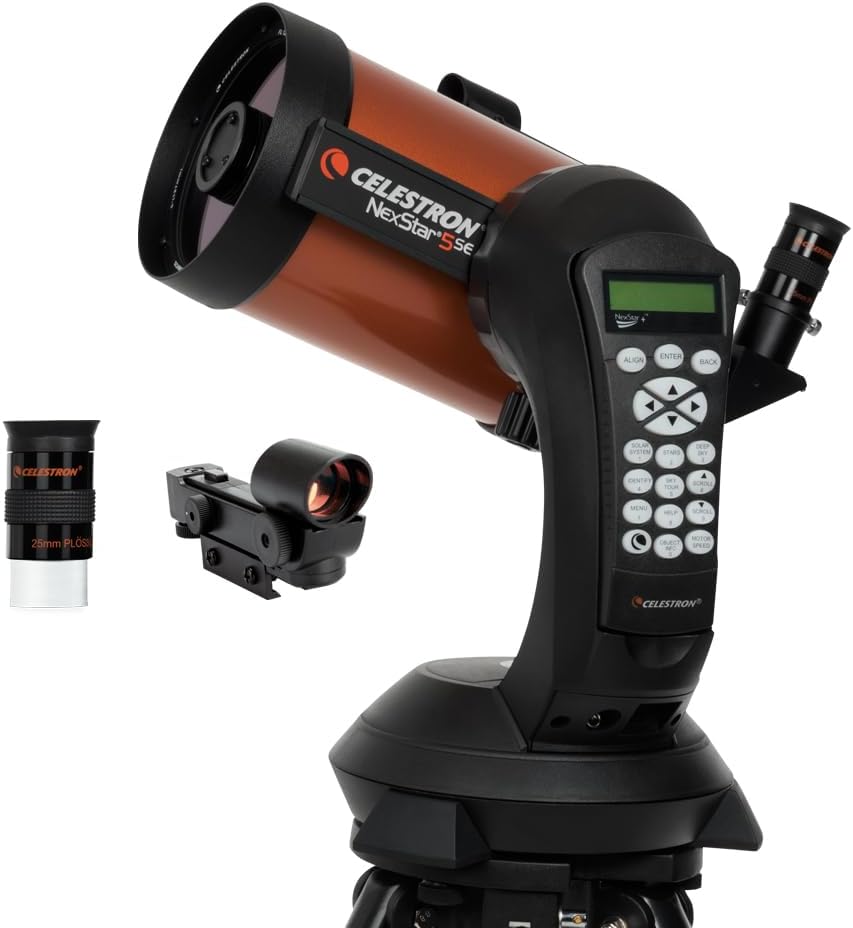
The NexStar 5SE is a portable GoTo SCT for beginners who want lunar and planetary imaging without jumping straight into a heavy equatorial rig. Tracking helps keep the Moon or planets centered while you capture video frames.
- Best for: Moon, Jupiter, Saturn, and compact travel setups.
- Keep in mind: alt-az tracking is not ideal for long-exposure deep-sky imaging.
Best telescope for moon photography
The moon is very approachable, so many people’s astrophotography experience starts with photographing the moon.
Attaching a DSLR camera directly to a telescope is also the most effective system for lunar photography. Some of the best telescopes for lunar photography are:
Celestron NexStar 127SLT - Best compact lunar and planetary scope
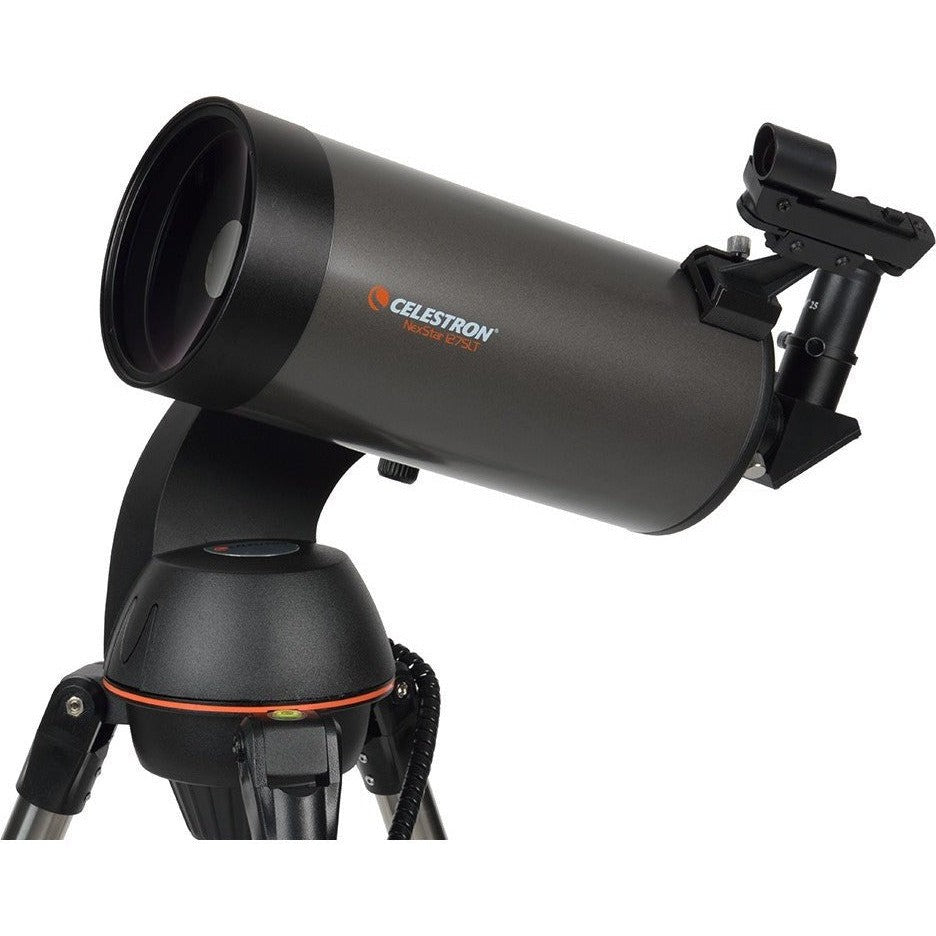
The NexStar 127SLT replaces the old Maksutov-style recommendation with a catalog product that serves the same role: compact Maksutov optics, long focal length, and strong lunar/planetary contrast.
- Best for: Moon craters, Jupiter, Saturn, and small bright targets.
- Keep in mind: narrow field of view, so it is not the first choice for large nebulae.
Celestron NexStar 8SE - Best high-resolution Moon and planets
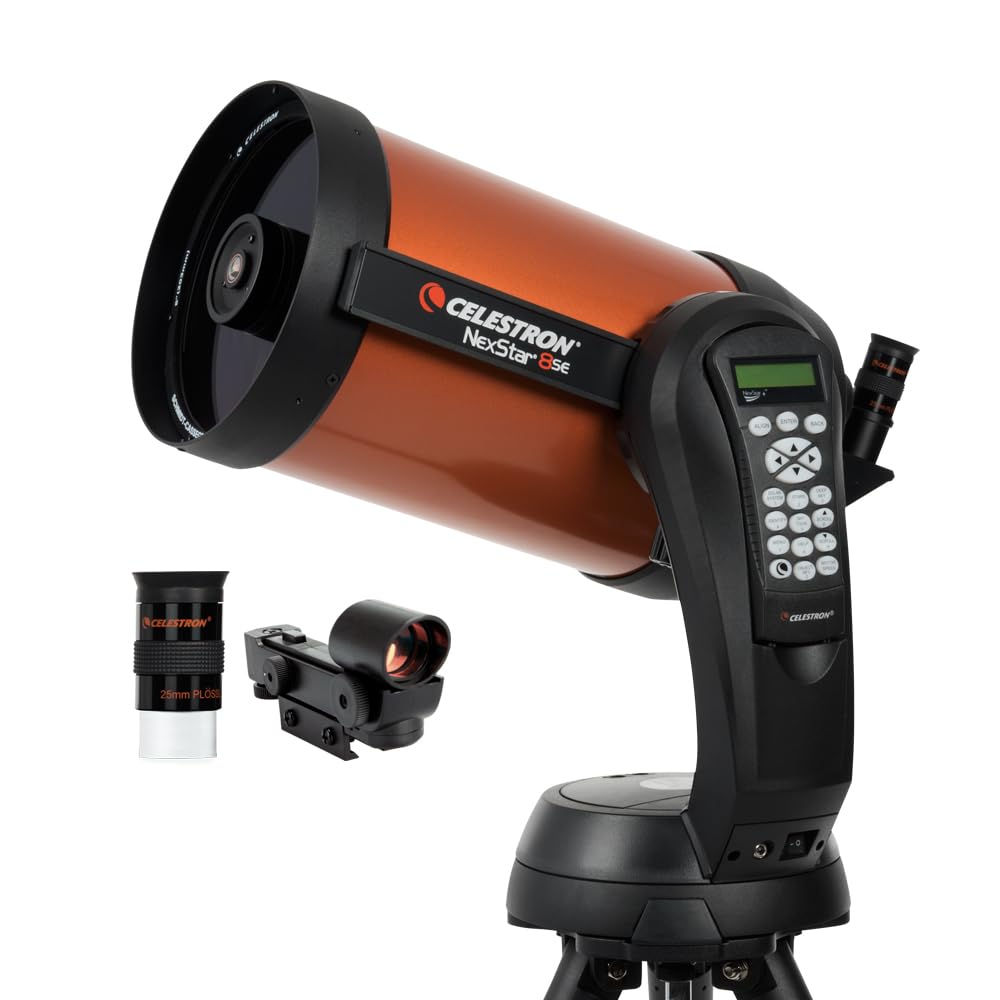
The NexStar 8SE is the high-aperture SCT option for sharper lunar and planetary imaging. It collects far more light than small refractors and gives you the focal length needed for close-up Moon and planet work.
- Best for: high-resolution Moon, Jupiter, Saturn, and bright compact objects.
- Keep in mind: for long-exposure deep sky, pair this class of optics with an equatorial wedge or EQ mount.
Best telescopes for galaxy photography
Short focal length telescopes have many advantages for galaxy photography.
Specifically, the best telescopes for photographing galaxies include:
Celestron Advanced VX 8" EdgeHD - Best deep-sky imaging platform
The Orion 6-inch f/4 Newtonian is loaded with useful features for capturing high-resolution images of deep-sky objects like galaxies.
This Orion Newtonian reflector lets you take high-resolution images of deep-sky objects with short exposure times, ensuring outstanding results in less time.
The telescope’s 6-inch parabolic mirror has a 610mm focal length. So, this is a fast f/4 telescope offering a wide-field astrophotography experience.
It features a substantial 63mm minor axis secondary mirror that provides excellent field illumination to CCD and DSLR cameras for efficient astrophotography performance.
Also, both primary and secondary mirrors boast 94% reflectivity coatings to ensure better-quality images.
The telescope is well-built. It features an Orion-exclusive steel reinforcement plate under the focuser, which eliminates flexure when heavy cameras and other imaging gear are attached.
This Orion Newtonian reflector is compact and weighs only 12.7 lbs. So, it’s conveniently portable and lightweight, making handling easy. You also will not need to invest in a huge mount to support it.
The telescope comes with two heavy-duty hinged tube rings, an 8×50 finderscope, and a dovetail mounting bar.
However, being a fast Newtonian reflector telescope, this Orion telescope suffers comatic aberration. So, a coma corrector is highly recommended to eliminate coma for optimized imaging performance.
Pros of the Orion 6-inch f/4 Newtonian reflector
- Gives high-resolution results with short exposures
- Compact and lightweight
- Relatively inexpensive
Cons of the Orion 6-inch f/4 Newtonian
- Suffers severe optical distortion (coma)
Sky-Watcher Classic 200P 8" Dob - Best visual fallback while building imaging skills
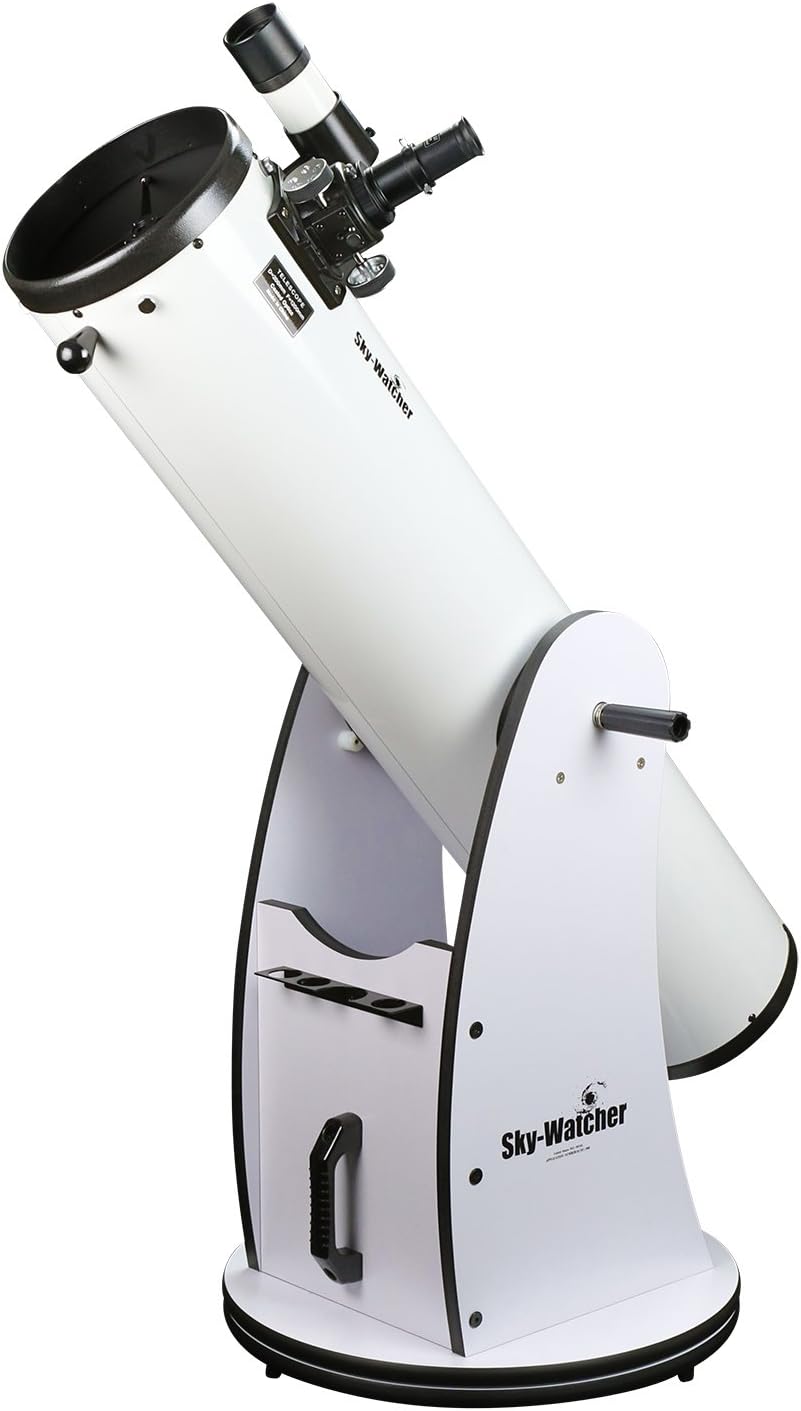
The Classic 200P is not a dedicated imaging Newtonian, but it is a catalog-aligned replacement for hard-to-source astrograph recommendations when the reader mainly wants visual performance now and a practical upgrade path later.
- Best for: learning the sky visually before investing in a full imaging rig.
- Keep in mind: manual Dobsonian tracking limits long-exposure photography.
Best telescope for planet photography
Capturing detailed images of planets require serious magnification. Thus, the best telescope for planets photography needs a healthy combination of aperture and focal length.
Specifically, the best telescopes for planetary photography include:
Sky-Watcher Evostar 80 APO - Better color correction for imaging
The Sky-Watcher Evostar 80 APO refractor is a portable f/5 refractor telescope that gives a wide field and high contrast for planetary photography.
The Skytravel 120 EQ3-2 telescope is perfect for anyone looking for a small but powerful scope for astrophotography. The scope uses two-element, fully multi-coated lenses to provide excellent terrestrial viewing, visual astronomy, and astrophotography.
Its relatively large 120mm aperture gathers enough light to allow you see more details. With this aperture and a 558mm focal length, the scope “zooms” into planets for a closer look.
The Startravel telescope produces crisp and detailed images at a reasonable price, making it a good first telescope or a traveling telescope for more advanced amateur astronomers.
While the Sky-Watcher Startravel telescope is well-suited for lunar and planetary astrophotography, it may be useful for some deep-sky astrophotography.
The telescope comes with two eyepieces (10mm and 2mm) and a Sky-Watcher AZ3 mount that provides slow-motion controls on the vertical and horizontal axes for precise targeting.
Sky-Watcher Evostar 80 APO - Catalog APO refractor pick
The Sky-Watcher Evostar 80 APO refractor is an 80mm F6 APO triplet refractor optical tube assembly (OTA) for deep sky astrophotography.
The Sky-Watcher Evostar 80 APO has an 80mm aperture, giving it a decent 1.45 arc seconds resolving power. In addition, it features triplet apochromatic optics, which reduces edge dispersion to increase image quality significantly (by 15.8%).
The APO has multiple light barriers inside the inner wall of the lens barrel and the focusing seat, all designed in the pursuit of extinction.
It has a 2.5” focusing base that reduces the vignetting problem when connecting to a full-frame camera. So, the telescope gives bright, high-contrast images, which allow you to explore galaxies and nebulae with better graphic clarity.
The Sky-Watcher Evostar 80 APO refractor comes with a 180mm dovetail plate that is easy to set and makes your scope more stable.
The scope also comes with an equatorial mount. This makes it suitable for long-exposure photography, as it effectively tracks a sky object and keeps it in the field of view.
Pros of the Sky-Watcher Evostar 80 APO
- Creates high-quality images
- Impressive build quality
- Comes with an equatorial mount for easy tracking
- Relatively inexpensive
Cons of the Sky-Watcher Evostar 80 APO
- Fairly robust
Best budget-friendly telescope for astrophotography
You do not have to break the bank to enjoy astrophotography, as many budget-friendly telescopes exist. Some of these are:
Celestron AstroMaster 130EQ - Best budget reflector under $300
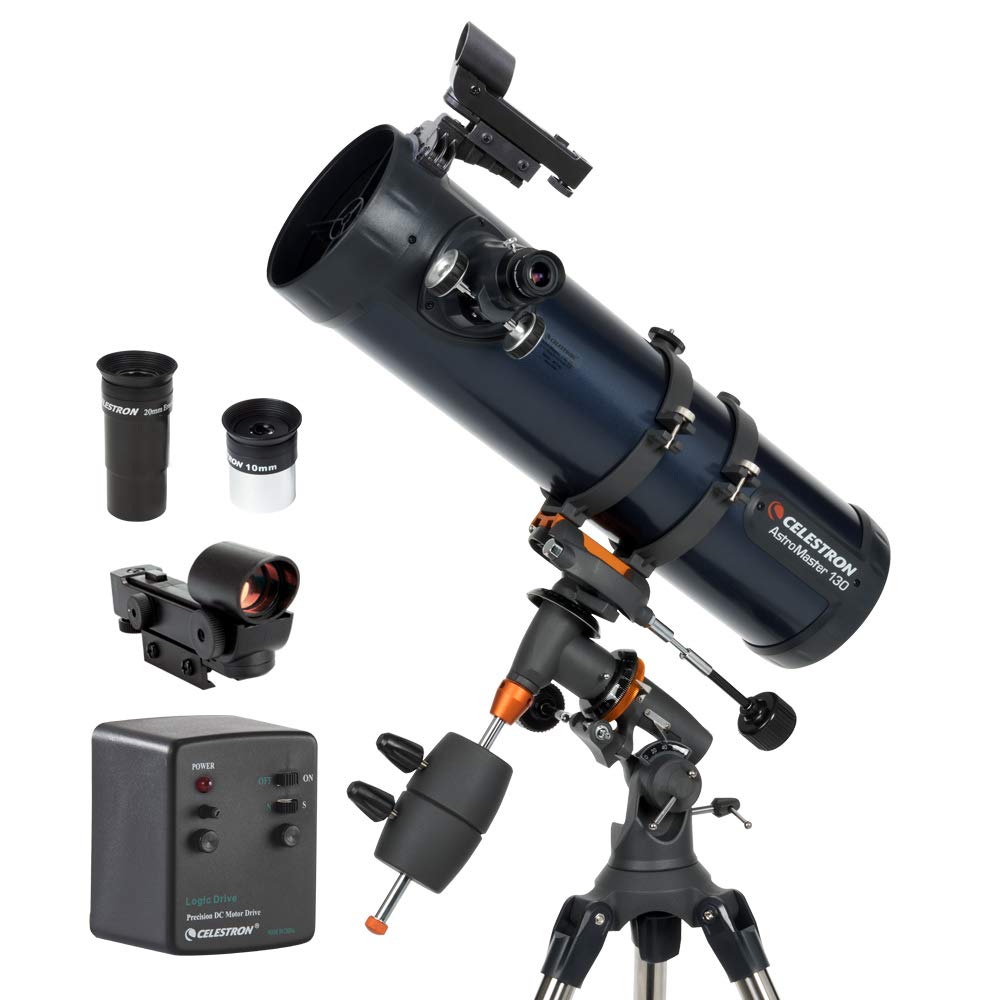
The AstroMaster 130EQ is the budget-friendly catalog pick. It is not a premium astrophotography rig, but it gives beginners a reflector, an equatorial-style mount, and enough aperture to start experimenting with the Moon and bright objects.
- Best for: budget Moon shots and learning telescope basics.
- Keep in mind: expect limitations for serious deep-sky imaging.
How to choose a telescope for astrophotography? Factors to consider
If you’re enthralled by beautiful pictures of celestial objects and want to try your hand at nighttime photography, you should be careful when buying your telescope.
Factors to consider before buying a telescope for astrophotography include:
Optical Tube Assembly (OTA)
Optical Tube Assembly (OTA) is the telescope’s tube where the optics are housed. The OTA is a standalone telescope tube that does not come with the mount and tripod. Adding an OTA is a great way to gain a new field of view or upgrade your aperture and optics.
Specialized scopes for astrophotography are usually sold independently as OTA without the mount. So, in astrophotography, you have to build your telescope setup. That means buying the OTA, mount, and other needed stuff separately.
There are two types of OTA – refractors and reflectors. Refractors use lenses to capture light, while reflectors use mirrors.
Lenses (and mirrors)
A telescope is nothing more than a pair of lenses mounted in a tube. The scopes use lenses (and mirrors) to gather and focus light from the night sky to form images.
In telescopes with lenses, the lens at the front gathers and bends light from sky objects, focusing an image for the smaller lens. The smaller lens then magnifies the image and focuses it for your eyes.

In telescopes that use mirrors (reflecting scopes), a larger mirror at the bottom of the tube gathers and reflects light to the smaller mirror. The small mirror magnifies the image, reflecting the light into the eyepiece.

The light from the second lens (mirror) is what you see when you look through your telescope’s eyepiece.
Powerful telescopes have big objective lenses. The bigger the objective lens (or mirror), the more light the telescope can gather to form brighter images.
Also, the surface of the lens (or mirror) has to be extremely smooth. Any flaws in the objective lens/ mirror will change the image.
Magnification
A telescope’s magnification is how much it enlarges a target object. It’s the size of an object observed through a scope’s eyepiece relative to the object’s size when observed with the naked eye.
Distant celestial bodies are very small and dim in the night sky. So, photographing these objects require a powerful telescope that effectively magnifies them.
Comatic aberration
Comatic aberration (or coma) is an aberration in optical systems due to imperfection in the lens or other components of the system.
Being an aberration, comatic aberration causes light to spread out over a region instead of being focused on a single point. This results in off-axis point sources such as stars appearing to have a tail like a comet.
Different schemes to reduce comatic aberration include optical designs like Schmidt Cassegrain telescopes and Maksutov Cassegrains.
Coma is a big issue with reflectors, especially on fast scopes with a short focal ratio (from f/5 down). The faster the scope is, the smaller the “coma-free” area is in the field of view. So with the slower scopes (like f/6 and up), the coma is not a big issue.
Coma correctors have been designed to reduce the problem in Newtonian reflector telescopes. A coma corrector lens is not necessary for visual observations but is a must-have accessory for astrophotography with a fast-reflecting telescope.